I turned 37 in the apartment with the dry-erase marker stains on the kitchen table, and I remember thinking: three years from 40, and I am not who I thought I’d be by now. That sounds dramatic when I write it down. It wasn’t dramatic. It was just a Tuesday. Nora was at a sleepover. Eli was asleep. I was sitting at the kitchen table doing that thing I do where I make tea and then forget to drink it, and the thought arrived the way thoughts do — not with a crash, but with the quiet precision of something that’s been waiting in the hallway for you to open the door.
In my twenties, 40 felt like a finish line. By 40 I’d have the career, the marriage, the house, the version of myself that had it figured out. Instead, by 37, I had a divorce, a part-time job I love but that doesn’t pay enough, two kids who think I’m boring, and a therapist appointment every Wednesday at 4pm where I sit in a comfortable chair and learn things about myself that are useful and uncomfortable in equal measure.
And honestly? I wasn’t okay about it for a while. There’s a specific grief in realizing the life you built wasn’t the one you actually wanted. Not because it was bad — it wasn’t bad — but because you built it to be acceptable rather than true. The confidence I’m working on now isn’t the kind I had at 25, which was mostly performance. It’s something quieter. It’s the willingness to be wrong about yourself and start over with the new information. These ten books are the ones that helped me get there.
Quick Pick: In a Hurry?
Also see our guide to 10 BEST BOOKS FOR BUILDING UNSHAKEABLE CONFIDENCE AND SELF-ESTEEM. Also see our guide to 10 Best Books for Building Confidence and Friendship in Tween Girls. Also see our guide to 10 Best Books for Building Confidence as a First-Time Manager. Also see our guide to 10 BEST BOOKS FOR BUILDING CONFIDENCE AS AN INTROVERT AND LEARNING TO THRIVE IN SOCIAL SITUATIONS. Also see our guide to 10 Best Books for Building Confidence in Your 40s.| Book | Best For | Rating | |——|———-|——–| | The Gifts of Imperfection by Brene Brown | Letting go of who you think you should be | ⭐⭐⭐⭐⭐ | | Untamed by Glennon Doyle | Stopping the performance and getting real | ⭐⭐⭐⭐⭐ | | Maybe You Should Talk to Someone by Lori Gottlieb | Seeing that everyone is figuring it out as they go | ⭐⭐⭐⭐⭐ |
10 Best Books for Building Confidence in Your 40s
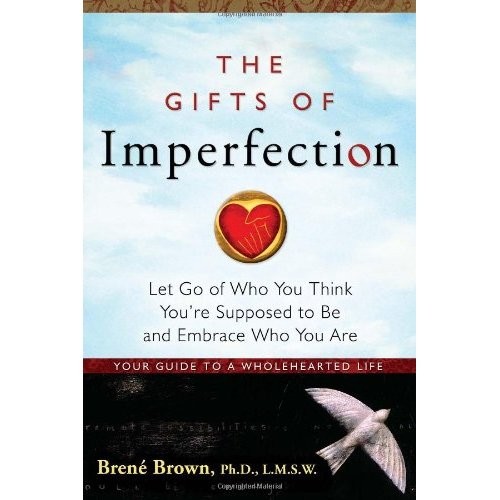
1. The Gifts of Imperfection by Brene Brown
⭐⭐⭐⭐⭐
Who it’s for: Anyone exhausted from performing a version of their life that looks good on the outside.
This is the book that started everything for me. Not the divorce. Not the therapy. This book. Dr. Nair recommended it during our third session, when I was still explaining why I was “basically fine,” and I read it in the school parking lot after drop-off and then sat there for twenty minutes because Brene Brown had described my entire adult life in a chapter about shame resilience.
Her concept of “wholehearted living” — which sounds like something you’d find on a throw pillow — is actually about the radical act of showing up as yourself when you’ve spent decades showing up as who you think people need you to be. The ten guideposts she lays out aren’t revolutionary ideas. They’re the simplest things in the world — authenticity, self-compassion, resilience, creativity, play — and they’re the hardest things I’ve ever tried to do.
The guidepost about letting go of “what people think” is the one I return to every few months. I spent years calibrating my personality to the room I was in. At the school, I was competent and calm. With Daniel, I was accommodating and low-maintenance. With my mom, I was fine. Always fine. Brown helped me see that “fine” was the most dangerous word in my vocabulary, because it was the word that kept me from being honest with anyone, including myself.
My take: “I cried through the first three chapters. Not because it was sad, because it was true.”

2. Untamed by Glennon Doyle
⭐⭐⭐⭐⭐
Who it’s for: Someone who’s been told they’re “too much” and is ready to stop apologizing for it.
I resisted this book for a year because everyone was reading it, and I have a contrarian streak that sometimes works against me. When I finally picked it up, I read the first chapter and understood why people were passing it around like scripture. Glennon Doyle writes about the moment she stopped performing her life — as a wife, as a public figure, as someone who had it together — and started living it. The story of falling in love with Abby Wambach while married is the one everyone talks about, but the deeper story is about the cage. The invisible cage of expectations that you build around yourself so gradually you don’t notice it until you try to move.
At 37, I had a very well-built cage. It had good lighting and people said nice things about it. But I couldn’t turn around without hitting a wall. Doyle’s book gave me language for that — and more importantly, permission to be uncomfortable with the dismantling. Because dismantling a life, even a life that wasn’t quite right, is terrifying. The confidence doesn’t come before the terror. It comes alongside it.
My take: “I read this book and then made a decision I’d been avoiding for six years. I’m not saying the book made me do it. I’m saying it made me brave enough to.”
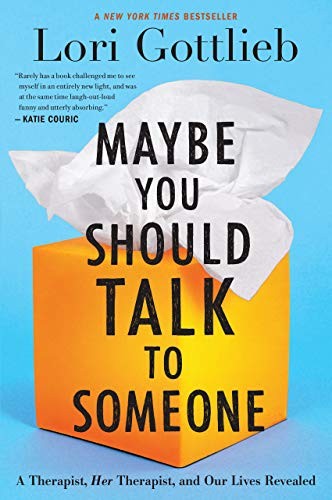
3. Maybe You Should Talk to Someone by Lori Gottlieb
⭐⭐⭐⭐⭐
Who it’s for: Someone who thinks therapy is for other people and needs to hear that therapists are also a mess.
Lori Gottlieb is a therapist who, after a bad breakup, ends up in therapy herself. This book is the story of that experience — interwoven with the stories of her patients — and it’s the most human thing I’ve read about the therapeutic process. She’s funny, self-aware, and honest about the fact that having a psychology degree doesn’t protect you from being irrational about your own life.
I include this book on a list about confidence because the thing that shook my confidence most in my late thirties was the feeling that everyone else had figured something out that I hadn’t. Gottlieb’s book dismantles that illusion completely. Her patients — the narcissistic Hollywood producer, the young woman with terminal cancer, the elderly woman who wants to quit therapy — are all figuring it out in real time. Nobody has a map. Everyone is making it up.
That knowledge, somehow, is the most confidence-building thing I’ve ever encountered. Not “you’re great the way you are.” Just: you’re not behind. Nobody is ahead. We’re all in the same confused, trying-hard, doing-our-best place.
My take: “I finally went to therapy because of this book. I should have gone ten years ago.”

4. The Confidence Code by Katty Kay and Claire Shipman
⭐⭐⭐⭐
Who it’s for: Someone who wants to understand the science behind confidence and what actually builds it.
Katty Kay and Claire Shipman are journalists who spent years researching confidence — what it is, where it comes from, why women tend to have less of it than men, and whether it can be built. The answer to that last question is yes, but not the way you think. Confidence isn’t about positive affirmations or power poses. It’s about doing things. Repeatedly. Even badly. Especially badly.
The research they cite is compelling: confidence is built through action, not thought. You don’t think your way into confidence. You act your way there, by doing things that scare you, surviving them, and accumulating evidence that you can handle more than you thought. The “overthinking tax” — the way women in particular analyze decisions to death before making them — is one of the biggest confidence killers, and it’s the thing I recognize most in myself.
I used their framework when I started writing for ReadPlug. I was terrified. I’d never written for an audience. I’d never put my opinions about books on the internet. I spent two weeks outlining my first piece before I realized I was just procrastinating in a more sophisticated way. Then I wrote it in three hours, submitted it, and waited for someone to tell me it was terrible. Nobody did. That’s not the point. The point is that I did it, and the doing built something that the thinking never could have.
My take: “Finally, a confidence book backed by data instead of platitudes.”

5. When Women Rise: The Power of a Woman’s Voice by Michele Promaulayko and the editors of Women’s Health
⭐⭐⭐⭐
Who it’s for: A woman navigating the specific confidence challenges of midlife — career plateaus, identity shifts, the feeling that time is running out.
This book collects stories from women who found their voice later in life — after 40, after divorce, after career changes, after the moment when the life they’d built stopped fitting. It’s less prescriptive than the other books on this list and more testimonial. You’re reading about women who stood in the same place you’re standing and figured out how to move.
My take: The chapter about women who changed careers in their forties hit me hard. I’m not changing careers exactly — I love being a school counselor — but I’m adding something to my life with the writing, and adding feels almost as scary as replacing. Every time I submit a piece, I have a ten-second window where I feel brave and a ten-minute window where I feel like a fraud. Both feelings are real. Both are temporary. This book helped me understand that.
“I bought this for my mom. Then I stole it back.”
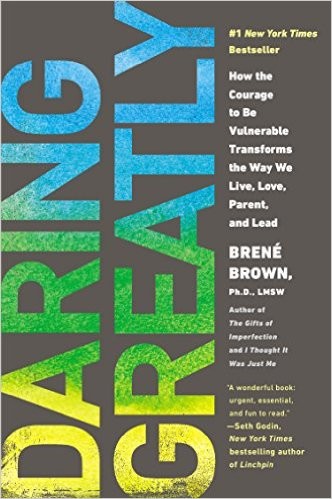
6. Daring Greatly by Brene Brown
⭐⭐⭐⭐⭐
Who it’s for: Someone ready to stop playing it safe and start being vulnerable — which is the actual source of confidence.
If The Gifts of Imperfection is about accepting who you are, Daring Greatly is about showing that person to the world. Brown’s argument is that vulnerability — the willingness to be seen, to be uncertain, to risk failure — isn’t weakness. It’s the birthplace of confidence, creativity, and connection. You can’t build real confidence without risking something. You can only build the appearance of confidence, which is what most of us have been doing.
The chapter on “the vulnerability hangover” — the feeling you get after you’ve been honest about something real — is the most relatable thing I’ve ever read. I get it every time I publish a piece. Every time I tell someone I’m divorced. Every time I admit to another parent that I don’t have it together. The hangover is the price of admission to a real life, and knowing it’s coming makes it easier to show up anyway.
My take: “I thought vulnerability was for therapy sessions. This book made me realize it’s for everywhere.”

7. Year of Yes by Shonda Rhimes
⭐⭐⭐⭐
Who it’s for: Someone who’s been saying no to life because saying yes feels too risky.
Shonda Rhimes — the creator of Grey’s Anatomy and Scandal — spent a year saying yes to everything that scared her. Speeches. Interviews. Parties. The things she’d been avoiding because anxiety told her she couldn’t handle them. This book is the story of that year, and it’s surprisingly funny and surprisingly honest about how terrified she was the entire time.
The thing I love about this book is that it’s not about becoming fearless. Rhimes is clear: she was scared every single time. She just did it anyway. And the accumulation of doing it anyway — of saying yes to the scary thing and surviving — is what built her confidence. Not a single dramatic transformation. Just a year of small, terrifying choices that added up to a different life.
I read this during the months when I was debating whether to start writing. The question wasn’t whether I could write. The question was whether I could handle being seen trying. Year of Yes helped me see that the answer to “can I handle this?” is almost always yes. Even when it doesn’t feel like it.
My take: “I said yes to three things this week that I would have said no to last month. Two of them were amazing. One was terrible. I regret nothing.”

8. The Second Mountain: The Quest for a Moral Life by David Brooks
⭐⭐⭐⭐
Who it’s for: Someone who achieved what they were supposed to achieve and is wondering why it doesn’t feel like enough.
David Brooks writes about two mountains. The first is the one you climb in the first half of life — achievement, career, status, the external markers of success. The second mountain is the one you climb when the first one doesn’t satisfy — when you realize that getting the thing you wanted didn’t make you the person you hoped to be. The second mountain is about commitment, purpose, and meaning. It’s about giving yourself to something rather than proving yourself.
I read this book at a time when I had everything the first mountain promised — a marriage, kids, a stable career — and none of it felt like mine. It felt like a life I’d assembled from a kit. Brooks helped me understand that the emptiness wasn’t a sign that something was wrong with me. It was a sign that I was ready for the second mountain. The divorce, in a strange way, was the beginning of that climb.
This isn’t a confidence book in the traditional sense. It’s a meaning book. But meaning and confidence are connected — when you know why you’re doing something, the fear of doing it wrong loses some of its power.
My take: “I thought this was going to be another ‘find your purpose’ book. Instead, it helped me understand why my purpose hadn’t been enough.”

9. Presence: Bringing Your Boldest Self to Your Biggest Challenges by Amy Cuddy
⭐⭐⭐⭐
Who it’s for: Someone who needs practical, body-based tools for showing up more confidently in specific situations.
Amy Cuddy is the Harvard researcher who gave the famous TED talk about “power posing.” This book goes deeper than the talk — it’s about the connection between your body and your confidence, and how small physical changes can shift the way you feel and perform. She’s careful not to overclaim. Power posing won’t make you a different person. But the research on embodied cognition — the way your posture affects your psychology — is solid and practical.
I used her techniques before my first parent-teacher conference as a counselor. I stood in the bathroom for two minutes with my hands on my hips like I was auditioning for a superhero movie. I felt ridiculous. But I also felt slightly less terrified, and in a job where you’re talking to worried parents about their kids, slightly less terrified is a meaningful improvement.
For building confidence in your 40s, the value of this book is specific: it gives you tools for the moments when confidence matters most. Not the general, philosophical kind. The “I have to walk into this room and not fall apart” kind.
My take: “I used to think body language was woo-woo. The science in this book changed my mind.”

10. Tiny Beautiful Things: Advice on Love and Life from Dear Sugar by Cheryl Strayed
⭐⭐⭐⭐⭐
Who it’s for: Someone who needs to hear that being lost in your 40s isn’t a failure — it’s a beginning.
I’ve recommended this book on other lists and I’ll keep recommending it because the advice in it is the most honest, least pretentious wisdom I’ve ever encountered. Cheryl Strayed wrote an advice column, and the letters she received — from people in their 40s who didn’t know what to do next, who felt too old to start over, who were scared they’d wasted their lives — are so specific and so universal that reading them feels like being given permission.
The letter from the 41-year-old who felt too old to go back to school is the one I think about most. Strayed’s response isn’t reassuring in the way you’d expect. She doesn’t say “you’re not too old.” She says something closer to: you’re going to be 45 either way. You can be 45 with the degree or 45 without it. Choose.
That’s the kind of confidence I’m building now. Not the big, bold, look-at-me kind. The kind that says: I’m going to be 40 either way. I can be 40 still hiding, or 40 showing up. The showing up is scarier. But the hiding is lonelier.
My take: “I’ve never read advice columns that made me cry before. Every single letter felt like it was written to me.”
Frequently Asked Questions
1. Is it normal to feel less confident in your 40s than in your 20s?
Completely. In your 20s, confidence is often just ignorance — you don’t know what you don’t know, so you charge ahead. By your 40s, you know exactly how much can go wrong. That awareness isn’t weakness. It’s experience. The task of your 40s is to build a confidence that includes the knowledge of what can go wrong and chooses to act anyway.
2. Can you really build confidence at 40, or is it too late?
It’s not too late. The research in The Confidence Code (#4) shows that confidence is built through action, not age. You can start at 40, 50, or 70. The advantage of starting at 40 is that you have decades of evidence about what you can survive. That’s not nothing.
3. Which book should I start with?
If you’re feeling stuck and don’t know why: The Gifts of Imperfection (#1). If you know what you want but you’re scared to go for it: Untamed (#2). If you think you might need therapy but you’re not sure: Maybe You Should Talk to Someone (#3).
4. I’m not going through a divorce. Will these books still apply?
Yes. The confidence challenges of your 40s aren’t limited to major life crises. They show up in career plateaus, parenting exhaustion, friendship changes, the slow realization that your body is doing things you didn’t authorize. These books meet you wherever you are.
5. How do I stop comparing myself to people who seem to have it figured out?
Read Maybe You Should Talk to Someone (#3). The illusion that everyone else has figured it out is the single biggest confidence killer in midlife. Gottlieb dismantles it by showing you that therapists, patients, and everyone in between is making it up as they go.
6. Is confidence something you feel or something you do?
Both, but the doing comes first. You act, the feeling follows. Waiting to feel confident before you act is like waiting to feel awake before you get out of bed. It doesn’t work that way. The Confidence Code (#4) and Year of Yes (#7) are both built on this principle.
7. My confidence issues are tied to body image and aging. Will these books help?
Partially. Presence (#9) addresses the body-confidence connection directly. For body image specifically, you might also want to explore books on self-acceptance, but the core message of these books — that confidence comes from action and self-compassion, not from how you look — applies regardless.
A Final Thought
I’m writing this at the kitchen table. The same table where I cried after the divorce papers were signed. The same table where Nora does her math homework and Eli eats cereal with his hands. The same table where I made the decision to start writing, which was the first decision I made for myself in years that wasn’t about logistics or scheduling or making someone else comfortable.
I’m not confident in the way I thought I’d be at this age. I’m not the woman with the good haircut and the firm handshake and the knowledge that everything is going to be fine. I’m the woman with the cold tea and the two kids and the therapist appointment and the nagging suspicion that she’s just getting started.
And honestly? I think that’s better. The confidence I had at 25 was armor. The confidence I’m building at 37 is skin. It’s thinner. It’s more sensitive. But it’s mine, and it’s real, and it doesn’t need to perform.
Which book are you grabbing first? I’d love to know. Forty is coming either way. Might as well meet it with something good to read.
Disclosure: This article contains affiliate links. If you purchase through these links, ReadPlug may earn a small commission at no additional cost to you. We only recommend books we genuinely believe in.