I want to tell you about the morning routine that lasted four days.
It was January, the year after my divorce. Daniel had the kids that week, which meant I had the apartment to myself for the first time in what felt like years. I’d just read a book about morning routines — I won’t name it because the author doesn’t deserve the attention — and I was going to become the kind of person who wakes up at 5am, meditates for twenty minutes, journals, exercises, makes a green smoothie, and starts her day with intention and clarity and whatever other words the book used that I now associate with the specific delusion of January.
Day one: I set my alarm for 5am. I hit snooze until 6:15. I meditated for about four minutes before my brain started making a grocery list. I journaled one sentence: “I am tired.” I did not exercise. I made coffee, not a smoothie. I went to Lincoln Elementary feeling like a failure before 8am.
Day two: I set my alarm for 5am. I hit snooze until 6:30. I skipped meditation entirely. I wrote “still tired” in my journal. I ate cereal standing over the sink.
Day three: I didn’t set the alarm.
Day four: I didn’t set the alarm and I felt guilty about not setting the alarm, which is a specific kind of exhausting that no morning routine book accounts for.
That was the year I learned something about habits that none of the books had told me: the problem wasn’t my discipline. The problem was that I was trying to build someone else’s habit system in my body, in my life, in my specific Tuesday mornings that start with Eli needing help finding his shoes and Nora needing me to sign a permission slip I forgot about. The 5am meditation routine was designed for someone whose mornings look nothing like mine. And when it didn’t work, I didn’t think “this system doesn’t fit me.” I thought “I don’t fit this system. Something is wrong with me.”
Nothing was wrong with me. Something was wrong with the system.
If you’ve tried to build habits and failed — not once, but repeatedly, in a way that makes you suspect you’re just not the kind of person who follows through — I want you to know that the research disagrees with you. You are exactly the kind of person who can build sustainable habits. You just haven’t found the approach that fits your actual life. These ten books are the ones that helped me find mine.
Quick Pick: The Best Book for Building Sustainable Habits
Also see our guide to 10 Best Books for Building Better Sleep Habits Naturally and Finally Getting Rest. Also see our guide to 10 BEST BOOKS FOR BUILDING HEALTHY HABITS IN RECOVERY AND CREATING A LIFE THAT ACTUALLY STICKS. Also see our guide to 10 BEST BOOKS FOR BUILDING HEALTHY HABITS THAT LAST AND CREATING LASTING CHANGE IN YOUR LIFE. Also see our guide to 10 Best Books for Building Better Sleep Habits Naturally and Finally Getting Rest. Also see our guide to 10 Best Books for Building Sustainable Habits for Long-Term Success.If you only have time for one book, go with “Tiny Habits” by BJ Fogg. It’s the most research-backed, immediately practical book on habit formation I’ve read. Fogg’s method — start impossibly small, attach new habits to existing routines, and celebrate immediately — is the approach that finally stuck for me. Not because it was easy. Because it was designed for actual humans with actual lives.
THE 10 BEST BOOKS FOR BUILDING SUSTAINABLE HABITS FOR LONG-TERM SUCCESS

1. TINY HABITS BY BJ FOGG
BJ Fogg | ⭐ 4.6/5
Who it’s for: Anyone who has tried to build habits and failed because they started too big. If your New Year’s resolutions die by February, Fogg’s approach will change that.
“People change best by feeling good, not by feeling bad.”
Fogg is a behavior scientist at Stanford, and his research produced the simplest, most effective habit-building method I’ve encountered. The core formula: after I [existing habit], I will [tiny new behavior]. Not “I will run three miles every morning.” After I pour my coffee, I will do two pushups. After I brush my teeth, I will floss one tooth. After I park my car, I will take three deep breaths.
The key insight: the size of the behavior doesn’t matter. What matters is that you do it consistently and celebrate immediately after. The celebration — a fist pump, a “yes!”, a mental high-five — wires the habit into your brain through positive emotion. I was skeptical of the celebration part. It felt silly. But when I tried it — after I park my car, I will take three deep breaths, and then I say “nice” to myself — the habit stuck. Not because three breaths are transformative. Because the consistency and the celebration created a neural pathway that made the behavior automatic.
My take: The most scientifically grounded habit book I’ve read. Start impossibly small. The system compounds.

2. ATOMIC HABITS BY JAMES CLEAR
James Clear | ⭐ 4.6/5
Who it’s for: Anyone who wants a comprehensive framework for building good habits and breaking bad ones. If you want one book that covers everything — the science, the strategy, the implementation — this is it.
“You do not rise to the level of your goals. You fall to the level of your systems.”
Clear’s framework has four laws: make it obvious, make it attractive, make it easy, make it satisfying. Each law addresses a different barrier to habit formation. His concept of “habit stacking” — attaching a new habit to an existing one — is similar to Fogg’s approach but more flexible. His “two-minute rule” — any new habit should take less than two minutes to start — is the most useful practical tool in the book.
The chapter on identity-based habits changed how I think about behavior change. Clear argues that lasting change comes from changing your identity, not your outcomes. Instead of “I want to read more,” the identity shift is “I am a reader.” Instead of “I want to exercise,” it’s “I am someone who moves.” When I shifted from “I want to be more organized” to “I am someone who puts things back,” my apartment got cleaner. Not because I tried harder. Because the identity drove the behavior.
My take: The most complete habit book on the market. Dense with useful frameworks. Read it cover to cover once, then keep it as a reference.

3. THE POWER OF HABIT BY CHARLES DUHIGG
Charles Duhigg | ⭐ 4.4/5
Who it’s for: Anyone who wants to understand the science behind why habits work — the neurological loop that drives automatic behavior. If you’re the kind of person who needs to understand the mechanism before you can change the behavior, this is your book.
“The brain can almost completely shut down. This is the real power of habit: the choice disappears.”
Duhigg’s habit loop — cue, routine, reward — is the foundation of most modern habit research. Every habit has three components: a cue (the trigger), a routine (the behavior), and a reward (the payoff). To change a habit, you keep the cue and reward but change the routine. The chapter on how Alcoa transformed its safety record by changing one keystone habit was the most compelling case study I’ve read.
The part that matters most for sustainable habits: Duhigg identifies “keystone habits” — single habits that create a cascade of other positive changes. Exercise is a keystone habit for many people. When I started walking Nora and Eli to school instead of driving — one small change — I started sleeping better, eating better, and feeling more patient in the afternoons. The walk didn’t cause those changes directly. It created the conditions for them.
My take: The best book for understanding the science. Pair it with Clear or Fogg for the practical implementation.

4. BETTER THAN BEFORE BY GRETCHEN RUBIN
Gretchen Rubin | ⭐ 4.3/5
Who it’s for: Anyone who has noticed that habit advice works great for some people and terribly for others. If you’ve tried every productivity hack and nothing sticks, Rubin’s framework might explain why.
“The first essential step toward building a good habit is to know yourself.”
Rubin identifies four “tendencies” — Upholders, Questioners, Obligers, and Rebels — based on how people respond to expectations (both outer and inner). Upholders meet both outer and inner expectations easily. Questioners meet inner expectations but resist outer ones. Obligers meet outer expectations but struggle with inner ones. Rebels resist both.
I’m an Obliger. That means I will do things for other people reliably — show up on time, meet deadlines, follow through on commitments to my kids — but I will consistently fail to do things for myself. Exercise, journaling, self-care — all the things I do for “future Sarah” — are the things that don’t happen because present Sarah doesn’t respond to inner expectations. The solution for Obligers: external accountability. I joined a walking group. I told my friend about my journaling goal. I made my habits public. And they stuck, because now someone else was expecting me to show up.
My take: The most useful diagnostic book on habits. Take the quiz. Find your tendency. Then design your habits accordingly.
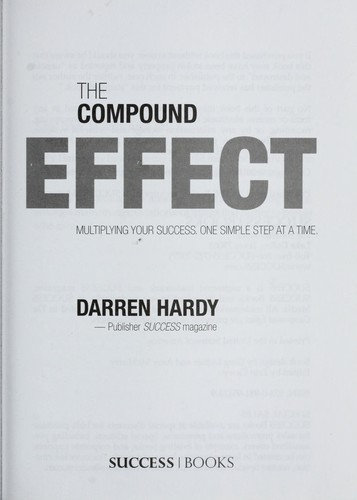
5. THE COMPOUND EFFECT BY DARREN HARDY
Darren Hardy | ⭐ 4.2/5
Who it’s for: Anyone who feels frustrated by the slow pace of habit results. If you’ve been doing everything right and nothing seems to be changing, Hardy explains why and why you should keep going.
“The compound effect is the principle of reaping huge rewards from a series of small, smart choices.”
Hardy’s central argument: small, consistent actions compound over time to produce dramatic results. The problem is that the early results are invisible. Reading ten pages a day doesn’t feel transformative on day one. On day 365, you’ve read thirty books. The compound effect works in both directions — small positive habits compound into success, and small negative habits compound into failure.
This book gave me patience. I’d been writing at the kitchen table every night for three months and my blog had maybe forty readers. Hardy’s framework helped me see that I was in the “valley of disappointment” — the period where effort exceeds visible results. Six months later, I had two thousand readers. The compound effect was working. I just couldn’t see it yet.
My take: The best book for the patience problem. Read it when you’re tempted to quit because the results aren’t showing.

6. GOOD HABITS, BAD HABITS BY WENDY WOOD
Wendy Wood | ⭐ 4.4/5
Who it’s for: Anyone who wants the actual science of habit formation from the researcher who studied it for thirty years. If you’re tired of self-help authors interpreting the research and want to hear from the source, Wood is your author.
“Habits account for about 43 percent of our daily behaviors. They are not decisions. They are automatic responses.”
Wood is a psychology professor who has spent her career studying how habits actually form. Her findings challenge popular advice: willpower isn’t the key to habit change — environmental design is. People with good habits don’t resist temptation more effectively. They set up their environments so they encounter fewer temptations.
The research on “context cues” changed my practice. Wood shows that habits are triggered by environmental cues — the same time, same place, same preceding action, same emotional state. When I wanted to build a reading habit, I didn’t try to “read more.” I put a book on my pillow every morning. The cue (going to bed, seeing the book) triggered the behavior (reading) automatically. Within two weeks, I was reading every night without thinking about it.
My take: The most rigorous science book on this list. Less practical than Fogg or Clear, but more accurate about what actually works.
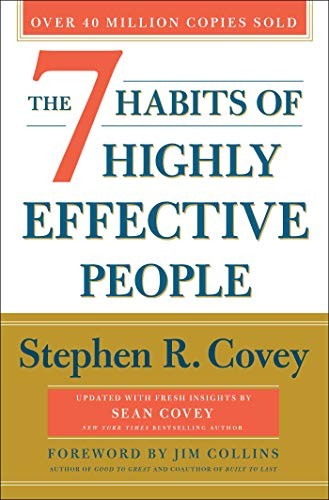
7. THE 7 HABITS OF HIGHLY EFFECTIVE PEOPLE BY STEPHEN COVEY
Stephen Covey | ⭐ 4.4/5
Who it’s for: Anyone who wants a comprehensive life framework, not just habit tricks. If you’re looking for a philosophy that organizes your entire approach to work, relationships, and personal growth, Covey provides it.
“The key is not to prioritize what’s on your schedule, but to schedule your priorities.”
Covey’s seven habits — be proactive, begin with the end in mind, put first things first, think win-win, seek first to understand, synergize, and sharpen the saw — form a complete system for personal effectiveness. The first three are private victories (habits of self-mastery). The next three are public victories (habits of interaction). The last is renewal.
The concept that most affected my daily life: the time management matrix. Covey divides tasks into four quadrants: urgent and important, important but not urgent, urgent but not important, and neither. Most people spend their time in the urgent quadrants. Sustainable success comes from investing in the “important but not urgent” quadrant — exercise, relationships, planning, learning. That’s where habits live. That’s where long-term success is built.
My take: The classic. Dense and sometimes dated, but the framework is still the most comprehensive system for personal effectiveness.
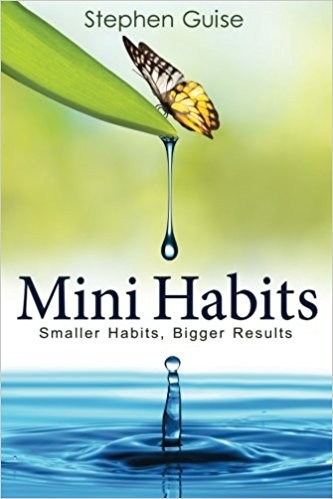
8. MINI HABITS BY STEPHEN GUISE
Stephen Guise | ⭐ 4.2/5
Who it’s for: Anyone who finds even “tiny habits” too ambitious. If starting with one pushup feels like too much, Guise will ask you to start with one.
“A mini habit is a too-small-to-fail daily behavior that you do consistently.”
Guise started his fitness journey with one pushup. One. That’s it. And from that one pushup, he eventually built a comprehensive exercise routine. His argument: the resistance to starting is the real barrier, not the behavior itself. Once you’ve started — even if the start is absurdly small — momentum carries you forward.
I used this for journaling. My “habit” was to write one sentence every night. Just one. Some nights I wrote one sentence. Some nights I wrote a page. The habit wasn’t about the output. It was about the consistency of sitting down with the intention to write. The one-sentence minimum removed every excuse.
My take: The most extreme version of “start small.” If Fogg’s tiny habits feel like too much, try Guise’s mini habits.

9. HIGH PERFORMANCE HABITS BY BRENDON BURCHARD
Brendon Burchard | ⭐ 4.1/5
Who it’s for: People who have the basics down and want to reach the next level. If you’re already functional — you show up, you get things done — but you want to be exceptional, Burchard’s research on high performers shows what separates good from great.
“High performance is not about talent. It’s about habits that produce consistent superior results.”
Burchard studied 170 high performers across multiple fields and identified six habits: seek clarity, generate energy, raise necessity, increase productivity, develop influence, and demonstrate courage. Each habit is backed by research and supported with specific practices.
The chapter on “raising necessity” — creating internal and external pressure to perform — was the most useful for me. Burchard argues that high performers don’t rely on motivation. They create urgency. They set deadlines, make public commitments, and surround themselves with people who hold them accountable. When I applied this to my writing — committing to a public posting schedule and telling my readers when the next piece would be up — my consistency improved dramatically.
My take: Not for beginners. Best for people who have basic habits in place and want to optimize.
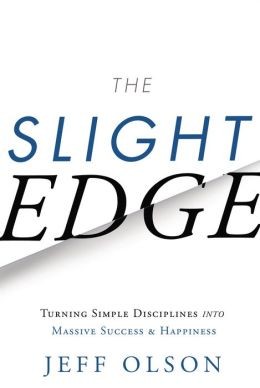
10. THE SLIGHT EDGE BY JEFF OLSON
Jeff Olson | ⭐ 4.0/5
Who it’s for: Anyone who underestimates the power of small daily actions. If you’ve ever thought “what difference does it make if I skip today?” this book will show you exactly what difference it makes.
“The simple disciplines, done consistently over time, are what create extraordinary results.”
Olson’s argument mirrors Hardy’s compound effect but with a slightly different emphasis: the slight edge is the difference between success and failure, and it’s so small that it’s invisible in the moment. Reading ten pages versus watching TV. Walking versus sitting. Saving versus spending. Each choice seems negligible. Over time, they diverge into completely different lives.
The concept that stuck with me: “easy to do, easy not to do.” Every successful habit is easy to do. It’s also easy not to do. The slight edge is the choice to do it anyway, today, when it doesn’t seem to matter. Tomorrow, it still won’t seem to matter. A year from now, it will have mattered enormously.
My take: Not the most sophisticated book. But the core message — that small daily choices compound — is the foundation of every other book on this list.
FREQUENTLY ASKED QUESTIONS
HOW LONG DOES IT TAKE TO BUILD A HABIT?
The “21 days” myth comes from a misinterpretation of plastic surgeon Maxwell Maltz’s observations in the 1960s. Research by Phillippa Lally at University College London found that habit formation takes an average of 66 days — but the range was 18 to 254 days depending on the person and the behavior. Simpler habits form faster. More complex ones take longer. The key isn’t the number of days. It’s consistency.
WHAT IF I KEEP BREAKING MY STREAK?
Streaks are motivating but dangerous. When a streak breaks, many people abandon the habit entirely because the “perfect record” is gone. Clear and Fogg both recommend the “never miss twice” rule: if you miss one day, make sure you don’t miss the next. One miss is an accident. Two misses is the beginning of a new pattern.
SHOULD I BUILD MULTIPLE HABITS AT ONCE?
Research suggests no. Fogg’s recommendation: one tiny habit at a time. Once it’s automatic — usually after two to four weeks — add another. Trying to build multiple habits simultaneously divides your attention and increases the chance that all of them fail. I tried to start meditating, exercising, journaling, and reading in the same month. None of them lasted. When I started with just the walk to school, it stuck. Then I added reading. Then journaling. One at a time.
HOW DO I BUILD HABITS WHEN MY SCHEDULE IS CHAOTIC?
This is the real question, and most habit books don’t address it well. Rubin’s tendencies framework helps: if you’re an Obliger, build in external accountability. Fogg’s approach is schedule-proof because the habits are so small they fit anywhere. Clear’s habit stacking works regardless of schedule because it attaches new behaviors to existing routines. The key is designing habits for your actual life, not your ideal life.
WHAT IF I DON’T HAVE WILLPOWER?
Good. Willpower is unreliable and limited. The most effective habit strategies don’t rely on willpower at all. Wood’s research shows that environmental design — changing your context rather than your willpower — is more effective. Clear’s “make it easy” principle reduces the willpower required. Fogg’s tiny habits require almost no willpower because the behaviors are too small to resist. Stop trying to be stronger. Start trying to be smarter.
CAN HABITS CHANGE YOUR LIFE?
Yes, but not in the way the books sometimes promise. No single habit will transform your life. But the compound effect of multiple small habits, sustained over years, produces results that look miraculous from the outside. Hardy’s compound effect, Olson’s slight edge, and Clear’s 1% improvement all describe the same phenomenon: tiny changes, consistently applied, produce dramatic long-term results. The transformation isn’t dramatic. It’s gradual. And then one day it looks dramatic.
THE BOTTOM LINE
Habits are not about discipline. They’re about design. The right habit, in the right place, at the right size, with the right support, doesn’t require willpower. It requires the willingness to start impossibly small and the patience to let the compound effect do its work.
If I had to hand you three books, I’d start with “Tiny Habits” by BJ Fogg for the method, move to “Atomic Habits” by James Clear for the comprehensive framework, and finish with “Better Than Before” by Gretchen Rubin for the self-knowledge that makes everything else work.
I spent years trying to be the person who wakes up at 5am and meditates. I’m not that person. I’m the person who takes her kids to school on foot and writes one sentence in her journal before bed. And that’s enough. The system compounds.
Which book are you grabbing first?
Disclosure: This post contains affiliate links. If you purchase through these links, ReadPlug may earn a small commission at no extra cost to you. We only recommend books we’ve personally found valuable.