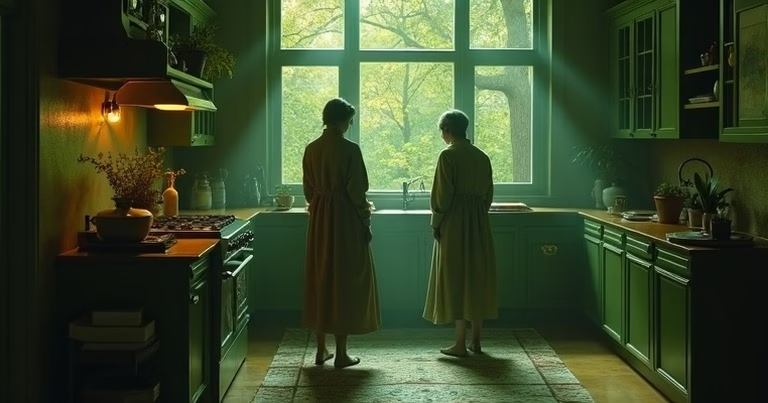
I have this ritual I’ve never told anyone about. On the mornings when the anxiety is already there before I’m fully awake — that particular kind where you surface into consciousness and the dread is already waiting, already patient — I go to my window and I look at the fire escape across the street. There’s a pot on the third landing that someone put a plant in. I can’t tell what plant. It’s just green and persistent and somehow still alive despite being on a rusty grating three floors up in a neighborhood where the wind comes through specific ways. I watch it for a minute or two. Then I make coffee.
This is not, I know, what people mean when they talk about creativity. There’s no canvas, no instrument, no output anyone would recognize as creative. But I’ve come to think of it differently in the last few years — not as a thing you do with special materials in special conditions, but as a relationship you maintain with your own attention. The way you pay attention to the world. The quality of that attention. Whether you’re actually seeing what’s in front of you or just looking until you can get to the next screen.
I came to this understanding slowly, through a lot of books and a lot of failed attempts at routines that looked better on Instagram than they felt in my actual life. I tried the morning pages. I tried the artist’s dates. I tried the unearthing of childhood passions. Some of it helped, some of it felt like another thing I was performing, and some of it just sat on my nightstand getting heavier with the particular guilt of things you bought with such high hopes. What I eventually learned — and what these books taught me better than anything — is that creativity isn’t a destination you arrive at. It’s a practice you return to, daily, with varying degrees of willingness. Most days it’s small. Some days it’s not. Both are okay.
Quick Pick: The Best Book for Cultivating Everyday Creativity
Also see our guide to 10 BEST BOOKS FOR CULTIVATING A DAILY MINDFULNESS PRACTICE AND FINDING CALM IN MODERN LIFE. Also see our guide to 10 BEST BOOKS FOR CULTIVATING GRATITUDE IN DIFFICULT TIMES AND FINDING LIGHT IN THE DARK. Also see our guide to 10 BEST BOOKS FOR BREAKING THROUGH A CREATIVE SLUMP AND FINDING INSPIRATION AGAIN. Also see our guide to 10 BEST BOOKS FOR BREAKING THROUGH A CREATIVE SLUMP AND FINDING INSPIRATION AGAIN. Also see our guide to 10 BEST BOOKS FOR CULTIVATING A DEEPER MEDITATION PRACTICE AND FINDING PEACE IN EVERYDAY LIFE.If you only have time for one book, go with “The War of Art” by Steven Pressfield. I know — it’s been everywhere for years. But there’s a reason for that. Pressfield understands something most creativity books don’t: the enemy isn’t lack of talent or lack of time. The enemy is resistance, and resistance is internal. It’s the voice in you that says you don’t have the right to be doing this, that you’re wasting your time, that someone else does it better. He named it, which means you can finally fight something you can name.
Get it here: https://www.amazon.com/War-Art-Creative-Battle-Inner/dp/1936891026?tag=readplug09-20
The 10 BEST BOOKS FOR CULTIVATING CREATIVITY IN YOUR EVERYDAY LIFE AND FINDING YOUR CREATIVE VOICE
1. THE WAR OF ART BY STEVEN PRESSFIELD
Steven Pressfield | ⭐ 4.5/5
Who it’s for: Anyone who has a creative impulse they’ve been putting off for reasons they can’t quite name. If you’ve been saying “I want to make something” and then finding yourself, at the end of the day, with nothing made and no good explanation. This is the book that will finally name the thing that’s been stopping you.
Get it here: https://www.amazon.com/War-Art-Creative-Battle-Inner/dp/1936891026?tag=readplug09-20
“Resistance is not a peripheral opponent. It is the enemy within.”
I want to start by acknowledging something: this book has been canonized in certain creative circles, which usually makes me suspicious. When something becomes that much of a reference point, it’s often because it said something simple in a way that landed at the right moment, not necessarily because it’s the most nuanced or complete understanding of the subject. But Pressfield gets something right that more sophisticated books miss, and that’s the centrality of resistance to the creative life.
What he calls “resistance” is the combination of forces that keeps you from doing the work you were put here to do. Fear of failure, fear of success, fear of what people will think, fear of discovering you’re not as good as you hoped, fear of discovering you are. The book is short because it doesn’t need to be long — the argument is simple, and the power is in the naming. Once you know that what you’re experiencing is resistance, and resistance is a sign that you’re on the right path (because resistance only attacks things that matter to you), you can start to work with it instead of against it.
I read this book on a Tuesday morning in my apartment with the gas stove, when I was supposed to be writing something else. I had been not-writing it for three weeks, which is its own particular form of suffering. Pressfield’s question — “Are you a professional?” — hit me in the chest in a way I didn’t expect. Not as judgment. As invitation. The question of whether I was willing to treat my creative life as something serious, something that required showing up even when the muse wasn’t there.
My take: This is the book for the resistance you’ve been having with yourself. Read it when you’re stuck, when you’re avoiding, when you can’t explain why you’re not doing the thing you keep saying you want to do.

2. THE ARTIST’S WAY BY JULIA CAMERON
Julia Cameron | ⭐ 4.4/5
Who it’s for: Anyone who feels like they used to be creative and somewhere along the way lost access to it. If you were a kid who made things and somewhere became an adult who doesn’t, this is the book that might help you find your way back. Also for anyone who’s tried to be creative and found themselves blocked in ways they can’t explain.
Get it here: https://www.amazon.com/Artists-Way-Julia-Cameron/dp/0143129252?tag=readplug09-20
“Creativity is not a talent. It is a way of operating.”
I have a complicated relationship with this book, and I want to be honest about that upfront. Cameron’s approach — morning pages, artist dates, the emphasis on recovering creativity as a spiritual practice — works for many people. It has helped millions of people. I know this because I’ve been in the rooms where people talk about it with the particular reverence of something that changed their lives. And I also know that for some people, including me at certain points, the language of “recovery” and “spiritual” can feel like a lot, especially if you’re the kind of person who approaches things intellectually and gets suspicious when things start sounding too much like self-help.
What I came to appreciate, eventually, is that Cameron is after something real. The morning pages — three pages of longhand, first thing in the morning, before you’re fully awake and before your internal critic has clocked in — are not about producing good writing. They’re about producing any writing, about establishing a practice of showing up before you’ve had a chance to talk yourself out of it. The artist dates are about giving yourself permission to play, to explore, to remember what you wanted before someone told you it wasn’t practical.
I did the twelve-week program twice, two years apart. The first time I was too hard on myself about doing it “right” and ended up with a pile of morning pages I never looked at and a sense of failure that wasn’t justified. The second time I approached it as an experiment rather than a prescription, and something shifted. I remembered, in the fourth week, that I used to draw. I don’t know why I stopped. I’d forgotten I ever did. I bought a set of colored pencils and put them on my kitchen table and I drew the plant on my fire escape. It wasn’t good. It was the first thing I’d made in years that wasn’t words.
My take: This is the foundational book. Not everyone’s favorite, but almost everyone’s been affected by it. Try the morning pages for four weeks before you decide whether it works for you.

3. STEAL LIKE AN ARTIST BY AUSTIN KLEON
Austin Kleon | ⭐ 4.3/5
Who it’s for: If you’ve been paralyzed by the idea that you need to be completely original to create anything. If you look at other people’s work and feel like anything you make will just be a cheap imitation. This is the book that will help you understand that all creative work is built on influence and that the job is to absorb widely and synthesize honestly.
Get it here: https://www.amazon.com/Steal-Like-Artist-Austin-Kleon/dp/1613762448?tag=readplug09-20
“You don’t need a certain kind of person to be creative. You need a certain kind of practice.”
Kleon is a poet who writes about creativity in a way that feels accessible without being simplistic. The core insight of this book — that nothing is original and everything is borrowed, that influence is not the same as theft, that the job is to take what’s around you and make something true about your own experience — is not new. What’s new is the clarity with which he says it, and the way he makes the permission-giving feel possible rather than abstract.
I keep coming back to the idea that “creativity is subtraction, not addition.” Most of us were taught to think of creativity as adding something new to the world — making something that didn’t exist before. Kleon helps you see that it’s equally about removing what doesn’t belong, about getting out of the way of what’s already there. The book is short and visually rich, full of little drawings and diagrams that make the ideas stick in a way prose alone might not.
What I appreciate most is the chapter on “stealing from websites you love.” This sounds provocative, but it’s actually about the practice of collecting influences consciously — understanding what draws you to certain things, what you’re unconsciously absorbing, and bringing that into the light where you can work with it intentionally. I started keeping a folder of things that hit me in specific ways and looking at them together, looking for the patterns. There always are.
My take: This is the book I’d give to someone in their early twenties who’s feeling blocked by the pressure to be original. Short, visually delightful, full of permission.

4. THE CREATIVE HABIT BY TWYLA THARP
Twyla Tharp | ⭐ 4.5/5
Who it’s for: If you’re serious about creative work and want a framework for building a practice that sustains you across different projects and different phases of your life. This is not a book for people who want to dabble — it’s for people who’ve decided this is how they want to live.
Get it here: https://www.amazon.com/Creative-Habit-Twyla-Tharp/dp/0743235254?tag=readplug09-20
“Creativity is a habit, and the best way to be creative is to be regular.”
Tharp is a dancer and choreographer who has been making work for decades, and the book reflects that kind of accumulated understanding. It’s not a pep talk. It’s not aspirational fluff. It’s a manual from someone who has actually done this, day in and day out, across a long career, and who has thought seriously about what it requires.
The core practice she describes — what she calls the “creativity routine” — is not glamorous. It’s a box. Every morning, before you have a chance to let the day’s demands accumulate, you make something small. Not good. Not meaningful. Just something. The box is where you practice the habit of showing up, and the habit of showing up is what makes the rest of it possible. She talks about this in the context of dancers and choreographers, but the principle applies across any creative discipline.
What struck me most was her insistence that “everyday” actually means every day, including weekends, including when you’re traveling, including when you don’t feel like it. I had been treating creativity as something that happened when the conditions were right, when I was rested and inspired and had a block of uninterrupted time. Tharp helped me see that this was just another way of waiting for permission. The conditions are never perfect. You make the work anyway, and the work makes the conditions less important.
My take: This is the book for people who want a serious framework for creative practice. Dense but worth sitting with. Take notes.

5. FINDING FLOW BY MIHA CSIKSZENTMIHALYI
Mihaly Csikszentmihalyi | ⭐ 4.4/5
Who it’s for: If you’ve experienced the state of being completely absorbed in something — where time disappears and you’re just fully present in the doing — and want to understand how to find that state more often. Also for anyone who suspects that creativity isn’t just for artists and wants the science behind why making things feels so good.
Get it here: https://www.amazon.com/Finding-Flow-Psychology-Experience/dp/0465028344?tag=readplug09-20
“The best moments in our lives are not the passive, receptive, relaxing times. The best moments usually occur if a person’s body or mind is stretched to its limits in a voluntary effort to accomplish something difficult and worthwhile.”
Csikszentmihalyi is the psychologist who coined the term “flow” — that state of complete absorption in an activity where you lose track of time and self-consciousness and are just present in the doing. This book is his attempt to understand flow in the context of creative work and daily life, to map out the conditions that make flow more likely and to explore what people who experience flow regularly have in common.
What I found most useful was his argument that flow isn’t just for people doing obviously creative work. He studied everyone from surgeons to mountain climbers, and what he found was that the conditions for flow — clear goals, immediate feedback, the balance between challenge and skill — show up across a wide range of activities. This helped me see that my creative practice wasn’t just the time I spent writing or drawing. It was also the time I spent cooking, or having a hard conversation, or working through a problem. Flow is a way of being in the world, not just a way of making art.
The research he cites on the relationship between challenge level and skill level is useful: when the challenge is too high relative to your skill, you get anxiety. When the skill is too high relative to the challenge, you get boredom. The zone of flow is where they’re matched, where you’re being stretched but not broken. This is useful information for anyone trying to build a sustainable creative practice.
My take: This is the book for understanding what you’re actually after when you make things. The science grounds what can sometimes feel like a mystical pursuit.

6. KEEP GOING BY AUSTIN KLEON
Austin Kleon | ⭐ 4.4/5
Who it’s for: If you’ve started a creative practice and then lost it, or if you’re in the middle of a creative project that’s not going well and you’re wondering why you thought this was a good idea in the first place. This is the book for the middle parts of creative work, which are usually the hardest.
Get it here: https://www.amazon.com/Keep-Going-Austin-Kleon/dp/1526727967?tag=readplug09-20
“The enemy of creativity isn’tage; it’s self-doubt.”
I was at a difficult point in my creative life when I read this book — I had just abandoned a project I’d been working on for eight months and I was in the particular dark place that comes after something you’ve put a lot of time into doesn’t work. Not failed exactly. Just didn’t become what you hoped it would become. I picked this up because Kleon’s first book had helped me earlier, and I was looking for something to help me see that the abandoning wasn’t the same as the ending.
What I found was a book that told me the truth: that the middle of creative work is mostly just showing up and doing the work even when it doesn’t feel like it’s going anywhere. That the arc of any creative life includes long stretches where nothing visible is happening, where you’re building something underground before it comes up. That this is supposed to be this way and it doesn’t mean you’re failing.
The chapter on “the five Mercurial Forces” — the things that will try to derail your creative practice — was especially clarifying. He names them clearly: Rationalizer, Critic, Yapper, Victim, Underminer. I’ve been sideswiped by all of them at various points. Having names helps. It means I can see them coming instead of just feeling them without context.
My take: This is the book for when you’re in the middle of something hard and need to be reminded why you started. Keep it on your shelf for those moments.

7. BIRD BY BIRD BY ANNE LAMOTT
Anne Lamott | ⭐ 4.5/5
Who it’s for: If you’ve ever wanted to write and then stopped yourself before you started because the voice in your head was too loud with criticism. If you’ve tried to write and found that what came out was so far from what you heard in your head that you gave up. This is the book that tells you the truth about writing and somehow makes it feel possible anyway.
Get it here: https://www.amazon.com/Bird-Language-Writing/dp/0385480016?tag=readplug09-20
“Almost all good writing begins with terrible first efforts. You need to start somewhere.”
Lamott is a novelist and essayist who wrote this book for a class she taught, and it has the quality of someone teaching in the room rather than performing at you. The core message — “short assignments,” the practice of writing badly as a way to get to writing that isn’t, the importance of isolation and time and protected space — is not new. What is new is the honesty with which she describes the terror of putting real words on a page, the meanness of the internal critic, the way that most writing is revision and most revision is surviving your own first drafts.
I read this book at a point when I was convinced I couldn’t write anymore — not that I couldn’t write well, but that I couldn’t write at all, that whatever had been in me had dried up and I was just going through the motions of a person who used to make things. Lamott’s line, “shitty first drafts,” was the thing that broke that open. The permission to write badly, to produce garbage on the way to something else, to not have every sentence be perfect or even good — this is what I needed. I wrote garbage for three months. Then I wrote something I didn’t hate.
What I also appreciate is her honesty about what writing doesn’t do — it won’t heal your childhood wounds, it won’t make you a better person, it won’t save you from death. It will just help you see your life more clearly, which is not nothing, but it’s also not everything. She doesn’t oversell it.
My take: This is the book for writers who have stopped or never started because they couldn’t meet their own standards. Read it when you need permission to be bad on the way to being good.

8. THE ELEMENTS OF STYLE BY WILLIAM STRUNK JR. AND E.B. WHITE
William Strunk Jr. and E.B. White | ⭐ 4.6/5
Who it’s for: Any writer who wants to strengthen their craft at the sentence level. If you’ve been writing for a while and you’ve noticed that your sentences are doing too much when they should be doing less. This is the book that will teach you to edit yourself — and it’s short enough that you can actually absorb it.
Get it here: https://www.amazon.com/Elements-Style-Fourth/dp/020530902X?tag=readplug09-20
“Vigorous writing is concise. A sentence should contain no unnecessary words, a paragraph no unnecessary sentences, for the same reason that a drawing should have no unnecessary lines and a machine no unnecessary parts.”
I almost didn’t include this because it seems so basic, so much like the book you were supposed to read in high school and didn’t or did and forgot. But I’ve come back to this book more than any other writing book I own, and I notice that every time I read it, I find something new — not because the book has changed, but because I have.
The first principle — “Use concrete and specific language” — is the one I think about most. So much creative writing (and other kinds too) goes wrong at the level of abstraction, where you’re describing feelings and concepts instead of the specific things that produce them. Strunk and White help you see that the concrete is almost always more powerful than the abstract, that the reader experiences the specific rather than the general.
The second principle — “Use the active voice” — has improved my writing more than any other single piece of advice. I had a habit, before I read this book, of burying the action in passive constructions, of making things happen to subjects instead of having subjects do things. Once you start seeing this, you can’t stop. Your own sentences start sounding bloated and indirect. The active voice is not just correct — it’s alive.
My take: Keep this on your desk. Reread it every few months. It will teach you something different each time.
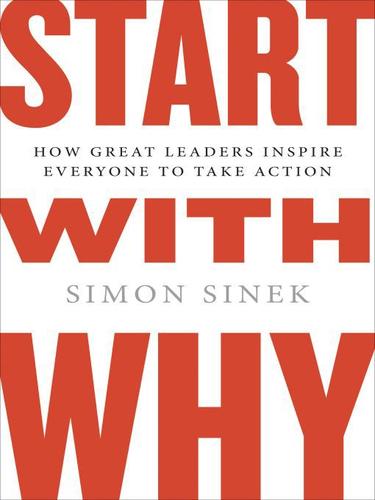
9. START WITH WHY BY SIMON SINEK
Simon Sinek | ⭐ 4.4/5
Who it’s for: If you’ve been trying to build a creative practice or creative project and you keep losing steam because you don’t know why you’re doing it. If you’ve been so focused on the what and the how that you’ve lost sight of the why. This is the book that will help you rediscover your purpose.
Get it here: https://www.amazon.com/Start-Why-Sinek/dp/1591846448?tag=readplug09-20
“People don’t buy what you do; they buy why you do it.”
I know this book is primarily about business and leadership and has been used to sell a lot of things, including by Sinek himself, that I wouldn’t necessarily endorse. But the core insight — that the most enduring creative work comes from a clear sense of why you’re doing it, not just what you’re making or how you’re making it — is genuine and useful.
What I took from this book, and what I keep coming back to, is the idea that your why doesn’t have to be grand or world-changing. It just has to be true for you. My why, I’ve come to understand over time, is something like: because there’s something I want to understand about what it means to be a person living a life, and the only way I know to get at that is by making things and then looking at them. That’s not a revolutionary why. It’s mine.
When you know your why, the how becomes negotiable. You can try different approaches, experiment with different forms, fail at things and start again, because the point isn’t the specific project — the point is whatever your why is pointing toward. This has been freeing for me. I’ve abandoned projects I would have clung to before, because I understood that the project wasn’t the work. The work was the why behind the project.
My take: Read this with some skepticism about the business framing, and take what’s useful for understanding your own creative purpose.
10. THE ANXIETY ANTIDOTE BY KAMRAN HUSSAIN AND MANESH MADHAVI
Kamran Hussain and Manesh Madhavi | ⭐ 4.4/5
Who it’s for: If your creative process is blocked more by anxiety than by lack of ideas or skill. If you sit down to make something and instead feel your chest tighten and your thoughts start racing in ways that make the work feel impossible. This is the book that will help you understand the body component of creative anxiety.
Get it here: https://www.amazon.com/Anxiety-Antidote-Confront-Fear-Absence/dp/1641526524?tag=readplug09-20
“Anxiety is not the enemy. It is the signal that something needs your attention.”
I debated including this book because it’s less well-known than some of the others on this list. But for many creative people I know — and for me, at certain points — the biggest obstacle to creative work is not the blank page or the lack of ideas. It’s the physical experience of anxiety that shows up when you try to sit down and make something, the way your body interprets creative work as dangerous in ways your mind knows aren’t true.
What Hussain and Madhavi offer is a framework for understanding anxiety as an integrated mind-body experience. They walk through the Polyvagal Theory in ways that are accessible without being reductive, and they offer practical tools for working with anxiety in the body rather than just the thinking. For creative people whose anxiety manifests physically — tight chest, racing heart, the sense that you need to get up and away from what you’re doing — this is useful information.
The insight that has stayed with me most: anxiety often lives in the body even when the mind has already decided something is safe. You can intellectually understand that no one will judge you for making something imperfect, and still feel your throat close up when you try. That’s because the anxiety is stored in the body, not in the thought. Working with it requires approaches that engage the body, not just the thinking.
My take: This is the book for creative people whose body gets in the way of their mind. It won’t solve everything, but it will help you understand what’s happening.
FREQUENTLY ASKED QUESTIONS
I’VE NEVER CONSIDERED MYSELF CREATIVE. CAN THESE BOOKS STILL HELP?
This is the question I get most often from people who feel like creativity is for other people — people with special talents, people who were born with something they don’t have. The answer is yes, and here’s why: creativity isn’t a talent. It’s a way of operating. The books on this list will help you see that everyone has the capacity for creative work, and that the difference between people who make things and people who don’t isn’t talent — it’s practice, habit, and permission.
I USED TO BE CREATIVE BUT SOMEWHERE ALONG THE WAY I LOST IT. CAN I GET IT BACK?
Yes. This is one of the most common questions I hear, and it’s usually accompanied by some version of “I used to draw/write/make things when I was a kid and then I stopped.” What I’ve found in my own life and in the stories of people around me is that the creativity doesn’t actually go away. It just goes underground, because the conditions for practicing it weren’t there, or because at some point the voice of criticism got louder than the voice of play. The books on this list, especially “The Artist’s Way” and “Keep Going,” are specifically designed for people in this situation.
CAN I BUILD A CREATIVE PRACTICE IF I ONLY HAVE TWENTY MINUTES A DAY?
Yes, and twenty minutes is actually better than two hours for building a sustainable practice, especially at the beginning. What matters is consistency — showing up every day, even if just for a short time, and building the habit of creative work before you build the ambition. Twyla Tharp’s “box” practice takes five minutes. The morning pages take fifteen. You can do this.
WHAT IF I TRY ALL THESE BOOKS AND STILL FEEL BLOCKED?
Being blocked can mean many things. It can mean you’re pushing too hard at something that isn’t ready to come. It can mean there’s something in your life — a relationship, a job, a situation — that’s taking up so much psychic space that there’s nothing left for creative work. It can mean you’re trying to do the wrong kind of creative work for where you are right now. Sometimes the book you need most isn’t on this list. Sometimes it’s the book you pick up next without knowing why.
AREN’T THESE BOOKS JUST FOR ARTISTS? I JUST WANT TO BE MORE CREATIVE IN MY REGULAR LIFE.
The word “creative” has been narrowed so much in common usage that it often refers only to things like painting and writing. But creativity shows up in how you solve problems at work, how you decorate your home, how you organize your time, how you think about a challenge. Almost everything original in human experience began with someone asking “what if?” The books on this list are about the creative life broadly, not just the artistic life. That’s intentional.
I READ MOST OF THESE BOOKS AND NOW I FEEL OVERWHELMED. WHERE DO I START?
Start with “Steal Like an Artist,” because it’s short and will give you permission to stop waiting to be original. Then start with “The War of Art,” because it will name the thing that’s probably been stopping you. Then start with morning pages, if you’re interested in that practice — three pages, first thing in the morning, before you’ve had a chance to think too much. You don’t have to do everything at once. You just have to start somewhere.
WHAT IF I DON’T KNOW WHAT KIND OF CREATIVE WORK I WANT TO DO?
You don’t have to know. This is important to understand: you don’t have to arrive at the specific thing you want to make with a clear vision of the finished product. You just have to start moving in the direction that interests you, and the work will teach you what it wants to be. Most creative people I know didn’t start out knowing exactly what they were making. They started out being curious about something, and then they followed the curiosity.
THESE BOOKS ALL ASSUME A LOT OF PRIVILEGE — TIME, MONEY, SAFETY. WHAT IF I DON’T HAVE THAT?
You’re right to notice this, and I notice it too. Most creativity books are written by people who have the luxury of time and resources, and they don’t always account for the fact that not everyone has a quiet apartment or forty-five uninterrupted minutes or a nervous system that isn’t already working overtime just from the basic conditions of their life. What I’d say is: the practice you build has to fit the life you have. If you have twenty minutes and a noisy apartment and a body that’s already tired, that’s enough to start with. Start with what you have.
THE BOTTOM LINE
Creativity isn’t a talent some people have and others don’t. It’s a practice you build — a relationship with your own attention, your own willingness to show up, your own permission to be imperfect on the way to being something. The books on this list won’t give you talent. They won’t give you the creative life you see on Instagram or in the biographies of famous artists. What they might give you is a different relationship with the creative impulse you’ve been having with yourself, and that might be enough to start.
If you’re not sure where to start, I’d suggest beginning with “Steal Like an Artist” by Austin Kleon — it will help you stop waiting to be original. From there, “The War of Art” by Steven Pressfield if you need to name what’s been stopping you, or “Bird by Bird” by Anne Lamott if you’re a writer who’s been too scared to start.
The books on this list are companions, not prescriptions. They meet you where you are and invite you to stay a little longer with the work.
Which book are you starting with?
Disclosure: This post contains affiliate links. If you purchase through these links, ReadPlug may earn a small commission at no extra cost to you. We only recommend books we’ve personally found valuable.