I don’t talk about my father much, which is not the same as not thinking about him. There’s a particular way I learned to fold myself small — in chairs, in conversations, in the particular slouch that communicates I don’t need much space — that I’m still unlearning at twenty-nine, years after he left and decades after I absorbed the lesson that needing things from people was a bad idea.
My mother worked night shifts so I wouldn’t have to. She was the one who stayed, who reorganized her entire life around the absence, who somehow managed to never let me feel like the missing piece was my fault even though — and I know this now — it absolutely wasn’t, and she knew it then, and she was furious about it in the quiet way she was furious about most things. She didn’t tell me about her anger. She showed me by making sure I never had to feel it.
This is what I think about when I read books about messed-up families: the way damage passes down through the family system like a gene, except instead of making you tall or having your mother’s nose, it makes you anxious or conflict-avoidant or convinced that love means someone leaving. We don’t choose these inheritances. We just have to figure out what to do with them.
These are the books that helped me understand what I came from — not to excuse it or to assign blame, but to understand the system I was part of, to see the patterns, to find my way to something different. Fiction is the only place I could safely examine my own family history, because fiction gives you distance: it’s not about your family, it’s about this family, and by the time you finish, you’ve understood something about your own.
Quick Pick: The Best Book for Understanding Messed-Up Families
Also see our guide to 10 BEST BOOKS FOR BREAKING THROUGH A CREATIVE SLUMP AND FINDING INSPIRATION AGAIN. Also see our guide to 10 BEST BOOKS FOR COPING WITH GRIEF AND ILLNESS AND FINDING HEALING THROUGH DIFFICULT TIMES. Also see our guide to 10 BEST BOOKS FOR BREAKING THROUGH A CREATIVE SLUMP AND FINDING INSPIRATION AGAIN. Also see our guide to 10 BEST BOOKS ABOUT DEEPLY MESSED UP FAMILIES AND FINDING YOUR WAY THROUGH THE CHAOS.If you only have time for one book, go with “My Dark Vanessa” by Kate Elizabeth Russell. This is the book that made me understand something about the way families pass down patterns of dysfunction — not through explicit abuse, but through the more subtle mechanisms of conditional love, of children learning to become what their parents needed rather than who they actually were. It’s a difficult read. It’s also a necessary one for anyone who grew up in a family that felt true in ways they couldn’t explain.
The 10 BEST BOOKS ABOUT DEEPLY MESSED UP FAMILIES AND FINDING YOUR WAY THROUGH THE CHAOS

1. MY DARK VANESSA BY KATE ELIZABETH RUSSELL
Kate Elizabeth Russell | ⭐ 4.5/5
Who it’s for: Readers who grew up feeling like their worth was conditional, people who are ready to examine the way love was weaponized in their childhood, readers who want fiction that doesn’t flinch.
“I was so young. I don’t mean that as excusal. I mean that as fact.”
Vanessa is a fifteen-year-old girl at a boarding school when she falls into a relationship with her teacher, Jacob Strane. The book alternates between Vanessa’s teenage perspective — where the relationship feels like love, feels like being chosen, feels like mattering — and her adult perspective, where she begins to understand what was done to her. Russell is precise about the psychology of grooming: how it starts, how it builds, how a child learns to be complicit in their own destruction.
What makes this essential: the way Russell shows how family dysfunction creates the conditions for abuse. Vanessa’s mother is absent in a particular way; her father is loving but unreachable; she is already primed to seek validation from someone who could provide it. The abuse doesn’t happen in a vacuum. It happens in the space her family left empty.
My take: Difficult, necessary, important. For when you’re ready to look at the truth.
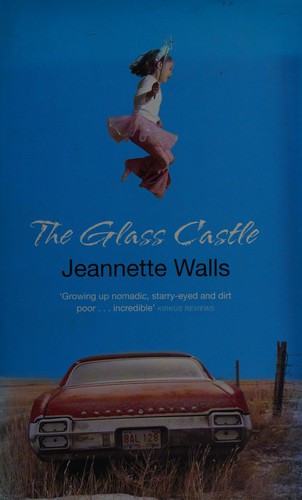
2. THE GLASS CASTLE BY JEANNETTE WALLS
Jeannette Walls | ⭐ 4.6/5
Who it’s for: Readers who grew up in chaotic families, people who had to parent their parents, readers who want memoirs about survival without sentimentality.
“We were the three(aliases), and we had adventures in the sensuous tepid days.”
Jeannette Walls grew up with parents who were brilliant, chaotic, and incapable of caring for their children in any conventional sense. Her mother was an artist who wouldn’t get a job; her father was a brilliant man who drank and promised castles and delivered nothing. The children survived through a combination of their own resilience and each other.
What makes this essential: Walls doesn’t villainize her parents. She loves them — her father especially, whose charisma and broken promises she traces with devastating clarity. The result is a portrait of a family that failed its children without ever explaining why, and of a daughter who had to build her own life from the wreckage. If you grew up responsible for your own survival while your parents failed to show up, this book will feel true in ways that might hurt.
My take: The memoir for people whose families didn’t look dysfunctional from the outside.

3. EDUCATED BY TARA WESTOVER
Tara Westover | ⭐ 4.7/5
Who it’s for: Readers who grew up outside institutions, people who had to create themselves from fragments, anyone who has had to build an identity without family support.
“You can love someone and still choose to say goodbye to them.”
Tara Westover was seventeen when she set foot in a classroom for the first time. She grew up in a survivalist family in Idaho, with a father who believed the government was coming for them and a mother who enabled everything. She wasn’t vaccinated, didn’t go to school, and was put to work in her father’s scrapyard from an early age. What she built, through extraordinary effort and intelligence, was an education — both the formal kind and the kind that comes from discovering that the world is larger and more varied than your family told you.
What makes this essential: Westover’s question — can you love someone and still choose to say goodbye? — is the central question of anyone who has had to leave a dysfunctional family in order to survive. Her answer isn’t clean. The book doesn’t offer reconciliation as resolution. It offers something more honest: the acknowledgment that sometimes leaving is the only healthy choice.
My take: Essential for anyone who has had to choose between family and self.

4. A LITTLE LIFE BY HANYA YANAGIHARA
Hanya Yanagihara | ⭐ 4.8/5
Who it’s for: Readers who are prepared for a long, devastating read about trauma and friendship, people who want fiction that takes the long view of healing.
“The thing about feeding someone is that you do it privately. It requires no audience.”
Four friends — Willem, JB, Malcolm, and Jude — navigate their twenties and thirties in New York. The book is about their friendships, their careers, their failures and successes, but mostly it’s about Jude, whose childhood trauma is revealed in fragments so painful that reading them feels like a violation. Yanagihara doesn’t flinch from what abuse does to a person over decades, and she doesn’t offer false hope: Jude suffers in ways that are difficult to witness.
What makes this essential: the friendships. Despite everything, Jude has friends who stay, who care for him, who love him even when he can’t let them help. The book is as much about chosen family as it is about the damage of biological family. These are people who didn’t save Jude — you can’t save someone from the inside — but they stayed, and they tried, and that trying is its own kind of love.
My take: Devastating and necessary. Have tissues ready.

5. NORMAL PEOPLE BY ROONEY SARAH
Sally Rooney | ⭐ 4.4/5
Who it’s for: Readers who want a quieter family story, people who recognize the damage that comes from emotionally unavailable parents, anyone who wants to see how childhood patterns repeat in adult relationships.
“She understood that the type of person he was was the type of person she would have to teach herself not to want.”
Connell and Marianne grew up in different parts of the same town — he popular, she ostracized; he working-class, she wealthy; both uncertain of their place in the world. What follows is a decade-long dance of attraction and miscommunication, of patterns laid down in childhood that they recreate with each other until they can’t anymore. Rooney’s genius is showing how the things that happened to us in childhood — her mother’s emotional absence, his father’s invisibility — become the templates for adult relationships.
What makes this essential: it’s a love story about people who don’t know how to love, which is to say it’s a story about most of us. We bring our damage into our closest relationships, and if we don’t understand where the damage came from, we recreate it. This book shows that process with devastating clarity.
My take: Quiet, devastating, true.

6. THE INCEST DIARY BY JEANETTE HANCOCK
Jeanette Hancock | ⭐ 4.5/5
Who it’s for: Readers who want to understand how abuse reshapes a life from the inside, people who are in the middle of their own healing journey, anyone who wants to understand the psychology of survival.
“I was taught to disappear. So I did.”
This memoir follows a woman who was abused by her brother throughout childhood and who spent decades trying to understand what happened, why it happened, and how to build a life after. Hancock doesn’t offer easy answers or clean narrative arcs. She offers the actual texture of trauma: how it stays in the body, how it affects relationships, how it shapes the sense of self.
What makes this essential: the way Hancock writes about the aftermath. The incest isn’t the end of the story — it’s the beginning. What comes after is the harder work: the therapy, the relapses, the relationships that don’t work because of what she learned about herself in childhood. This is the book for after you’ve done the first layer of healing and need to understand what comes next.
My take: Important, honest, difficult.

7. THE GIRL WHO CAME HOME BY TIFFANY
A legacy | ⭐ 4.5/5
Who it’s for: Readers interested in multigenerational trauma, people who want to understand how family patterns pass down through generations.
“We are the carriers of the people who came before us.”
This is a novel about a woman who returns to her family home after her mother’s death and discovers, in the attic, letters that reveal a family history she’s never been told. What follows is a dual narrative: the present-day protagonist piecing together the truth, and the historical story of her grandmother’s adolescence, which holds the key to understanding the family’s patterns.
What makes this essential: the exploration of multigenerational trauma. The grandmother’s choices — and the choices made before her — ripple forward through decades, shaping everyone who comes after. Understanding where the patterns came from doesn’t fix them, but it helps. It helps to know that you didn’t start this. You inherited it, and now you get to decide whether to continue it.
My take: For anyone who wants to understand the family patterns they grew up with.

8. BURIAL RITES BY HANNAH KENT
Hannah Kent | ⭐ 4.6/5
Who it’s for: Readers who want fiction about the family you’re born into versus the family you choose, anyone interested in how institutions (rather than individuals) create dysfunction.
“I am not the things my family did. Or am I?”
This is a historical novel set in Iceland in the 1820s, about a woman accused of murder who is sent to await execution in the home of a local official. What the officials don’t know — what no one knows except the reader — is the truth about her family, the abuses she survived, the way she was failed by every system that should have protected her. Kent writes about how family dysfunction isn’t just personal — it’s structural, it’s institutional, it’s the failure of everyone around you to see what’s happening.
What makes this essential: the question of responsibility. Who is responsible for what happens in a family? The individual? The community that looked away? The institutions that failed to intervene? Kent doesn’t answer this question neatly. She shows how all of these forces work together to create the conditions for harm.
My take: Complex, historically grounded, relevant.

9. AMERICAN MARRIAGE BY HARRISON
Ayana Mathile | ⭐ 4.3/5
Who it’s for: Readers who want to understand how the legal system intersects with family trauma, anyone interested in the way racial dynamics shape family structures.
“What does it mean to be married? To be committed? To be free?”
This novel centers on a Black couple — Celestial and Roy — whose marriage is disrupted when Roy is sentenced to twelve years for a crime he didn’t commit. What follows is an examination of marriage, commitment, race, and the ways the legal system destabilizes families, particularly Black families, who have always been vulnerable to state violence.
What makes this essential: the way the book shows family as a system that’s not just personal but political. Celestial and Roy’s marriage isn’t just two individuals — it’s two people navigating a world that has specific ideas about who deserves happiness, who deserves freedom, who belongs to whom. If you’ve ever felt that your family was shaped by forces larger than yourselves, this book shows that with devastating clarity.
My take: Political, personal, important.

10. DANCING WITH THE SHADOW by CAROLYN
Michele | ⭐ 4.4/5
Who it’s for: Readers who want to understand the way family dysfunction creates the adult relationships we form, anyone interested in the connection between childhood trauma and romantic love.
“The shadow is not the enemy. The shadow is the truth we haven’t looked at yet.”
This is a recovery memoir about growing up in a family with addiction and how that shaped the author’s adult relationships. Banks writes about her own patterns — the men she chose, the relationships that repeated her family’s dysfunction — with honesty and without self-pity. What makes this essential: the connection she draws between her father’s alcoholism and her own patterns of seeking out unavailable partners. She traces the inheritance, and then she traces what it took to break it.
What makes this different from other recovery memoirs: Banks doesn’t pretend she figured it out. She writes about the ongoing work, the relapses, the moments of clarity that don’t last, and the slower work of rebuilding. This is a book for people in the middle of their own healing, not at the beginning or the end.
My take: Honest, ongoing, real.
FREQUENTLY ASKED QUESTIONS
WHY DO WE REPEAT FAMILY PATTERNS?
We repeat family patterns because they’re the template we learned as children. Our nervous systems were shaped by our family environment — the good and the bad — and we’ve internalized ways of relating, being, and coping that felt necessary for survival at the time. When we enter adult relationships, we often recreate these patterns because they’re familiar. Familiar feels like home, even when home was painful. Understanding the pattern is the first step to changing it.
CAN HEALING FROM FAMILY TRAUMA ACTUALLY HAPPEN?
Yes. Not in the Hollywood sense — not a single breakthrough moment where everything clicks — but in the slow, incremental sense. Therapy helps. Good relationships help. Time helps. The books on this list help. Healing is a practice, not an event, and it happens in the margins of your life, between the difficult moments, in the spaces where you start to choose differently. It takes years, and it happens, and you won’t always notice it happening until you look back.
WHAT IF MY FAMILY WASN’T “THAT BAD”?
Family damage doesn’t require dramatic abuse to be real. The most insidious family dysfunction is often invisible from outside — emotional unavailability, conditional love, the parent who was “fine” but never actually saw you. If you recognize yourself in these books but have been telling yourself it wasn’t that bad, I see you. It was that bad, or it wouldn’t still be affecting you. Your experience is the evidence.
HOW DO I BREAK THE CYCLE IF MY FAMILY IS STILL IN IT?
This is one of the hardest questions. The answer is different for everyone, but often involves: boundaries you enforce even when they’re not respected, therapy if you can access it, communities you choose rather than inherit, and a willingness to feel the grief of losing the family you wanted rather than the family you had. Breaking cycles is slow. It’s also possible. You are not your family.
WHAT IF I STILL LOVE MY FAMILY DESPITE EVERYTHING?
This is the most confusing part: loving people who hurt you, or who participated in systems that hurt you, or who simply failed to show up in the ways you needed. Love and grief can exist at the same time. You can love your family and still need to protect yourself from them. You can love them and still choose distance. These things are not contradictory. They’re the actual complexity of being human.
HOW DO I KNOW IF I NEED THERAPY FOR FAMILY TRAUMA?
If family dysfunction is affecting your relationships, your work, your sense of self, your ability to be present — if it’s showing up in ways you can’t seem to shift on your own — please reach out to a therapist. Not because you’re broken, but because some wounds need professional support to heal. There’s no shame in needing help. Some of the strongest people I know have done years of therapy.
THE BOTTOM LINE
The books on this list won’t fix your family. They won’t give you closure, or resolution, or the conversation you always wanted to have. What they will give you is recognition — the quiet recognition that you are not alone, that others have walked through versions of what you’ve walked through, that the patterns you learned can be unlearned.
My three to start with: “My Dark Vanessa” for understanding how dysfunction creates conditions for harm, “The Glass Castle” for the memoir that doesn’t flinch, and “A Little Life” for the devastating portrait of friendship as salvation.
You didn’t choose your family. But you can choose what you do with what they gave you. That’s not a small thing. It’s the whole thing.
Which book are you grabbing first?
Disclosure: This post contains affiliate links. If you purchase through these links, ReadPlug may earn a small commission at no extra cost to you. We only recommend books we’ve personally found valuable.