I need to start by admitting something: when my son Eli was first evaluated for autism at age five, my first instinct was to ask what we could do to make him “normal.” I asked the developmental pediatrician this in her office, sitting in a too-small chair with a box of tissues on the table between us, and she looked at me with the specific patience of someone who had answered this question many times before and said, “What if we focused on helping him become the best version of himself instead?”
I didn’t have a good answer for that. I went home and cried in my car in the school parking lot — which is, I have come to understand, where I do most of my important crying. And then I started reading.
What I learned first was that I had a lot of wrong ideas about what autism actually is. I had absorbed, without examining, the stereotypes — the non-speaking child, the Rain Man savant, the inability to connect. I had not understood that autism exists on a spectrum, that it affects how people process sensory input and social cues and emotional regulation in ways that are different but not deficient. I had not understood that the goal of “treatment” is not to make autistic people into neurotypical people, but to support them in living full lives as the people they actually are.
I also learned that understanding autism is not just for parents of autistic children. It’s for anyone who has ever felt like they see the world differently than the people around them. It’s for anyone who has wondered why certain social situations feel impossibly hard when they should be easy. It’s for autistic adults who spent their childhoods trying to figure out why they felt out of place and didn’t have the language for it.
This list is for all of those people. These are the books that helped me understand Eli, and that helped me understand myself in ways I didn’t expect.
Quick Pick: The Best Book for Autism Understanding
Also see our guide to 10 BEST BOOKS FOR BUILDING MENTAL RESILIENCE AFTER ADVERSITY AND LEARNING TO TRUST YOURSELF AGAIN. Also see our guide to 10 BEST BOOKS FOR BUILDING UNSHAKEABLE MENTAL RESILIENCE WHEN LIFE KEEPS KNOCKING YOU DOWN. Also see our guide to 10 BEST BOOKS FOR BRINGING BACK YOUR CURIOSITY AND REBUILDING YOUR MENTAL MUSCLES. Also see our guide to 10 BEST BOOKS FOR BROADENING YOUR UNDERSTANDING OF THE WORLD AND SEEING WHAT YOU’VE BEEN MISSING. Also see our guide to 10 BEST BOOKS FOR AUTISM UNDERSTANDING AND MENTAL HEALTH SUPPORT.If you only have time for one book, go with “The Autistic Brain” by Temple Grandin and Richard Panek. This is the most comprehensive overview of what autism actually is — from the neuroscience to the lived experience — that I’ve found. Grandin is herself autistic, and that changes everything about how she understands it. She doesn’t theorize from the outside. She explains what it’s like from the inside, and then brings in the science to explain why it works the way it does. I read this book in three days and then immediately started recommending it to everyone I know who has any connection to autism.
The 10 BEST BOOKS FOR AUTISM UNDERSTANDING AND MENTAL HEALTH SUPPORT

1. THE AUTISTIC BRAIN BY TEMPLE GRANDIN AND RICHARD PANEK
Temple Grandin and Richard Panek | ⭐ 4.6/5
Who it’s for: Anyone who wants a science-based understanding of how autistic brains work. Parents, educators, autistic adults, and people who suspect they might be autistic. Anyone who wants to understand the “why” behind autistic behavior and experience.
“The autistic child is not a broken neurotypical child. The autistic brain is organized differently — and those differences come with strengths as well as challenges.”
I want to be honest: before I read this book, I thought I understood autism. I did not. I understood a collection of stereotypes and anxieties and fears I had absorbed from every movie and news story and well-meaning relative who told me my son would “outgrow” his autism if we just tried hard enough. Grandin and Panek dismantled every one of those assumptions in the first fifty pages.
What the book does exceptionally well is explain the neuroscience of autism without talking down to the reader. Grandin, who is both a scientist and an autistic person, brings a dual perspective that is genuinely rare in this space. She can describe what it feels like to have sensory sensitivities and then explain the neurological mechanism behind them. She can describe her own experience of “thinking in pictures” and connect it to the research on visual processing in autistic brains.
The book covers the four main categories of autistic strengths — pattern thinking, detail orientation, verbal/expert thinking, and visual/spatial thinking — and explains how these show up differently in different people. This was revelatory for me. Eli’s obsession with ceiling fans and spinning objects suddenly made sense as a neurological trait, not a behavior to be extinguished.
Here’s what I keep thinking about, weeks after finishing it: the book doesn’t sugarcoat the challenges. Grandin is clear that autism comes with real difficulties — in social communication, in emotional regulation, in sensory processing. But she refuses to frame these as deficiencies. She’s not arguing that autism is a superpower or that the challenges don’t exist. She’s arguing that the challenges exist within a context of real strengths, and that understanding both is the key to support that actually works.
My take: Essential reading for anyone touched by autism. It will change how you understand it, and that change will ripple out into how you understand every autistic person you encounter — including, possibly, yourself.
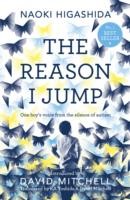
2. THE REASON I JUMP BY NAOKI HIGASHIDA
Naoki Higashida | ⭐ 4.7/5
Who it’s for: Anyone who wants to understand autism from the perspective of someone who experiences it deeply. Parents of non-speaking autistic children especially. People who have the assumption that autistic people don’t feel or connect.
“We autistic people are not lacking in empathy. In fact, I think we have more empathy than most neurotypical people. We just don’t know how to express it in the same way.”
This is one of the most important books I’ve ever read, and I want to be honest about why it affected me so deeply. When Eli was first diagnosed, one of my greatest fears was that I would never truly know who he was — that the autism would create a wall between us that I couldn’t cross. I feared that he would grow up feeling alone and misunderstood, and that I would be standing right next to him, equally alone and equally misunderstood.
Higashida was thirteen when he wrote this book, using a letter board to communicate. He is non-speaking, which means that most people who encounter him would make assumptions about his cognition, his emotional depth, his capacity for connection. This book is those assumptions exploding in the most compassionate way possible.
He answers fifty-eight questions about autism, including “Why do you jump?” and “Why do you avoid eye contact?” and “Do you want to be cured?” The answers are sometimes surprising, sometimes funny, sometimes devastating in their simplicity. His description of why he avoids eye contact — not because he’s not interested, but because eye contact is overwhelming and makes it harder to listen — changed how I interact with Eli immediately.
What I found most moving was his description of time. Higashida explains that autistic people often experience time differently — either as impossibly slow or as a series of disconnected moments rather than a continuous flow. This explained so much about Eli’s behavior that I had been interpreting as intentional non-compliance. He wasn’t ignoring me. He was experiencing time in a way that made my request hard to process in the moment.
My take: This book will break your heart and rebuild it in a different shape. Everyone should read it.

3. THE COMPLETE GUIDE TO ASPERGER’S SYNDROME BY TONY ATTWOOD
Tony Attwood | ⭐ 4.6/5
Who it’s for: Parents of autistic children, autistic adults (especially those diagnosed later in life), educators, therapists, and anyone seeking a comprehensive clinical understanding of Asperger’s syndrome and the autism spectrum.
“One of the strengths of someone with Asperger’s syndrome is the desire to be knowledgeable about topics of interest and to become an expert.”
Attwood is a clinical psychologist who has spent decades working specifically with autistic individuals, and this book reflects that depth of experience. It is one of the most comprehensive resources on Asperger’s syndrome available — covering everything from diagnosis criteria to social skills development to romantic relationships to career advice.
What sets this book apart is Attwood’s combination of clinical expertise and genuine warmth. He doesn’t write about Asperger’s from a distance — he writes with an understanding of what it actually feels like to navigate the world with an autistic neurology. His chapters on theory of mind, emotional regulation, and sensory sensitivity are particularly valuable.
For parents like me, the chapter on education is essential reading. Attwood explains how autistic children learn differently and offers strategies for supporting them in academic environments without trying to force them into neurotypical learning molds. His discussion of “special interests” — the intense focus that many autistic people have on specific topics — is particularly illuminating. These interests are not distractions from learning; they are often the mechanism through which autistic children learn best.
My take: A comprehensive, clinically rigorous, and genuinely compassionate resource. If you buy one book on Asperger’s, make it this one.

4. BORN ON A BLUE DAY BY DANIEL TAMMET
Daniel Tammet | ⭐ 4.4/5
Who it’s for: Anyone interested in understanding how an autistic savant experiences the world. Parents of autistic children who want insight into the inner experience of autism. Anyone who has wondered what it feels like to have extraordinary cognitive abilities alongside autism.
“I have never learned to add two and two in the normal way. I see two and two as four because four is the first number that feels like a complete thought.”
Tammet is an autistic savant who became internationally known for his ability to memorize and process information in extraordinary ways — he once recited pi to 22,514 decimal places from memory. But this memoir is not really about his mathematical abilities. It’s about how he experiences the world, how he learned to connect with other people despite social difficulties, and how he came to understand his own mind.
What makes this book valuable for understanding autism is Tammet’s ability to describe his inner experience with unusual clarity. He can articulate what most autistic people struggle to explain: what sensory input feels like, how he processes social cues, what it means to have a memory that works differently. His description of learning to make eye contact — which he could only do by treating it as a technical skill to be practiced rather than an intuitive behavior — is both illuminating and moving.
I found his description of his relationship with his mother particularly affecting. Tammet describes his mother as someone who never understood why he was the way he was, who worried constantly, who loved him without understanding him. This is an experience I recognize from many families navigating autism. The book helped me think about what it must be like for Eli to grow up with a mother who loves him but sometimes doesn’t fully understand his inner world.
My take: A uniquely valuable perspective on autism from someone who can articulate what most people cannot. Essential for parents who want to understand the inner experience of their autistic child.

5. THE WAY I SEE IT BY TEMPLE GRANDIN
Temple Grandin | ⭐ 4.5/5
Who it’s for: Autistic adults, parents of autistic children, educators, and anyone who wants to understand autism from someone who has lived it. Particularly valuable for people who want both the personal perspective and the practical applications of autism research.
“I think in pictures. I don’t think in language. All my thoughts are like videos running in my imagination.”
This is Grandin’s fourth book, and it reflects the perspective of someone who has had decades to think about autism from every angle — as a researcher, an educator, an autistic person, and an advocate. The essays in this collection cover a wide range of topics, from sensory issues to employment to animal welfare — Grandin is also a renowned animal behaviorist — and each one brings her distinctive combination of scientific rigor and personal honesty.
What I found most valuable was her discussion of the “ventral visual stream” — the way autistic people’s visual thinking works differently than neurotypical visual processing. Grandin explains that she thinks in pictures, not words, and that this shapes everything from how she processes social situations to how she approaches problem-solving. This is one of the most concrete explanations of autistic cognition I’ve encountered.
Her chapter on employment is essential reading for anyone who is autistic or who loves an autistic person. Grandin is direct about the challenges autistic people face in workplace environments designed by and for neurotypical people, but she also offers practical suggestions for making workplaces more accommodating. Her argument that autistic people often excel in jobs that play to their strengths — pattern recognition, attention to detail, deep focus — is supported by research and by her own experience.
My take: Another essential book from Grandin, this time focused on practical applications and personal perspectives. It will change how you understand autism and what autistic people are capable of.

6. ASPIERGIRLS BY RUDY SIMONE
Rudy Simone | ⭐ 4.4/5
Who it’s for: Autistic women and girls, particularly those who were diagnosed later in life. Parents of autistic daughters who want to understand their experience. Anyone interested in how autism presents differently in females.
“Being an Aspie girl is like being socialized in a foreign culture without knowing the language, customs, or rules — and then being told you’re just not trying hard enough.”
I have to be honest: I wish this book had existed when I was growing up. I don’t know if I’m autistic — I’ve wondered, especially after reading about the female presentation of autism, which is significantly different from the male presentation that most of the research is based on. But I know that I spent most of my twenties and thirties feeling like I was failing at something that everyone else seemed to know how to do naturally, and I know that understanding autism better has helped me understand myself better, regardless of whether I fall on the spectrum.
Simone’s book is an essential resource for the experience of autistic females specifically. The female presentation of autism has been under-researched and underdiagnosed for decades, partly because the diagnostic criteria were developed from studies of males and partly because autistic females often develop coping mechanisms that mask their struggles in ways that make them less visible to clinicians and teachers.
The book covers social challenges, sensory issues, relationships, career, and self-understanding, all through the lens of being female on the spectrum. What I found most striking was the chapter on ” camouflaging” — the ways autistic girls and women learn to mimic neurotypical social behavior in order to fit in, and the exhaustion that this requires.
My take: An important book that fills a significant gap in the autism literature. If you are an autistic woman, or if you love one, this book will explain things that other books can’t.

7. ADHD 2.0 BY EDWARD M. HALLOWELL AND JOHN J. RATEY
Edward M. Hallowell and John J. Ratey | ⭐ 4.5/5
Who it’s for: People with ADHD, parents of children with ADHD, partners of people with ADHD, and anyone who wants to understand the ADHD brain. Especially valuable for people who have been diagnosed or suspect they might be.
“ADHD is not a deficit of attention. It is a different way of organizing attention — one that comes with remarkable strengths when properly understood.”
I want to pause here and say something that may be obvious but that I think is important: autism and ADHD are different conditions, though they frequently co-occur. This book is about ADHD, not autism. I’m including it because understanding ADHD has helped me understand Eli, whose autism diagnosis came with an ADHD diagnosis, and because the sensory and regulatory challenges in both conditions overlap in ways that make each more understandable when you understand the other.
Hallowell and Ratey are both psychiatrists who have ADHD themselves, which gives them the dual perspective of clinicians and people who live with the condition. Their approach is fundamentally optimistic without being dismissive of the real challenges. They argue — persuasively — that ADHD comes with real strengths, not just deficits, and that understanding these strengths is the key to living well with ADHD.
What I found most useful was the emphasis on understanding your specific ADHD profile. ADHD doesn’t look the same in everyone — some people are primarily inattentive, some are primarily hyperactive-impulsive, and some are combined. The book helps you identify your profile and then figure out strategies that work for your specific brain.
My take: A warm, practical, and scientifically grounded book about ADHD. The most useful resource I’ve found for understanding Eli’s experience of co-occurring ADHD.

8. SET BOUNDARIES, FIND PEACE BY Nedra GOWEN TAWWAAB
Nedra Glover Tawwab | ⭐ 4.6/5
Who it’s for: Autistic adults who struggle with social boundaries and people-pleasing. Anyone who has difficulty saying no, setting limits, or protecting their energy. Family members who want to understand boundary-setting with autistic loved ones.
“Boundaries are the distance at which I can love you and me simultaneously.”
I know this is not an autism book. I want to be transparent about that. But I want to explain why it’s on this list.
One of the things that has been most striking to me, in my reading about autism and in my observations of Eli and other autistic people, is how much difficulty autistic individuals often have with boundary-setting — understanding what they feel, what they need, and how to communicate those needs in a world that often doesn’t make space for them.
Tawwab’s book is not specifically about autism, but the framework she offers for understanding and setting boundaries has been genuinely useful for me in thinking about how to support Eli in developing these skills, and in examining my own boundary issues that I had been attributing to personality rather than to patterns I learned in childhood.
The book is practical, accessible, and grounded in real examples. Tawwab doesn’t moralize about boundaries — she doesn’t suggest that people who struggle with them are bad or weak. She explains the nervous system science behind why boundaries are hard for some people and offers concrete practices for developing better boundary-setting skills.
My take: Not autism-specific, but valuable for understanding the relationship between neurodivergence and boundary struggles. One of the most useful books I’ve read for understanding myself and, by extension, Eli.
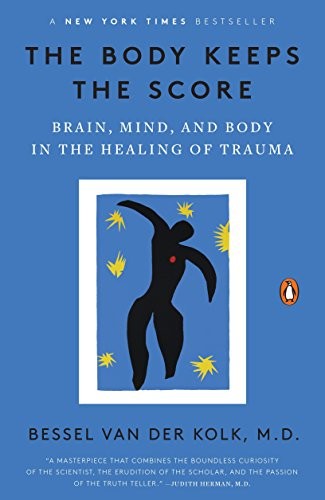
9. THE BODY KEEPS THE SCORE BY BESSEL VAN DER KOLK
Bessel van der Kolk | ⭐ 4.7/5
Who it’s for: Autistic individuals who have experienced trauma — which, given the rates of trauma in autistic populations due to bullying, social isolation, and mischaracterization, is a significant percentage. Anyone interested in the science of how trauma lives in the body.
“Trauma is not what happens to you. Trauma is what happens inside you as a result of what happens to you.”
I almost didn’t include this book because it is so well known and so frequently recommended. But I kept coming back to it because, in thinking about autism and mental health, I kept arriving at the same intersection: the intersection of neurodivergence and trauma.
Autistic people experience the world in ways that frequently result in trauma responses, even when no single traumatic event occurs. The chronic stress of sensory overwhelm, social misunderstanding, and the accumulated weight of being told repeatedly that you are wrong, strange, or broken — this is traumatizing, even if it doesn’t look like the classic trauma that van der Kolk often describes.
Van der Kolk’s book is essential for understanding how trauma lives in the body and how it can be processed and healed. His synthesis of research on PTSD, attachment, and body-based trauma treatment is comprehensive and accessible. The book doesn’t offer a quick fix — because trauma doesn’t work that way — but it offers a framework for understanding and a range of approaches for healing.
My take: A foundational text for understanding trauma, which is essential knowledge for anyone supporting autistic individuals who have experienced the chronic stress of living in a world not designed for their neurology.

10. LOOK ME IN THE EYE BY JOHN ELDER ROBISON
John Elder Robison | ⭐ 4.5/5
Who it’s for: Autistic adults, particularly those diagnosed later in life. Parents of autistic children who want to understand what it feels like from the inside. Anyone interested in the experience of growing up undiagnosed.
“I learned early that if I didn’t look people in the eye, they thought I was lying. So I learned to look at their foreheads. It worked. Nobody ever called me a liar to my face.”
Robison is one of the more well-known autistic memoirists, and this book — his first — is an engaging, honest account of growing up with Asperger’s syndrome in an era when the diagnosis didn’t exist for most people. He was diagnosed at forty, after his son was diagnosed, which is a story I have heard repeated many times in the autistic community: the diagnosis that comes because someone else in the family was diagnosed first.
What makes Robison’s memoir valuable is his frankness about the challenges of being autistic in a neurotypical world and the specific coping mechanisms he developed to survive social situations that felt incomprehensible to him. His descriptions of his childhood and early adult years are both funny and heartbreaking, and his reflections on the diagnostic process and what it meant to finally have language for his experience will resonate with anyone who has come to autism later in life.
I appreciated his honesty about what he calls “the Aspie perks” — the hyperfocus, the attention to detail, the ability to think in systems — without minimizing the real difficulties that also come with Asperger’s. This balance is rare and valuable.
My take: One of the essential autistic memoirs. Robison’s voice is distinctive and his story will resonate with many people who have had similar experiences of not fitting in without knowing why.
FREQUENTLY ASKED QUESTIONS
WHAT IS THE DIFFERENCE BETWEEN AUTISM AND ASPERGER’S?
This is a question that has a complicated answer, because the distinction has changed over time and varies by country. In the United States, Asperger’s was folded into the broader autism spectrum disorder diagnosis in 2013 with the publication of the DSM-5. Previously, Asperger’s was generally used to describe autistic people who had average or above-average intelligence and no significant language delays — as opposed to autism, which was used more broadly. Today, the term “Asperger’s” is still used by many people who were diagnosed with it before the change, and many autistic people prefer it as an identity marker. The important thing to know is that whether someone says “I’m autistic” or “I have Asperger’s,” they are talking about the same fundamental neurology.
CAN AUTISM BE TREATED OR CURED?
Autism is a neurodevelopmental difference, not a disease, which means it cannot be cured in the way that infections or nutritional deficiencies can be cured. What can be addressed are the co-occurring conditions that often accompany autism — anxiety, depression, ADHD, sensory processing difficulties — and the environmental factors that make life harder for autistic people. Support, accommodations, therapy for specific challenges, and acceptance are the tools that help autistic people live full lives. The goal is not to make an autistic person into a neurotypical person. The goal is to support them in becoming the best version of themselves.
HOW DO I KNOW IF I MIGHT BE AUTISTIC?
This is a question more and more adults are asking, especially women and girls who were not diagnosed in childhood. Some signs that might indicate autism in adults include: feeling like you never quite fit in socially, even when you wanted to; finding social situations exhausting in ways that don’t make sense to you; having intense, focused interests that you’ve been told are “too much”; experiencing sensory sensitivities that others don’t seem to share; and feeling like you’re watching social interactions from behind glass, not quite able to access the rules everyone else seems to know intuitively. If this resonates, seeking a diagnostic evaluation from a professional with expertise in adult autism is the next step.
WHAT SHOULD I DO IF MY CHILD IS DIAGNOSED WITH AUTISM?
The first thing I would say is: breathe. The second thing I would say is: find support for yourself. Parenting an autistic child comes with unique challenges, and you cannot support your child well if you’re falling apart. The third thing I would say is: learn. Read books like the ones on this list. Follow autistic adults on social media. Join parent support groups, but be careful to also seek out groups that center autistic voices, not just parent voices. The most important thing you can do is understand your child’s neurology from the inside, not just from the outside.
ARE AUTISTIC PEOPLE ALSO MENTALLY ILL?
Autism and mental illness are different things, but autistic people do experience higher rates of anxiety, depression, and other mental health conditions than the neurotypical population. This is not because autism causes mental illness, but because living in a world that is not designed for your neurology — and frequently being misunderstood, bullied, or pathologized — takes a toll. Supporting autistic mental health means addressing both the environmental stressors and the neurobiological differences that contribute to mental health challenges. The books on this list address both.
WHAT DOES “NEURODIVERGENCE” MEAN?
Neurodiversity is the concept that neurological differences — including autism, ADHD, dyslexia, and others — are natural variations in the human population, not deficits or disorders. The neurodiversity movement argues that these differences should be accepted and accommodated rather than pathologized and “fixed.” The term “neurodivergent” describes people whose brains work differently than the majority, typically neurotypical, population. The term “neurotypical” describes people whose brains work in the way that is considered standard or normal by society.
THE BOTTOM LINE
Understanding autism is one of the most important things I’ve done as a parent, and it has changed me in ways I didn’t expect. Not just because it helped me understand Eli — though it did, profoundly — but because it helped me understand myself, and the many ways I’ve spent my life trying to fit into shapes that weren’t mine.
These books represent different angles on autism — neuroscience, memoir, practical support, mental health, and the experience of autistic adults themselves. You don’t need to read all of them. Read the one that speaks to where you are right now. If you’re newly diagnosed or your child is newly diagnosed, start with “The Autistic Brain” or “The Reason I Jump.” If you’re an autistic adult who’s spent your life wondering why you felt different, read “Look Me in the Eye” or “Aspergirls.” If you’re trying to understand the sensory and emotional challenges, read “The Body Keeps the Score” — carefully, and with support.
The most important thing I learned from all this reading is something the developmental pediatrician told me in her office that day: the goal is not to make your autistic child into a neurotypical person. The goal is to help them become the best version of themselves. That reframe changed everything for me. I hope these books help you find your own version of that reframe.
Which book are you picking up first?
Disclosure: This post contains affiliate links. If you purchase through these links, ReadPlug may earn a small commission at no extra cost to you. We only recommend books we’ve personally found valuable.