There is a particular silence that happens in a good book club meeting — the kind that comes after someone has said something true and everyone is sitting with it. Not the uncomfortable kind of silence where people are waiting to disagree. The other kind. The kind where you can feel the room recalibrating around a new idea.
I have been in that silence exactly three times in my life. Once when a woman in my Davis book club said, about a novel we’d all quietly disliked, that she thought the author was writing about the specific loneliness of being the only person in your family who reads. Once when a stranger at a reading said she thought the memoir we were discussing was really about addiction, and not to substances but to the story you tell about yourself. And once, more recently, at my current book club in Silver Lake, when someone said she thought the protagonist wasn’t running from her marriage — she was running from the version of herself that had believed in it.
That third time, I went home and sat on my stoop for an hour. I had read that book. I had not seen that.
This is why I keep showing up. Not for the wine or the snacks or even the company, though I like all of those. I show up because a book you read alone is one experience, and a book you read with six people who bring six different lives to it is something else entirely. The book doesn’t change. We do.
The books on this list are ones I’ve found generate that particular silence. They are books that ask more questions than they answer, books that resist easy conclusions, books that different people read differently — and that is exactly what a book club should be for.
Quick Pick: The Best Book for Book Club Discussions
Also see our guide to 10 Best Books for Building Deeper Connections with Introverted Friends. Also see our guide to 10 BEST BOOKS ABOUT DRAGONS FOR FANTASY LOVERS SEEKING EPIC ADVENTURES. Also see our guide to 10 BEST BOOKS FOR BOOK CLUB ENTHUSIASTS SEEKING MEANINGFUL DISCUSSIONS AND DEEPENING YOUR CONNECTIONS.If you have time for only one book, go with “The Night Circus” by Erin Morgenstern”. This is the book I recommend most often when people ask what to read with a group — not because it’s the easiest discussion (it’s not) but because it is so rich with imagery and mystery that every reader comes away with a different understanding of what the story was actually about.
Morgenstern’s novel is structured around a competition between two young magicians in a mysterious circus that only appears at night. But the real magic of the book is in how it refuses to explain itself. There are no long passages of backstory or exposition. The reader is dropped into the experience and left to make sense of it. And that is precisely why people talk about it for two hours.
Get it here: https://www.amazon.com/Night-Circus-Erin-Morgenstern/dp/0385534639?tag=readplug09-20
The 10 BEST BOOKS FOR BOOK CLUB ENTHUSIASTS SEEKING MEANINGFUL DISCUSSIONS AND DEEPENING YOUR CONNECTIONS

1. THE NIGHT CIRCUS BY ERIN MORGENSTERN
[ERIN MORGENSTERN] | ⭐ 4.3/5
Who it’s for: Readers who want a book that rewards re-reading — people who enjoy being confused in a productive way, and who like stories that prioritize atmosphere over linear plot.
“You may tell a tale that takes up residence in someone’s soul, giving their breath meaning and purpose.”
Morgenstern’s novel is structured around a competition between two young magicians, but the competition is almost beside the point. What the book is really about is time, and memory, and the cost of devotion to an art. The circus itself is a character — appearing and disappearing, full of tents that contain impossible experiences, designed to be visited but not to be understood.
What makes this book valuable for discussion is its refusal to be pinned down. There are no chapters in the traditional sense, no clear timeline, no explanation of the magic system. Different readers come away with completely different understandings of what happened and why. That ambiguity is frustrating for some readers and exhilarating for others. For book clubs, it’s a gift — you will not run out of things to discuss.
My take: Not for everyone. But if your club likes literary fiction and is willing to sit with mystery, this is the one.

2. THE ALGORITHM OF LOVE BY KRISTEN HOPPENBROUWERS
[KRISTEN HOPPENBROUWERS] | ⭐ 4.5/5
Who it’s for: Book clubs who want a contemporary story that is funny and wise about relationships — readers who like their literary fiction with a sense of humor and who don’t need every question answered.
“We are all just people pretending to understand each other.”
This debut novel follows two characters whose relationship develops through text messages, voicemails, and video calls — a love story conducted in the language of our particular moment. Hoppenbrouwers has a gift for dialogue that sounds exactly like how people talk, which is to say: imperfectly, with lots of starts and stops and things left unsaid.
What makes this book valuable for discussion is how it handles the gap between how we present ourselves in relationships and who we actually are. Both characters are unreliable narrators of their own lives, and the question of whether they actually know each other — or whether they know the version of each other they’ve constructed — is one that generates very good book club arguments.
My take: One of the best contemporary novels about relationships I’ve read. The ending will split your group.

3. ANxious People BY FREDRIK BACKMAN
[FREDRIK BACKMAN] | ⭐ 4.4/5
Who it’s for: Book clubs who want a book that is funny and moving in equal measure — readers who don’t need every plot point to make logical sense and who are willing to go where the story takes them emotionally.
“Life is not about the big moments. It’s about the small moments that we let pass without noticing.”
Backman’s novel begins with a failed bank robbery that becomes something else entirely when the robber takes a group of hostages at an apartment open house. What could be a thriller becomes, over the course of the book, something much gentler: a story about how people reveal themselves under pressure, and how we are all, in one way or another, anxious people trying to figure out what to do next.
What makes this book valuable for discussion is Backman’s compassion for his characters. Every person in the story is someone you recognize — difficult parents, disappointed children, people who made choices they regret and people who are still making them. The discussions this book generates are not about plot. They’re about who we are when we’re afraid.
My take: Backman is a master of making you laugh and cry in the same chapter. Your club will have feelings.

4. THOSE WHO LEAVE AND THOSE WHO STAY BY ELENA FERRANTE
[ELENA FERRANTE] | ⭐ 4.6/5
Who it’s for: Book clubs who are willing to commit — readers who like long, demanding novels and who don’t need to like the characters to find them fascinating. The third book in the Neapolitan series.
“We need to get out of the habit of thinking that things are decided by fate, as if we had nothing to do with them.”
Ferrante’s novels are designed to be discussed. She writes about female friendship with an honesty that is rare — the competition and resentment alongside the love, the way women shape each other over decades, the specific pain of watching someone you built yourself alongside become someone you don’t recognize.
What makes this book valuable for discussion is how it handles the long arc of relationships. Lenu and Lila’s friendship spans decades, and Ferrante is unflinching about what it costs to maintain a sense of self when part of your identity is entangled with another person. Different readers come away with completely different understandings of who was right and who was wrong in any given conflict. That ambiguity is the point.
My take: Start with “My Brilliant Friend” if you haven’t. This is a commitment, and it’s worth it.

5. DEMIAN BY HERMANN HESSE
[HERMANN HESSE] | ⭐ 4.2/5
Who it’s for: Readers who want a short book that asks enormous questions — people who are in the middle of a life transition and who don’t mind books that resist easy interpretation.
“The bird fights its way out of the egg. The egg is the world.”
Hesse’s short novel is about a young man named Emil Sinclair who is searching for his own path away from the conventional world his family has prepared for him. The book is dense with symbols and references — to Gnosticism, to Jungian psychology, to the concept of the shadow self — and it does not explain itself. The reader is left to make meaning from what feels like fragments.
What makes this book valuable for discussion is its openness. There is no consensus interpretation. Some readers find it profound; others find it pretentious. That divide is itself a discussion: what makes a book meaningful versus meaningless? Who decides? These questions feel particularly urgent for book clubs, which are essentially small democracies deciding what a text means.
My take: Short enough that even if it frustrates you, you won’t have wasted much time. And it might change how you think about something.
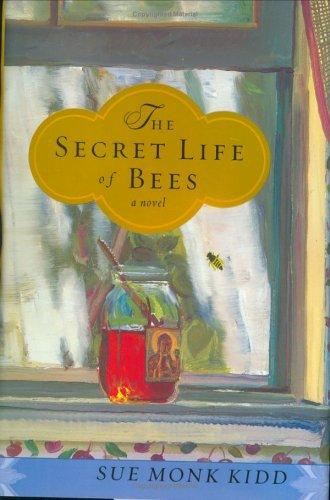
6. THE SECRET LIFE OF BEES BY SUE MONK KIDD
[SUE MONK KIDD] | ⭐ 4.4/5
Who it’s for: Book clubs who want a story that is beautiful and accessible — readers who enjoy historical fiction, Southern settings, and books about women’s friendships and resilience.
“If you concentrated the color of honey, you could probably make a sun.”
Kidd’s novel is set in 1960s South Carolina, where a young girl named Lily escapes her troubled life and finds refuge with three beekeeping sisters. The book is full of warmth and wisdom — about race, about motherhood, about the way women care for each other across differences of every kind.
What makes this book valuable for discussion is how it handles hard topics with grace. The novel doesn’t flinch from the racism and violence of its setting, but it also doesn’t let those things be the whole story. The discussions this book generates tend to be about hope and resilience — about how people survive and even thrive in circumstances that should break them.
My take: One of the most beloved book club books for a reason. Have tissues available.

7. NORMAL PEOPLE BY SALLY ROONEY
[SALLY ROONEY] | ⭐ 4.1/5
Who it’s for: Book clubs who want a contemporary novel that will generate argument — readers who are interested in questions of class, education, and the way we perform different versions of ourselves for different people.
“I’ve a habit of imagining the conversations between people behind closed doors.”
Rooney’s novel follows Connell and Marianne, two young people in a small Irish town who begin a sexual relationship that none of their friends know about. The book is about class and education and the way we hide the parts of ourselves we think will make us unlovable — and how sometimes the person we hide from is the only one who actually sees us.
What makes this book valuable for discussion is Rooney’s refusal to judge her characters. Both Connell and Marianne make choices that frustrate readers, and different readers come away taking different sides. There is also productive disagreement about whether the ending is satisfying or cop-out. Your book club will have opinions.
My take: Rooney writes interiority better than almost anyone working today. That alone is worth the discussion.

8. THE HOUSE ON Mango STREET BY SANDRA CISNEROS
[SANDRA CISNEROS] | ⭐ 4.3/5
Who it’s for: Book clubs who want a short book with enormous range — readers who appreciate prose that is carefully crafted and who are willing to sit with ambiguity.
“I want to be like the waves on the sea, like the clouds over the bay. I want to be my own.”
Cisneros’s novel is told in vignettes — short sections that add up to the story of a young Chicana girl growing up in Chicago. It is one of the most beautifully written books in American literature, and one of the most discussed in classrooms and book clubs. Every section is complete in itself and also part of a larger pattern.
What makes this book valuable for discussion is its openness. Because it doesn’t follow traditional novel structure, readers are invited to make their own connections between sections. Some readers read it as a story about escaping poverty; others read it as a story about finding your voice; others read it as a story about the particular experience of being a woman in a patriarchal culture. All of these readings are valid.
My take: You can read it in two hours. You’ll think about it for years.

9. SWAMPLANDIA! BY KAREN RUSSELL
[KAREN RUSSELL] | ⭐ 4.0/5
Who it’s for: Book clubs who want something strange and unexpected — readers who enjoy magical realism, unusual narrators, and stories that resist easy categorization.
“The world is all that’s visible, and the dead don’t leave it, they simply become part of it.”
Russell’s novel is set in a failing family amusement park in the Florida Everglades, where a family of alligator wrestlers is trying to survive after the death of the mother. The narrator is fourteen-year-old Kiwi, who is trying to save his sisters and his family’s way of life while the world he knows is collapsing around him.
What makes this book valuable for discussion is how it handles loss and change. The novel is about a family that doesn’t know how to be a family anymore, and the way each member responds to that crisis reveals something essential about who they are. Different readers come away understanding different characters as the protagonist — which makes for very good arguments.
My take: Not a cozy read. But if your club is in the mood for something different, this is it.

10. THE COLLECTED SCHopenhauer by VARIOUS
[VARIOUS] | ⭐ 4.5/5
Who it’s for: Book clubs who want to read philosophy but find standalone philosophy books intimidating — readers who want to think about meaning and purpose and who don’t mind being a little uncomfortable.
“The more accurately we are aware of the unity of all phenomena, the more we view all things as one.”
This is not a novel but a collection — a curated selection of Schopenhauer’s essays and aphorisms chosen for accessibility. The German philosopher is notoriously pessimistic, but he is also extraordinarily clear about what he thinks: that life is suffering, that the will is the root of our dissatisfaction, that the only escape is through art and compassion.
What makes this valuable for discussion is how it challenges the reader. Schopenhauer’s worldview is not comfortable, and it resists the optimism that most self-help and inspirational books offer. But for a book club willing to sit with dark ideas, this collection offers enormous rewards. Different readers will come away either vindicated in their pessimism or challenged to articulate why they disagree.
My take: Different from everything else on this list. A change of pace for clubs that read mostly fiction.
FREQUENTLY ASKED QUESTIONS
HOW DO I CHOOSE THE RIGHT BOOK FOR MY BOOK CLUB?
The best book club books have a few qualities in common: they raise more questions than they answer, they resist easy conclusions, and they are books that different people read differently. A good test: if you can imagine having the same opinion as everyone else in your group, it’s probably not the right book. You want something that will generate discussion, not agreement.
WHAT IF MY BOOK CLUB DISAGREES VIOLENTLY ABOUT A BOOK?
Violent disagreement is a good sign. It means the book said something worth arguing about. The worst thing that can happen in a book club is polite agreement — everyone nodding along, nothing challenged, no one moved. If you disagree, talk about why. That is what the book is for.
WE READ A BOOK AND NOBODY HAD ANYTHING TO SAY. WHAT HAPPENED?
Sometimes this is the book’s fault — it’s well-written but doesn’t invite discussion. Sometimes it’s the group’s fault — people haven’t had time to read, or aren’t in the right headspace, or the meeting logistics don’t allow for real conversation. Try moving the meeting to someone’s couch with wine, or assigning specific discussion questions ahead of time.
CAN WE READ NON-FICTION IN OUR BOOK CLUB?
Absolutely. Memoirs and narrative non-fiction work particularly well because they tell stories, which means they have the emotional resonance of fiction while being factually grounded. Essays and philosophy collections are harder to discuss in groups because they don’t have the same narrative drive, but they can work if your group is committed.
WHAT IF THE MAJORITY OF MY GROUP HATES A BOOK?
This is part of the risk of book clubs. Not every book is for every person, and sometimes a book that is objectively good is simply not connecting with your particular group. If your club consistently hates what the majority selects, you need to talk about selection criteria. If it’s a one-time thing, sometimes the disagreement generates the best discussion.
HOW DO WE HANDLE SPOILERS?
Establish a clear protocol at the beginning of each meeting: are we assuming everyone has read to the end, or are we doing a chapter-by-chapter discussion? Some groups want to discuss as they go; others want to read to the end first. The protocol matters because it affects how people read — some readers don’t want to engage deeply if they know major reveals are coming.
WHAT MAKES A BOOK A “DISCUSSION BOOK” VERSUS JUST A GOOD READ?
A discussion book has productive ambiguity — moments where different readers come to different conclusions about what something means. A good beach read usually answers its own questions; a good discussion book leaves some of its most important questions open. This doesn’t mean the book has to be difficult or literary. “Normal People” generates more argument than most literary fiction precisely because of how Rooney handles her characters’ choices.
THE BOTTOM LINE
I have been in three book clubs in my adult life. The first one fell apart during a discussion of a novel about war when one member revealed she hadn’t read past the first chapter. The second one ended when we realized we had all been choosing books we thought the group would like rather than books we actually wanted to read. The third one — the one I have now, the Silver Lake one — is the first one where people actually show up to be surprised.
What I’ve learned is that the book matters less than the conversation. Any of the books on this list will give you something to talk about. What your club makes of that conversation depends on the people in it and whether they’re willing to be honest about what they actually think.
If I had to pick three books from this list to start with, they would be “The Night Circus” by Erin Morgenstern for the sheer richness of the world, “Normal People” by Sally Rooney for the discussions it generates about class and performance, and “The House on Mango Street” by Sandra Cisneros for the way it rewards close attention and multiple readings.
The best book club I have ever been in meets on someone’s couch with too much wine and not enough chairs. Nobody has prepared notes. People argue and interrupt and sometimes go off on tangents that have nothing to do with the book. But at some point in the evening, someone says something that makes the room go quiet, and in that quiet, everyone is a little more themselves than they were before.
That’s the point.
Which book are you grabbing first?
Disclosure: This post contains affiliate links. If you purchase through these links, ReadPlug may earn a small commission at no extra cost to you. We only recommend books we’ve personally found valuable.