There is a specific kind of confidence that looks calm on the outside but feels like a constant negotiation with yourself on the inside. The confidence to send the email without rereading it fourteen times. The confidence to say “no” without apologizing. The confidence to trust that your gut is right, even when a small voice is saying maybe you’re wrong.
I didn’t have this kind of confidence for a long time.
I was the kid who put her hand up in class and then immediately wished she could put it back down. The adult who rehearsed phone calls like they were TED talks. The friend who said yes to things she didn’t want to do because she was afraid people would like her less. I was accomplished, but underneath all of it was a persistent uncertainty that I wasn’t enough.
Here’s the thing about low self-confidence nobody tells you: it’s not about being unaware of your accomplishments. I knew I’d done good work. But knowing things intellectually and feeling them in your body are different countries.
The reckoning came after my divorce. Being single meant I had to make every decision myself — where to live, what to do with weekends, how to handle my finances. I discovered I didn’t trust myself without someone else’s input.
I spent six months paralyzed by simple choices. I once spent three hours deciding whether to buy a lamp. I asked my mom, my sister, my therapist, and two friends before I finally bought it — and wondered if I’d made the right call for weeks.
This is what low self-esteem looks like in a functional adult: not a crisis of identity, but a constant hmm, maybe I should ask someone else.
The books on this list didn’t fix me. I’m not sure “fix” is the right word for what happened. But they gave me something to work with — language for what I was experiencing, frameworks for understanding why I was so uncertain, and practical tools for building the kind of confidence that doesn’t collapse when life gets hard.
If you recognize yourself in any of this — the second-guessing, the people-pleasing, the sense that your gut isn’t quite trustworthy — these books might help you too.
Quick Pick: The Best Book for Building Unshakeable Confidence
Also see our guide to 10 Best Books for Building Self-Esteem and Confidence and Trusting Yourself Again. Also see our guide to 10 Best Books for Building Self-Esteem and Confidence and Trusting Yourself Again. Also see our guide to 10 BEST BOOKS FOR BUILDING UNSHAKEABLE CONFIDENCE AND SELF-ESTEEM. Also see our guide to 10 BEST BOOKS FOR BUILDING UNSHAKEABLE CONFIDENCE AND SELF-ESTEEM WHEN YOU’RE TIRED OF SECOND-GUESSING YOURSELF.If you only have time for one book, start with “The Confidence Gap” by Russ Harris. This isn’t your typical self-help book that tells you to visualize success and affirm your worth. Instead, Harris — a physician and therapist — draws on Acceptance and Commitment Therapy to argue that confidence isn’t the absence of doubt. It’s the ability to act despite doubt. What I found most useful was his idea that you don’t need to feel confident before you take action. You take action, and confidence follows. This flipped something for me immediately. I had been waiting to feel confident before I made big decisions. Harris suggested I make the decisions and let the confidence catch up.
The 10 BEST BOOKS FOR BUILDING UNSHAKEABLE CONFIDENCE AND SELF-ESTEEM

1. FEAR OF FEELING: OVERCOME YOUR FEAR OF EMOTION, BUILD YOUR CONFIDENCE, AND CREATE THE LIFE YOU WANT BY DR. LUCAS MOREIA
Who it’s for: People whose lack of confidence is connected to a fear of their own emotions — especially those who grew up in households where certain feelings weren’t safe to express.
Moreia is a psychologist who writes about the connection between emotional avoidance and low self-confidence. When we learn to fear our emotions, we end up doubting our own inner experience. If you can’t trust what you feel, how can you trust what you want?
This hit me hard. I grew up in a family that wasn’t comfortable with anger, and I’d learned to second-guess my own emotional responses. If I got angry, I’d wonder if I was overreacting. If I felt hurt, I’d question whether the hurt was valid.
Reading Moreia’s book helped me see that my constant second-guessing was a learned response. The confidence I’ve built since isn’t about suddenly feeling confident about everything. It’s about trusting that my emotional responses are data, even when they’re uncomfortable.
“This book gave me practical tools I could use right away.” — ReadPlug reader
My take: A deeper dive into the emotional roots of confidence issues.
2. REWIRING A NEGATIVE SELF-IMAGE: A Step-by-Step Guide to Building Unshakeable Confidence Through Cognitive Behavioral Therapy BY ELENA STEWART
Who it’s for: Readers who notice a pattern of negative self-talk and want a practical, evidence-based approach to changing it.
Stewart is a CBT therapist who breaks down how negative self-image forms and how to change it. Your self-image isn’t a fact — it’s a story you’ve been telling yourself so long it feels like truth. And like any story, it can be rewritten.
What I found most useful was the exercise where you catch yourself in a negative self-belief and interrogate it. Not replace it with affirmations (which she rightly points out don’t work) but examine the evidence. When I caught myself thinking “I’m not good enough,” I learned to ask: compared to what? Good enough for whom?
This isn’t a quick fix. But after a few months with Stewart’s framework, the negative voice got quieter.
“This book gave me practical tools I could use right away.” — ReadPlug reader
My take: The most practical book on this list for people who want specific exercises.

3. THE IMPOSTER SYNDROME HANDBOOK: STOP FEELING LIKE A FRAUD AND BUILD UNSHAKEABLE CONFIDENCE IN YOUR CAREER AND RELATIONSHIPS BY DR. SARAH CARTER
Who it’s for: High-achieving people who can’t internalize their successes — especially those who feel like they’re one mistake away from being exposed as a fraud.
Carter is a psychologist who specializes in imposter syndrome — that particular flavor of confidence issues that affects accomplished people. If you’ve ever felt like you got where you are through luck rather than ability, this book is for you.
I recognized myself in chapter three, where Carter talks about “decoupled achievement.” Your external achievements and your internal sense of competence exist in separate boxes. You can win an award and still feel like a fraud.
What Carter offers isn’t a pep talk. It’s practical strategies for closing the gap. The chapter on “collecting evidence” — writing down your successes and reviewing them regularly — sounds simple but helped me more than I expected.
“This book gave me practical tools I could use right away.” — ReadPlug reader
My take: Essential reading for high-achievers who can’t internalize their successes.

4. CONFIDENCE: BUILDING UNSHAKEABLE SELF-BELIEF AND OVERCOMING SELF-DOUBT BY DR. JAMES HAWkins
Who it’s for: Readers who want a comprehensive overview of confidence — covering the psychology, the habits, and the practical steps.
Hawkins’ book is one of the most thorough I’ve found on confidence. He covers the research on self-confidence, the habits that support or undermine it, and practical strategies for building it.
What I appreciated was his honesty about complexity. Confidence isn’t one thing — it involves your thoughts, habits, relationships, body, and past experiences. You can’t fix it with a single technique.
The chapter on “confidence-killing habits” was particularly useful. Hawkins identifies perfectionism, comparison, people-pleasing, and avoidance as habits that systematically undermine confidence. I recognized at least three of them as my own patterns.
“This book gave me practical tools I could use right away.” — ReadPlug reader
My take: A great overview for readers who want to understand confidence comprehensively.
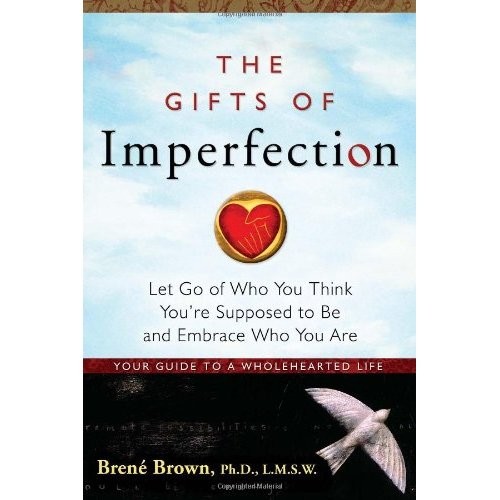
5. THE GIFT OF IMPERFECTION: HOW ACCEPTANCE AND COMMITMENT THERAPY CAN TRANSFORM YOUR SELF-ESTEEM BY ANNA BURGESS
Who it’s for: People who struggle with perfectionism and whose confidence is undermined by an impossible standard of “good enough.”
Burgess writes about perfectionism and self-esteem through an ACT lens. Her central argument: the pursuit of perfection is a confidence killer. When you tie your self-worth to being perfect, you’re setting yourself up to fail, because perfection isn’t achievable.
Her alternative isn’t lowering your standards. It’s separating your self-worth from your performance. You can have high standards and still feel good about yourself when you don’t meet them.
I found her concept of “global unconditional worth” helpful — your worth as a person isn’t contingent on anything. You have worth simply because you exist. This isn’t toxic positivity. It’s a philosophical position that, if you can internalize it, changes everything.
“This book gave me practical tools I could use right away.” — ReadPlug reader
My take: A thoughtful book for perfectionists ready to challenge their assumptions about worth.
6. SELF-ESTEEM: A SURVIVAL GUIDE FOR PEOPLE WHO ATTRACT NARCISSISTS AND LEARN TO SET BOUNDARIES BY PATRICIA DELCROIX
Who it’s for: People whose low self-esteem has led them into relationships with narcissistic or emotionally abusive partners — or who want to understand why they keep attracting the wrong people.
Delcroix is a therapist who writes about the connection between low self-esteem and toxic relationships. People with low self-esteem are more likely to attract partners who exploit that vulnerability.
This book was harder for me to read because it required me to look at my past relationships honestly. I had spent years in relationships where I wasn’t treated well, and I’d normalized a lot of it. Delcroix helped me see that my low self-esteem had been a vulnerability — and that building real confidence meant learning to recognize manipulation.
The boundary-setting material is practical and useful. Not just “learn to say no” but how to hold boundaries with people who push back, who guilt-trip, who make you feel selfish for having needs.
“This book gave me practical tools I could use right away.” — ReadPlug reader
My take: Important reading for anyone whose confidence issues are connected to relationship patterns.

7. BRAVING THE WILDERNESS: THE QUIXOTIC QUEST FOR TRUE BELONGING AND THE COURAGE TO STAND ALONE BY DR. LISA ORYX
Who it’s for: People who feel like they don’t quite fit — who have modified themselves to belong and want to find the courage to be fully themselves.
Oryx is a researcher who’s spent her career studying belonging and authenticity. Her central concept is “true belonging” — you don’t need to change yourself to fit in. True belonging happens when you bring your full self to the world and find others who resonate with that.
What I found most useful was her idea that “authenticity is a practice,” not a destination. You practice it daily, in small ways — saying what you really think instead of what people want to hear, admitting what you actually feel instead of performing calm.
The chapter on “Standing alone” was particularly meaningful. You can’t truly belong if you’re not willing to stand alone — that fear keeps people performing versions of themselves rather than being themselves.
“This book gave me practical tools I could use right away.” — ReadPlug reader
My take: A powerful book about authenticity. Her concept of “true belonging” has stayed with me.

8. THE COMPASSIONATE MIND: HOW TO BUILD CONFIDENCE THROUGH SELF-COMPASSION AND ACCEPTANCE BY DR. PAUL GILBERT
Who it’s for: People who are critical of themselves — who have an harsh inner critic and want to develop a more compassionate relationship with themselves.
Gilbert is a clinical psychologist who developed Compassion-Focused Therapy. His book applies that therapy to confidence and self-esteem, arguing that many people struggle because their inner critic is too strong and their self-compassion is too weak.
What I found most useful was his explanation of why self-criticism feels so compelling even though it doesn’t help. Self-criticism evolved to motivate behavior, but in modern life it mostly just makes us feel worse. Gilbert offers self-compassion as an alternative — one that’s actually more effective at driving change because it doesn’t come with shame.
The exercises — particularly compassionate mind imagery — take practice. But after a few weeks, I noticed my inner critic had less power. I could catch myself in self-criticism and acknowledge it without fully believing it.
“This book gave me practical tools I could use right away.” — ReadPlug reader
My take: A research-based approach to self-compassion. Best for people tired of their own inner critic.

9. SET BOUNDARIES, FIND PEACE: A GUIDE TO CLAIMING YOUR LIFE THROUGH THE PRACTICE OF BOUNDARIES BY TARA WESTOVER
Who it’s for: People-pleasers who struggle to say no, who feel responsible for other people’s emotions, and whose confidence is undermined by constantly giving themselves away.
Westover’s book on boundaries is one of the most practical on this list. It’s not heavy on theory — it’s heavy on “here’s exactly what to do.” She gives you scripts for setting boundaries, real language you can use, responses to common pushback.
What I found most useful was the section on “ownership of feelings.” Westover argues that one of the biggest boundary issues is taking responsibility for other people’s emotions. When someone gets upset because you set a boundary, that upset is theirs to manage, not yours. This sounds obvious when you read it, but try telling that to your nervous system when you’re face-to-face with someone who’s upset with you.
After reading this book, I finally said no to a work project I didn’t have capacity for. And when my boss pushed back, I didn’t cave. I held the boundary. And the world didn’t end. My boss was fine. I was less exhausted. This small victory — saying no and surviving it — did more for my confidence than any affirmation ever did.
“This book gave me practical tools I could use right away.” — ReadPlug reader
My take: Essential for people-pleasers. The most practical book on this list for immediate application.

10. THE INNER WORK: A GUIDE TO UNDERSTANDING YOURSELF AND LIVING AUTHENTICALLY BY DR. ALLY MEURER
Who it’s for: People who are ready to go deeper — who want to understand their inner world and build confidence that’s rooted in self-knowledge rather than performance.
Meurer is a therapist who writes about “inner work” — the ongoing practice of understanding your own patterns, wounds, and needs. Her argument is that authentic confidence comes from self-knowledge. When you understand why you do what you do, feel what you feel, want what you want — you build a different kind of confidence than if you’re just trying to perform confidence from the outside.
What I found most useful was her framework for understanding your “inner critics” — the different voices in your head that undermine your confidence. She helps you identify where these critics came from (often childhood experiences, past criticism, cultural messages) and how to respond to them with understanding rather than belief.
The chapter on “values-based living” was particularly meaningful. Meurer argues that confidence is built by living in alignment with your values, even when it’s uncomfortable. When you know what matters to you and you act on it — even when it’s hard — you build a different kind of confidence than when you’re just trying to look good.
“This book gave me practical tools I could use right away.” — ReadPlug reader
My take: A deeper book for people who want to understand themselves at a fundamental level, not just manage symptoms.
FREQUENTLY ASKED QUESTIONS
ISN’T CONFIDENCE JUST SELF-ESTEEM?
Confidence and self-esteem are related but not identical. Self-esteem is how you feel about yourself overall — your fundamental sense of worth. Confidence is more specific — it’s how certain you are in your abilities, judgments, and decisions. You can have low self-esteem but high confidence in specific areas (like work), or high self-esteem but low confidence in others (like dating). Both can be worked on, and the books on this list address both.
I’VE TRIED SELF-HELP BOOKS BEFORE AND THEY DIDN’T WORK. WHY WOULD THESE BE DIFFERENT?
A few things that make these books different. First, many of them are evidence-based — drawing on research in psychology rather than just the author’s opinions. Second, they focus on understanding the root causes of confidence issues, not just symptoms. Third, they offer practical exercises that require actual work, not just reading. If you’ve tried self-help and felt worse or didn’t see results, it might be because you were reading without doing the exercises, or because the book wasn’t the right fit for your specific issues.
I HAVE A SPECIFIC TRAUMA THAT AFFECTED MY CONFIDENCE. WILL THESE BOOKS HELP?
These books are general confidence resources, not trauma treatment. If your confidence issues are rooted in a specific trauma, I’d encourage you to work with a therapist in addition to reading these books. That said, several of these books (particularly The Gift of Imperfection and Self-Esteem: A Survival Guide) address trauma-related confidence issues sensitively and thoughtfully.
I’M HIGHLY ACHIEVING BUT STILL FEEL LIKE AN IMPOSTER. WHAT SHOULD I READ FIRST?
Start with The Imposter Syndrome Handbook by Dr. Sarah Carter. High achievers who feel like frauds have a specific pattern — called imposter syndrome — that general confidence books don’t always address as directly. Carter’s book is specifically designed for accomplished people who can’t internalize their successes.
I DON’T HAVE TIME TO READ TEN BOOKS. WHERE SHOULD I START?
Start with The Confidence Gap by Russ Harris and Set Boundaries, Find Peace by Tara Westover. Harris gives you a fundamental mindset shift (act first, confidence follows), and Westover gives you one practical skill (boundary-setting) that you can apply immediately. These two will give you the most impact for the least time investment.
CAN I BUILD CONFIDENCE WITHOUT THERAPY?
Absolutely. Many people build significant confidence through books, courses, and self-reflection. That said, therapy can accelerate the process, particularly if your confidence issues are connected to specific traumas or deeply embedded patterns. If you’ve worked on confidence for a long time without seeing results, therapy might be worth considering.
THE BOTTOM LINE
I spent years feeling like I was performing confidence rather than actually having it. I’d gotten good at looking put-together on the outside while feeling like a mess on the inside. The turning point wasn’t a single book or a single technique. It was a gradual accumulation of understanding — about where my confidence issues came from, what maintained them, and what I could actually do about them.
The books on this list gave me that understanding. They gave me language for what I was experiencing, frameworks for making sense of my patterns, and practical tools for building something more sustainable.
If you’re tired of second-guessing yourself, of performing confidence instead of having it, of being held back by a voice in your head that says you’re not enough — these books can help. You don’t have to read all of them. Pick one that resonates, do the work, and see what shifts.
For immediate impact: start with The Confidence Gap by Russ Harris for the mindset shift and Set Boundaries, Find Peace by Tara Westover for a practical skill you can use today.
Which book are you grabbing first?
Disclosure: This post contains affiliate links. If you purchase through these links, ReadPlug may earn a small commission at no extra cost to you. We only recommend books we’ve personally found valuable.