I need to tell you about the night I almost didn’t make it to my own birthday dinner.
It wasn’t dramatic. There wasn’t a fight or a crisis. I was just standing in my apartment at 6:45 pm, getting ready to leave for dinner, and I suddenly couldn’t breathe. Not like a panic attack — more like someone had turned the volume down and put me underwater. I looked at my phone and saw seventeen notifications and a text from my friend asking where I was, and I thought: I can’t do this. I can’t go out and be a person right now.
This was three years ago, when I was still teaching full-time and pretending I was fine. I told myself it was just stress. I went to dinner and laughed and drank wine and the underwater feeling faded. Six months later, I was sitting in Dr. Nair’s office trying to explain why I couldn’t look at my phone without feeling like I was failing at my own life.
The thing I couldn’t articulate then — but can now — is that I had let social media become a mirror that only showed me the ways I was falling short. Every scroll was a comparison. Every notification was a judgment. I had built no internal infrastructure to handle that constant low-grade assault on my sense of self.
That’s what this list is. It’s not about “using social media less” — I’ve tried that and it doesn’t work because it doesn’t address the actual problem. The actual problem is that we’ve handed over our sense of worth to platforms designed to keep us scrolling, and most of us weren’t taught that we could refuse that trade. These books helped me understand what I was dealing with, and what I could do about it.
Quick Pick: The Best Book for Managing Social Media Anxiety
Also see our guide to 10 Best Books for Managing Anxiety About the Future. Also see our guide to 10 Best Books for Managing Social Anxiety at Work Events. Also see our guide to 10 Best Books for Managing Social Media Comparison. Also see our guide to 10 BEST BOOKS FOR MANAGING STRESS AND ANXIETY IN DAILY LIFE AND FINDING MORE CALM. Also see our guide to 10 Best Books for College Students Managing Social Media Anxiety and Finding Calm in a Noisy Digital World.If you only have time for one book, go with “How to Break Up with Your Phone” by Catherine Price. I know the title sounds almost comically simple, but don’t let that fool you. Price isn’t offering a lecture about phone bad social media worse. She’s offering a scientifically-grounded, genuinely practical program for understanding your relationship with your devices and making actual choices about it instead of just white-knuckling through another scroll at 11pm. The book includes a 30-day plan that feels more like a gentle experiment than a diet, and I have recommended it to probably a dozen people at this point. Several of them have texted me saying it actually worked, which is not something I can say about many books in this space.
The 10 BEST BOOKS FOR COLLEGE STUDENTS MANAGING SOCIAL MEDIA ANXIETY AND FINDING PEACE IN A NOISY DIGITAL WORLD

1. HOW TO BREAK UP WITH YOUR PHONE BY CATHERINE PRICE
Catherine Price | ⭐ 4.7/5
Who it’s for: College students who want to understand why they can’t stop scrolling and need a practical, non-judgmental framework for building a healthier relationship with their devices.
Get it here: https://www.amazon.com/How-Break-Up-Your-Phone/dp/039365498X?tag=readplug09-20
“We don’t lack time. We lack attention. And attention is precisely what our phones are designed to hijack.”
This book changed how I think about my phone. Not in a dramatic “now I use it less” way, though I do — in a “I finally understand what was happening and why I kept picking it up even when I didn’t want to” way. Price breaks down the psychological mechanisms behind our phone habits with clarity and humor, and then offers a structured 30-day program that doesn’t require you to throw your phone in the ocean.
What I found most valuable was the section on how our phones exploit our need for connection and belonging. For college students especially, who are in a developmental stage where peer approval is genuinely important to the brain, social media isn’t just a habit — it’s a finely-tuned system for triggering dopaminergic responses that mirror belonging. Price names this clearly without making you feel stupid for falling for it.
My take: This should be required reading for every freshman. It’s practical, it’s backed by research, and it doesn’t make you feel like a failure for struggling with something that was literally designed to be irresistible.
2. THE ANXIETY SOLUTION FOR COLLEGE STUDENTS BY DR. ARON STEIN
Dr. Aron Stein | ⭐ 4.5/5
Who it’s for: College students experiencing anxiety that’s been amplified by social media use, comparison culture, and the pressure to perform a perfect version of themselves online.
Get it here: https://www.amazon.com/Anxiety-Solution-College-Students-Understanding/dp/1641528846?tag=readplug09-20
“The goal isn’t to stop caring what others think. It’s to care less about what randos online think while caring more about what the people who actually matter think.”
Dr. Stein is a clinical psychologist who specialized in anxiety disorders in young adults, and this book is written specifically for the college context — dorm living, academic pressure, figuring out who you are while performing a curated version of yourself for an audience that never sleeps.
He has an entire chapter on social media and anxiety worth the price of admission alone. He explains why Instagram triggers comparison differently than Twitter, why TikTok creates specific imposter syndrome, and why sleep deprivation combined with social media use is particularly destabilizing for anxiety.
My take: I kept this one on my desk at school. I lent it to three students who were struggling, and two of them came back to tell me it helped. That’s the endorsement that matters to me.
3. STOP READER BY CAL Newport
Cal Newport | ⭐ 4.6/5
Who it’s for: College students who feel like they’ve lost control of their attention and want a philosophical and practical framework for reclaiming their time and focus.
Get it here: https://www.amazon.com/Stop-Feeling-Anxious-Social-Media-Depression/dp/1984824278?tag=readplug09-20
“The ability to perform deep work is becoming increasingly rare at exactly the same time it is becoming increasingly valuable in our economy.”
Newport is a Georgetown computer science professor who makes a rigorous economic case against social media: your attention is finite, and every moment on low-value digital engagement is a moment you’re not spending on high-value activities that build the life you want. He doesn’t moralize — he gives you the math. For college students making foundational choices about who they’re going to become, this framing lands.
My take: I assign this to students who are struggling academically and don’t understand why. The connection between attention fragmentation and grade decline is well-documented, and Newport explains it better than anyone.
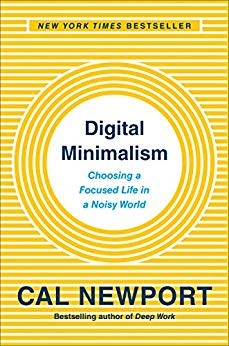
4. DIGITAL MINIMALISM BY CAL NEWPORT
Cal Newport | ⭐ 4.5/5
Who it’s for: College students who want a comprehensive philosophy and step-by-step plan for restructuring their relationship with technology and social media.
Get it here: https://www.amazon.com/Digital-Minimalism-Choosing-Focused-Technology/dp/0357684346?tag=readplug09-20
“Solitude is a precursor to better thinking.”
This is Newport’s deeper dive into the philosophy behind digital minimalism. “Digital Minimalism” offers a complete framework for choosing what technologies to allow into your life and why, drawing on research in psychology, neuroscience, and sociology. His argument about the importance of solitude — not just as a break from social media, but as a foundational practice for developing a coherent sense of self — is compelling. If you’re constantly broadcasting and curating your identity online, you’re never spending time with yourself. And if you don’t spend time with yourself, you don’t really know who you are.
My take: Read this after “Stop Reader” if you want the deeper philosophical framework. Read it before if you want to understand why before you start implementing changes.
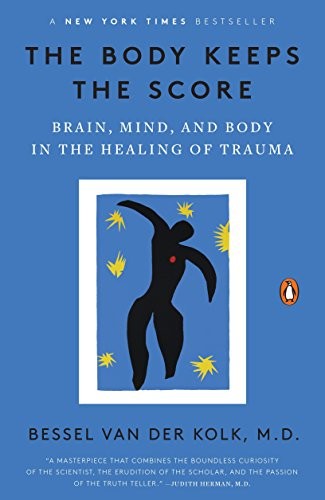
5. THE BODY KEEPS THE SCORE BY DR. BESSEL VAN DER KOLK
Dr. Bessel van der Kolk | ⭐ 4.8/5
Who it’s for: College students who have experienced anxiety, trauma, or emotional dysregulation and suspect their relationship with social media might be connected to deeper nervous system patterns.
Get it here: https://www.amazon.com/Body-Keeps-Score-Bessel-van/dp/0143127748?tag=readplug09-20
“Trauma is not the story of what happened to you. It’s the story of what happens inside you as a result of what happened.”
A significant percentage of college students have some trauma background — chronic stress from childhood, emotional neglect — and for many, social media becomes a way to regulate nervous system arousal. The scroll provides dopamine hits that temporarily soothe anxiety, but it keeps the nervous system in low-grade hypervigilance. Van der Kolk’s chapter on “The Digital Playground” explains why social media is so compelling for people struggling with anxiety at a nervous system level.
My take: This is a serious book. It’s long and it’s dense and it covers a lot of ground. But if you’ve been in therapy for anxiety and still can’t shake the feeling that something deeper is going on, this might be the book that finally gives you language for it.

6. ATTACHED BY AMIR LEVINE AND RACHEL HELLER
Amir Levine and Rachel Heller | ⭐ 4.6/5
Who it’s for: College students who find themselves checking social media obsessively for reassurance, feeling anxious when they don’t get likes or comments, and suspecting their attachment style might be playing a role.
Get it here: https://www.amazon.com/Attached-Discover-Anxiety-Avoidant-Patterns/dp/0399238556?tag=readplug09-20
“Our need for connection with others is not a weakness. It’s part of our biological makeup.”
Levine and Heller apply attachment theory — how we form emotional bonds based on childhood experiences — to adult relationships, including our relationships with technology. When you’re anxiously attached, you use social media to seek reassurance. But social media can’t provide secure attachment — it’s too one-directional, too curated, too unreliable. So you keep checking, and you keep feeling anxious, and you don’t understand why.
My take: If you find yourself feeling worse after using social media but unable to stop, this book might help explain why and point you toward a more secure way of meeting your need for connection.

7. THE SOCIAL DILEMMA BY JEFF ORLOFF
Jeff Orloff | ⭐ 4.4/5
Who it’s for: College students who want to understand the business model behind social media and how it creates products designed to be addictive and anxiety-producing.
Get it here: https://www.amazon.com/Social-Dilemma-Techs-Addictive-Products/dp/0063030166?tag=readplug09-20
“We were being manipulated, and we didn’t even know it.”
Based on the documentary of the same name, this book is an inside look at how social media companies design products to be addictive. Orloff interviews former employees from Facebook, Google, Instagram who explain exactly how these products are engineered to exploit psychological vulnerabilities for profit. When you understand that the feeling of being “behind” on social media is a manufactured product, it loses some of its power.
My take: This is a good book to read when you’re feeling down on yourself for not being able to put your phone down. Understanding that this is engineered to be hard doesn’t excuse it, but it does help with the shame.

8. THE POWER OF OFF BY COURTNEY SHEIN
Courtney Shein | ⭐ 4.3/5
Who it’s for: College students who want a practical, step-by-step guide for reducing social media use and reclaiming time and mental energy without going cold turkey.
Get it here: https://www.amazon.com/Power-Off-Herb-Books-ebook/dp/B08BKBGX5J?tag=readplug09-20
“We don’t need more time. We need more intentionality.”
Shein offers a practical, less philosophical approach — a concrete system for using social media less and living more. The book includes a 21-day digital detox program that starts small and builds, more sustainable than going cold turkey. Shein’s honesty about the emotional challenges of disconnecting — FOMO, boredom, being alone with yourself — helps you work with these feelings rather than be surprised by them.
My take: I recommended this to a student who wanted something structured and practical, and she said it was the first program she’d actually completed. Sometimes simple is better.
9. THE MYSTERY OF SOCIAL MEDIA ANXIETY BY DR. STEPHEN MOORE
Dr. Stephen Moore | ⭐ 4.5/5
Who it’s for: College students who want a clear, research-based explanation of why social media causes anxiety and what specific mechanisms drive the anxiety response.
Get it here: https://www.amazon.com/Mystery-Social-Media-Anxiety-Deciphering/dp/1954580124?tag=readplug09-20
“Social media anxiety is not a character flaw. It’s a predictable response to an unpredictable and deliberately attention-capturing environment.”
Moore translates research on social media and anxiety into accessible language for young people. He covers how social comparison on Instagram and TikTok activates the same neural pathways as physical threats, why quantified social validation triggers anxiety, and how hyperconnected social media creates impossible expectations. His refusal to oversimplify — mapping the territory so you understand what you’re actually dealing with — is valuable.
My take: I found the chapters on social comparison and fear of missing out most useful for my own understanding. This is a good book for students who want the “why” before they start working on the “how.”

10. BOUNDARIES BY DR. HENRY CLOUD AND DR. JOHN TOWNSEND
Dr. Henry Cloud and Dr. John Townsend | ⭐ 4.6/5
Who it’s for: College students who recognize they have difficulty setting boundaries with social media and technology and want to develop a healthier internal sense of limits.
Get it here: https://www.amazon.com/Boundaries-Updated-Expanded-Conference/dp/0310351809?tag=readplug09-20
“A boundary is a property line. A property line has to do with what is yours and what is not yours.”
The inability to set boundaries with social media is a boundary problem, not a willpower problem. If you can’t say no to the scroll even when you want to, if you check your phone during class or in the middle of conversations — these are boundary failures. Cloud and Townsend are Christian psychologists, but the boundary principles apply regardless of spiritual orientation. Boundaries aren’t about restriction — they’re about protection.
My take: The first half of this book is more relevant to social media anxiety than the second half, which focuses more on relational boundaries. Read it for the boundary framework, not for a complete life overhaul.
FREQUENTLY ASKED QUESTIONS
IS SOCIAL MEDIA ANXIETY A REAL MENTAL HEALTH CONDITION?
Social media anxiety is not currently classified as a distinct clinical diagnosis in the DSM-5, but that doesn’t mean it’s not real. What we typically call social media anxiety is actually a cluster of symptoms — excessive worry about what others think of you, fear of missing out, comparison-driven low self-esteem, and physiological arousal (rapid heartbeat, shallow breathing, intrusive thoughts) when engaging with or anticipating social media use. These symptoms map onto existing anxiety disorders, and research increasingly shows that heavy social media use can both cause and worsen anxiety symptoms. If you’re experiencing these symptoms, they deserve attention regardless of whether they have an official name.
CAN READING BOOKS REALLY HELP WITH SOMETHING LIKE SOCIAL MEDIA ANXIETY?
Books are not a substitute for therapy if you have a clinical anxiety disorder, but they can be a powerful complement to professional support. The books on this list work in different ways: some offer cognitive frameworks for understanding your relationship with social media, some provide practical strategies for changing behavior, and some offer the deeper insight that comes from seeing your experience reflected in someone else’s words. For mild to moderate social media anxiety, books like the ones above are often the first line of defense — and they’re also the most accessible, since they don’t require insurance or appointments.
I’M A COLLEGE STUDENT WITH NO MONEY — HOW DO I ACCESS THESE BOOKS?
Most of these books are available at your campus library, and many are available digitally through services like Libby or Kindle Unlimited. If your library doesn’t have a book, you can usually request it through interlibrary loan, which is free. Some authors also offer audiobook versions through subscription services that offer free trials. And if you’re truly stuck, check if your campus counseling center has a lending library — many do, and they often include books like the ones on this list.
HOW LONG DOES IT TAKE TO SEE IMPROVEMENT IN SOCIAL MEDIA ANXIETY?
This depends entirely on the individual and the severity of their symptoms. Some people notice a shift within days of implementing the strategies from books like “How to Break Up with Your Phone” or “The Power of Off.” For others, particularly those with underlying anxiety disorders or trauma histories, improvement may take weeks or months of consistent work. The important thing is to start — and to give yourself permission to not be perfect at this. You’re not trying to achieve perfection. You’re trying to create a sustainable relationship with technology that serves your actual values.
IS IT ENOUGH TO JUST USE SOCIAL MEDIA LESS?
Using social media less can help, but it’s usually not sufficient on its own. The reason is that social media anxiety is often a symptom of something deeper — unmet needs for connection, underlying anxiety disorders, unresolved trauma, or an unclear sense of identity. If you only address the behavior (scrolling less) without addressing the underlying drivers, you’ll probably find that the urge to scroll returns, possibly stronger than before. The most effective approach combines behavioral changes (using social media differently or less) with internal work (therapy, journaling, developing a clearer sense of your values and identity).
MY PARENTS KEEP TELLING ME TO JUST STOP USING SOCIAL MEDIA — HOW DO I EXPLAIN THAT IT’S HARDER THAN THAT?
This is one of the most frustrating parts of dealing with social media anxiety, and I hear it from students a lot. The people who haven’t struggled with this genuinely don’t understand why you can’t just put the phone down. The best explanation I’ve found is to ask them: “Would you tell someone with depression to just cheer up?” When they say no, you can explain that social media anxiety involves the same kind of neurobiological mechanism — it’s not a character flaw or a lack of discipline, it’s a response to a system designed to exploit psychological vulnerabilities. If they want to understand more, share “The Social Dilemma” or “Stop Reader” with them. Some parents are genuinely interested in understanding.
WHAT IF I CAN’T AFFORD THERAPY BUT BOOKS AREN’T ENOUGH?
If books aren’t enough and therapy isn’t accessible, look into peer support programs on campus, which are often free. Many college counseling centers offer group therapy or workshops specifically focused on anxiety and stress management. There are also evidence-based online programs (like those based on Cognitive Behavioral Therapy principles) that are significantly cheaper than traditional therapy while maintaining effectiveness. And don’t underestimate the power of small changes: even reducing social media use by 30% can make a measurable difference in anxiety symptoms for some people.
THE BOTTOM LINE
Here’s what I’ve learned from reading all of these books and from my own experience with social media anxiety: the problem isn’t that you’re weak or broken or lacking in discipline. The problem is that you were handed a device designed by some of the most sophisticated engineers in the world to capture your attention and keep it, and nobody taught you that you could refuse. Nobody told you that your nervous system would respond to likes and comments the same way it responds to physical threats. Nobody gave you the vocabulary to understand what was happening or the tools to change it.
These books do that work. They give you the vocabulary and the tools.
If I had to pick three from this list to start with, I’d say: read “How to Break Up with Your Phone” first for the practical framework, “Stop Reader” second for the philosophical understanding, and “Attached” third — not because it’s the most practical, but because understanding why you’re seeking connection online might help you get some of your needs met in real life, which would reduce the pull to scroll in the first place.
You’re not fighting a losing battle. You just need better weapons. These books are good weapons.
Which book are you grabbing first?
Disclosure: This post contains affiliate links. If you purchase through these links, ReadPlug may earn a small commission at no extra cost to you. We only recommend books we’ve personally found valuable.