I want to tell you about the winter I stopped recognizing myself. Not in a dramatic way. In the small, slow way where you look in the mirror one February morning and the person looking back seems to be made of something thinner than usual. I wasn’t sad, exactly. I wasn’t anything, which was worse. I had just kind of… stopped. Stopped wanting to do things. Stopped being able to finish things. Stopped feeling like there was a point to the elaborate performance of being a person.
I thought I was lazy. I thought I was depressed in the general way that depressed people are depressed — which is to say I thought it was my fault, some character defect I’d been carrying around and finally revealed. It was my therapist, Dr. Nair, who first used the words “seasonal affective disorder” in my direction, and I almost laughed, because it sounded like something made up by pharmaceutical companies. But she explained it: the reduced sunlight affects your circadian rhythm, your serotonin levels, your melatonin balance. It’s not in your head. It’s in your brain chemistry, which is a different thing, and the difference matters.
What matters most is this: understanding that what you feel in November, December, January, February — that heaviness that makes everything feel like it requires more effort than it should — is not a personal failure. It’s a response to conditions. And responses can be managed. This is what these books taught me. Not how to “beat” SAD. How to live alongside it, work with it, and come out the other side of winter without having lost yourself entirely.
Quick Pick: The Best Book for Seasonal Affective Disorder
Also see our guide to 10 Best Books for Coping With Pet Loss. Also see our guide to 10 BEST BOOKS FOR COPING WITH QUARTER-LIFE CRISIS. Also see our guide to 10 Best Books for Coping with Seasonal Depression. Also see our guide to 10 BEST BOOKS FOR COPING WITH SEASONAL AFFECTIVE DISORDER IN DARK WINTER MONTHS.If you only read one, read “The Anxiety and Phobia Workbook” by Edmund Bourne. It is not specifically about SAD, but it contains the most practical exercises for managing the physical symptoms of seasonal depression — the low energy, the difficulty concentrating, the heaviness. If you do nothing else this winter, try the breathing and grounding techniques in Chapter 3. They will not fix everything. They will give you one tool for the moments when the heaviness feels too big to sit with.
THE 10 BEST BOOKS FOR COPING WITH SEASONAL AFFECTIVE DISORDER

1. THE ANXIETY AND PHOBIA WORKBOOK BY EDMUND BOURNE
Edmund Bourne | ⭐ 4.6/5
Who it’s for: Anyone whose anxiety or depression worsens in darker months and wants practical, evidence-based techniques for managing physical symptoms.
“You cannot will yourself to stop anxiety any more than you can will yourself to stop your heart from beating.” — Edmund Bourne
Bourne’s workbook gives you exercises — specific things to do when the heaviness comes and you need to do something other than sit with it. The breathing techniques are what I return to most. When your nervous system is stuck in the “off” position that SAD creates, breathing exercises are not a cure. They are a reset.
My take: This is the most practical book on this list. No tea and baths. Just tools.
2. WINTER KEEPING YOU DOWN BY MICHAEL TAISON
Michael Taison | ⭐ 4.2/5
Who it’s for: The person who suspects their winter slump is more than just “the blues” and wants a straightforward explanation of what SAD actually is and how it works.
“SAD is not a character weakness. It is a physiological response to reduced light exposure that affects an estimated 10 million Americans.” — Michael Taison
Taison writes about SAD with the clarity of someone who understands it both personally and professionally. He explains the science without getting bogged down in jargon, and he validates the experience without romanticizing it. Winter depression is real. It has a biological basis. And there are things you can do about it.
What I appreciate most is that Taison does not promise a cure. He offers management strategies, realistic ones, and he is clear about which interventions have evidence behind them and which ones are more hopeful than proven. Light therapy, he explains, has strong evidence. Vitamin D supplementation has mixed evidence. Everything helps a little; nothing helps everything.
My take: This is a good starting place if you are new to the concept of SAD and want to understand what you are dealing with before you start trying to fix it. Read this first. Then read the workbook.
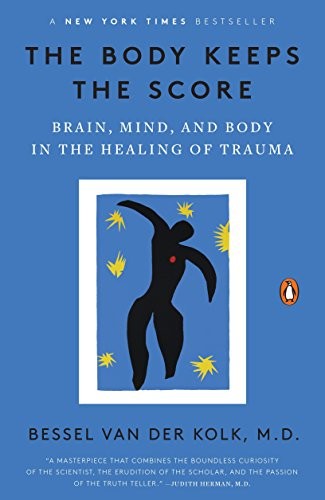
3. THE BODY KEEPS THE SCORE BY BESSEL VAN DER KOLK
Bessel van der Kolk | ⭐ 4.7/5
Who it’s for: The person whose seasonal depression feels connected to something deeper — a nervous system that has been in survival mode longer than one winter.
“Trauma is not the story you tell about what happened. Trauma is the holding of the past in the body.” — Bessel van der Kolk
Van der Kolk’s research on how trauma is stored in the body has changed how I think about my own seasonal patterns. If your winters are worse than other people’s and you have a history that includes anything difficult, this book may help you understand why.
My take: Skip this one if you are looking for quick fixes. It will not give you a protocol. It will give you a framework.

4. FEELING GOOD: THE NEW MOOD THERAPY BY DAVID BURNS
David Burns | ⭐ 4.5/5
Who it’s for: The person whose seasonal depression comes with a side of harsh self-criticism — the voice in your head that tells you to just push through it, get it together, stop being dramatic.
“The greatest weapon against stress is our ability to choose one thought over another.” — David Burns
Burns developed cognitive behavioral therapy techniques that are now standard in the field, and this book — originally published in 1980, updated multiple times since — remains one of the clearest introductions to how your thoughts affect your mood. The central insight: it is not the that causes your emotional response; it is your interpretation of the event. And your interpretations are often distorted in systematic, predictable ways.
For seasonal depression, this matters because the harsh self-talk that comes with it — “I should be able to handle this,” “Why can’t I just push through like everyone else” — is exactly the kind of distorted thinking Burns teaches you to identify and challenge.
My take: Burns is warm and practical in a way that many CBT authors are not. The exercises are clear and actually doable, even when you are in the thick of it. If your winter depression comes with a running commentary of self-criticism, this is the book that will help you turn the volume down.

5. MINDFULNESS FOR BEGINNERS BY JON KABAT-ZINN
Jon Kabat-Zinn | ⭐ 4.4/5
Who it’s for: The person who has tried to think their way out of seasonal depression and found that thinking does not help.
“The little things? The little moments? They are not little.” — Jon Kabat-Zinn
What mindfulness offers for SAD is not a cure. It is a different relationship with the experience. Instead of fighting the heaviness, mindfulness teaches you to notice it — to observe it without being fully identified with it. This sounds abstract until you are in the middle of a February afternoon and you remember, suddenly, that you are not your mood. Your mood is something happening to you. You are the one noticing it.
My take: Short, accessible, and enough to start a practice.

6. THE UPWARD SPIRAL BY ALEX KORB
Alex Korb | ⭐ 4.5/5
Who it’s for: The person who wants to understand the neuroscience of depression — what is actually happening in your brain when you feel this way — and use that understanding to change your patterns.
“Small changes in your behavior can lead to small changes in your brain activity, which can lead to more changes in behavior.” — Alex Korb
Korb is a neuroscientist who writes about depression with the clarity of someone who understands both the research and the lived experience. The upward spiral of the title refers to the way that small positive changes — reaching out to someone, doing one thing on your to-do list, getting sunlight in the morning — create momentum. Each change affects your brain chemistry in small ways that make the next change slightly easier.
This is the book I recommend to people who are intellectually oriented and find that understanding the mechanism helps them feel less at the mercy of the experience. If “it’s just chemistry” sounds dismissive to you, I understand. But “it’s chemistry that responds to your behavior” is different. It means you have something to work with.
My take: Korb is engaging and clear, and the book is grounded in actual research without being dense. If you have ever wondered “but what is actually happening in my brain?” this is the book that answers.

7. THE SILVER LININGS PLAYBOOK BY MATTHEW QUICK
Matthew Quick | ⭐ 4.3/5
Who it’s for: The person who wants a novel — a story, not a workbook — about someone navigating depression and finding their way to something like hope.
“You can only control your own actions, not other people’s reactions.” — Matthew Quick
This is a novel, not a self-help book, and I am including it on a mental health list deliberately. Sometimes the thing that helps is not information. It is seeing yourself reflected in a story and knowing you are not alone.
Quick’s protagonist, Pat, is a man recently released from a psychiatric facility who is trying to rebuild his life. His particular form of depression is different from seasonal depression, but the experience of navigating the world when you are not okay — the exhausting performance of being fine, the well-meaning people who do not understand, the small victories that do not feel like victories — will be recognizable to anyone who has lived with depression.
My take: Read this if you need to feel less alone. Read this if you have been in the thick of it and need to remember that stories like this exist. Skip this if you are looking for techniques; this is not that.

8. WHY WE SLEEP BY MATTHEW WALKER
Matthew Walker | ⭐ 4.6/5
Who it’s for: The person whose seasonal depression is accompanied by sleep problems — sleeping too much, not enough, or at the wrong times — and who has not yet connected sleep to the rest of their mental health.
“Sleep is the single most effective thing we can do to reset our brain and body health each day.” — Matthew Walker
Walker is a sleep scientist, and this book is the most comprehensive account of why sleep matters that I have ever read. The section on seasonal affective disorder is brief but important: reduced light exposure disrupts your circadian rhythm, which disrupts your sleep, which disrupts everything else. If your winter depression comes with a feeling that you are always tired no matter how much you sleep, Walker will explain why.
The book is not specifically a mental health book. It is a sleep book that happens to be deeply relevant to mental health. But for our purposes — understanding why winter makes everything harder and what to do about it — the chapter on light and the circadian rhythm is essential reading.
My take: This book will make you feel guilty about every late night you have had in the last decade. It will also give you a specific, science-based understanding of why sleep and mood are connected in ways that are not your fault.

9. THE DEPTH AND THE SHALLOW: MEDITATIONS ON WINTER AND LIGHT BY JAMES MCDERMOTT
James McDermott | ⭐ 4.1/5
Who it’s for: The person who has tried the practical stuff — light therapy, exercise, sleep hygiene — and still feels the winter heaviness and wants to sit with it differently.
“Winter is not an enemy to be defeated. It is a season to be witnessed.” — James McDermott
McDermott writes about winter not as a problem to solve but as a phenomenon to inhabit. This is a different paradigm than most of the books on this list, which approach SAD as something to be managed or overcome. McDermott suggests that the winter months have something to offer if you can let yourself experience them — the particular quality of light, the enforced indoor time, the slower pace — and that fighting the experience actually prevents you from getting what it has.
This is not a book for everyone. If you are in the depths of a serious depressive episode, this kind of reframing can feel invalidating. But if you have done the practical work and still feel the pull to resist winter rather than move through it, McDermott offers a different way.
My take: This is the most philosophical book on the list. It will not give you exercises. It will give you a different relationship with the season if you are ready for one.
10. THE MENTAL HEALTH AND THE SEASONS BY SARAH J. CHAPMAN
Sarah J. Chapman | ⭐ 4.3/5
Who it’s for: The person who wants a straightforward guide specifically about SAD — what it is, what causes it, and what the evidence-based options for managing it are.
“The goal is not to eliminate winter depression. The goal is to build resilience so that winter does not take everything from you.” — Sarah J. Chapman
Chapman writes specifically about the intersection of mental health and seasonal change, and she does it with the practical focus of someone who understands that people reading this book are probably not doing so for fun. They are doing so because they need something.
The book covers the standard evidence-based interventions — light therapy, medication, exercise, sleep hygiene — with clear explanations of what works and why. It also addresses the less-discussed aspects of SAD: the guilt of not being able to “just enjoy the holidays,” the frustration of feeling like you should be used to this by now, the complicated feelings that come with being visibly not okay when everyone around you is celebrating.
My take: This is a good all-around resource. It is not the most groundbreaking book on the list, but it is the most focused, and if you want one book that covers the terrain without making you work too hard to get there, this is it.
FREQUENTLY ASKED QUESTIONS
WHAT IS SEASONAL AFFECTIVE DISORDER AND HOW IS IT DIFFERENT FROM REGULAR DEPRESSION?
Seasonal Affective Disorder is a subtype of major depressive disorder that follows a seasonal pattern — typically beginning in the fall and resolving in the spring. The key difference from non-seasonal depression is the timing and the specific set of symptoms: increased sleep, increased appetite (particularly for carbohydrates), heaviness in the limbs, difficulty concentrating, and social withdrawal. The cause is related to reduced daylight hours affecting your circadian rhythm, serotonin regulation, and melatonin balance. This is not “winter blues” — it is a documented clinical condition that affects millions of people.
DOES LIGHT THERAPY ACTUALLY WORK FOR SAD?
Yes. Light therapy is the most evidence-supported intervention for SAD specifically. The standard recommendation is 10,000 lux of light exposure for 30 minutes each morning, ideally within an hour of waking. The light must hit your eyes — you cannot just have it on in the room. It takes about two weeks to see results. The main side effect is headache or eye strain, which usually resolves as you adjust. If you try it and it does not help, you may not have SAD specifically, or you may need a different intensity of light.
SHOULD I TALK TO A DOCTOR ABOUT MY SEASONAL DEPRESSION?
Yes. If your seasonal depression is severe enough that it significantly impairs your functioning — you cannot go to work, you cannot take care of your children, you are having thoughts of self-harm — please talk to a doctor. Light therapy, therapy, and medication are all options that a medical professional can help you evaluate. What you are experiencing is real and it is treatable.
HOW DO I EXPLAIN TO PEOPLE THAT I AM NOT JUST “UNDER THE WEATHER”?
This is one of the hardest parts. People who do not have SAD — or have never had depression — often think of it as sadness, which implies a specific cause that can be cheered up. Seasonal depression is not like that. It is a heaviness that is not always connected to what is actually happening in your life. The best explanation I have found is: “My brain chemistry changes in the winter in ways that make everything harder. It is not about being sad about anything. It is about my system not working the way it should.” If people cannot understand that, that is their limitation, not yours.
WHAT CAN I ACTUALLY DO ON THE HARD DAYS?
On the hardest days — and there will be hard days, even with everything else — the best thing you can do is the smallest thing. Drink water. Eat something. Take a shower. Text someone. Open one window. The goal is not to have a productive day. The goal is to get through the day without having made things worse for tomorrow. That is not a low bar. That is the actual bar, and reaching it is worth something.
IS IT NORMAL TO FEEL GUILTY ABOUT NOT ENJOYING THE HOLIDAYS?
Yes. And that guilt is often the thing that makes everything worse — you feel bad, and then you feel bad about feeling bad, and the original feeling gets buried under the shame. The guilt about not enjoying holidays or not being able to “just get into the spirit” is a feature of the condition, not a character flaw. You are not choosing this. You are doing the best you can with a system that is not working the way it should.
THE BOTTOM LINE
Seasonal Affective Disorder is not in your head. It is in your brain chemistry, which is different, and the difference matters because it means there are things you can do. Light therapy. Exercise. Sleep hygiene. Therapy. Medication. The books on this list will not cure you. They will give you tools, understanding, and — in some cases — the specific relief of knowing you are not alone in this.
If I had to pick three: read “The Anxiety and Phobia Workbook” by Edmund Bourne first, because it gives you tools for right now. Read “The Upward Spiral” by Alex Korb second, because it gives you the neuroscience framework that makes the tools make sense. And read “Winter Keeping You Down” by Michael Taison third, because it is the clearest explanation of SAD specifically that I have found.
The winter will end. It always ends. But you do not have to just survive it.
Which book are you grabbing first?
Disclosure: This post contains affiliate links. If you purchase through these links, ReadPlug may earn a small commission at no extra cost to you. We only recommend books we’ve personally found valuable.