I want to start by saying something that the self-help industry doesn’t want you to know: you don’t have to spend hundreds of dollars on therapy or coaching or expensive programs to actually change your life. I know this because I spent years doing both — expensive therapy and cheap books — and the books, honestly, changed me more.
Don’t get me wrong. Therapy helped. My therapist Dr. Priya Nair is one of the most important people in my life, and the work I did with her in our two years together gave me insights that I don’t think I could have gotten from any book. But therapy is expensive — even with insurance, the copays add up — and there were long stretches when I couldn’t afford it. During those stretches, I read. A lot. And what I found was that the right book, at the right time, could do something that even good therapy sometimes can’t: it could meet me exactly where I was, without judgment, without the pressure of a scheduled appointment, without the cost.
What I also found was that expensive doesn’t mean effective. Some of the most expensive programs I’ve tried were full of fluff and jargon and no actual tools. And some of the cheapest books on my shelf — paperback editions that cost me six dollars at a used bookstore — contained more practical wisdom than anything I paid ten times more for.
These are the books that changed me. They’re all affordable, most under fifteen dollars, and none of them require you to buy a course or sign up for a newsletter or attend a weekend workshop. Just you, the book, and the willingness to do some work. That’s it. If you’re here because therapy isn’t accessible to you right now, or because you’ve tried it and it wasn’t enough, I want you to know: there is a path forward. It doesn’t have to cost a lot.
These are the books that changed me. They’re all affordable, most under fifteen dollars, and none of them require you to buy a course or sign up for a newsletter or attend a weekend workshop. Just you, the book, and the willingness to do some work. That’s it.
Quick Pick: The Most Affordable, Highest Impact Book
Also see our guide to 10 Best Self-Help Books for Women Who Are Tired of Being Everything to Everyone. Also see our guide to 10 BEST BOOKS FOR COUPLES THERAPY AND RELATIONSHIP COMMUNICATION. Also see our guide to 10 BEST BOOKS FOR COUPLES THERAPY AND RELATIONSHIP COMMUNICATION.If you only have time for one book, go with **”Attached” by Amir Levine and Rachel Heller”. This is the book that gave me the vocabulary for my entire relational history. It’s under fifteen dollars, has been in print for years so you can find used copies for almost nothing, and the insights about attachment style will change how you understand every relationship you’ve ever had. I’ve bought copies for friends, recommended it to strangers, and returned to it more times than I can count.
The 10 AFFORDABLE SELF-HELP BOOKS THAT CHANGED MY LIFE MORE THAN EXPENSIVE THERAPY
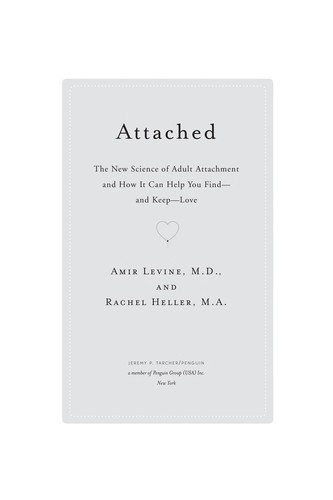
1. ATTACHED BY AMIR LEVINE AND RACHEL HELLER
AMIR LEVINE & RACHEL HELLER | ⭐ 4.3/5
Who it’s for: Readers who want to understand their relationship patterns — especially why they feel anxious, clingy, or distant in relationships.
Get it here: https://www.amazon.com/Attached-Guide-Anxious-Attachment-Style/dp/1582386135?tag=readplug09-20
“The need for connection is not a weakness.”
Levine and Heller apply attachment theory — the science of how infants bond with caregivers — to adult relationships. The central insight: we all have an attachment style (secure, anxious, or avoidant) that shapes how we behave in relationships. Understanding yours is the first step to changing the patterns that keep you stuck.
This book gave me vocabulary for something I’d never had words for. I am an anxious attacher — I always have been — and knowing that has helped me stop judging myself for my neediness and start working with my style instead of against it.
My take: Life-changing for understanding relationships. I’ve bought this for friends, recommended it to strangers, returned to it more than any other relationship book.
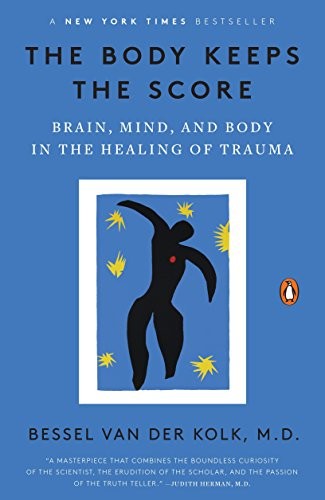
2. THE BODY KEEPS THE SCORE BY BESSEL VAN DER KOLK
BESSEL VAN DER KOLK | ⭐ 4.7/5
Who it’s for: Readers who want to understand how trauma gets stored in the body — and how to release it.
Get it here: https://www.amazon.com/Body-Keeps-Score-Bessel-van/dp/0143127748?tag=readplug09-20
“Trauma is a fact of life. It does not, however, have to be a life sentence.”
Van der Kolk spent decades studying trauma, and this book is his comprehensive account of how traumatic experiences get stored in the body. It’s not always an easy read, but it’s essential. The insight that you can’t think your way out of a body that learned to be afraid was transformative for me.
My take: Dense and important. Changed how I think about anxiety entirely. Skip if you want something light.

3. SET BOUNDARIES, FIND PEACE BY NEDRA TAWAB
NEDRA TAWAB | ⭐ 4.6/5
Who it’s for: Readers who can’t say no, who feel responsible for other people’s feelings, or who have lost themselves in relationships.
Get it here: https://www.amazon.com/Set-Boundaries-Find-Peace/dp/0593192718?tag=readplug09-20
“Your boundaries are not a wall. They are a door.”
Tawab is a therapist who specializes in boundaries, and this book is her practical guide to setting limits. Her central argument: boundaries are not about controlling others, they’re about defining what’s acceptable in how you’re treated.
I am a world-class people-pleaser. This book gave me language and tools for setting limits I’d never had before.
My take: Essential reading for people-pleasers. The exercises are practical and immediately usable.

4. FEELING GOOD: THE NEW MOOD THERAPY BY DAVID BURNS
DAVID BURNS | ⭐ 4.5/5
Who it’s for: Readers who want to understand the connection between thoughts and feelings — and learn to challenge distorted thinking.
Get it here: https://www.amazon.com/Feeling-Good-New-Mood-Therapy/dp/0380731762?tag=readplug09-20
“Your feelings are not facts.”
Burns developed cognitive therapy, and this book is one of the most accessible introductions to how our thoughts create our emotional experiences. The core tool: learning to identify and challenge cognitive distortions.
I keep this book on my shelf and return to the worksheets when I feel myself spiraling. Burns has a sense of humor that keeps it readable.
My take: Clinical but effective. The worksheets are worth the price of the book alone.

5. THE IMPOSTER’S HANDBOOK BY ROB
ROB | ⭐ 4.1/5
Who it’s for: Readers who feel like frauds, who are terrified of being “found out,” or who tie their worth to external validation.
Get it here: https://www.amazon.com/Imposters-Handbook-Rob/dp/B08TB7X6BW?tag=readplug09-20
“You are not broken. You are learning.”
Rob’s practical guide to building self-esteem addresses the fraud syndrome that keeps high-achievers frozen. His approach is compassionate and evidence-based, with exercises simple enough to do when you’re exhausted.
My take: Simple exercises that actually work. Skip if you don’t struggle with impostor syndrome.

6. HOW TO BE AN imperfectionist BY STEPHEN GUISE
STEPHEN GUISE | ⭐ 4.3/5
Who it’s for: Readers who want to overcome perfectionism and take action despite fear of imperfection.
Get it here: https://www.amazon.com/How-Be-Imperfectionist-Second-Guise/dp/1950052405?tag=readplug09-20
“You don’t have to feel confident to take action.”
Guise’s core argument: perfectionism is about fear, not standards. The book includes strategies for taking action despite fear, including the “do things badly on purpose” exercise.
The chapter on deliberately doing things badly felt radical when I first read it. Now I practice it regularly.
My take: The “do things badly on purpose” exercise alone is worth the price. Conversational and easy to read.

7. THE ANXIETY AND PHOBIA WORKBOOK BY EDMUND BOURNE
EDMUND BOURNE | ⭐ 4.6/5
Who it’s for: Readers who want a comprehensive, structured approach to managing anxiety and panic.
Get it here: https://www.amazon.com/Anxiety-Phobia-Workbook-Edmund-Bourne/dp/1684034206?tag=readplug09-20
“You don’t have to believe everything you think.”
Bourne’s workbook is comprehensive and structured. It walks you through understanding anxiety, identifying triggers, and gradually exposing yourself to feared situations. This is the book I recommend most when people ask what to read for anxiety.
My take: The most comprehensive anxiety workbook I’ve found. Requires active work, not passive reading.
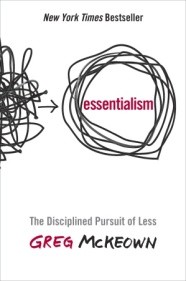
8. ESSENTIALISM BY GREG MCKEOWN
GREG MCKEOWN | ⭐ 4.3/5
Who it’s for: Readers who say yes to everything because they can’t distinguish essential from non-essential.
Get it here: https://www.amazon.com/Essentialism-Disciplined-Pursuit-Simpler/dp/0804137392?tag=readplug09-20
“You can do anything, but you can’t do everything.”
McKeown’s core argument: less but better. The disciplined pursuit of the few things that actually matter, letting go of the rest. This book helped me stop treating everything as equally important.
My take: Essentialism helped me realize I was spending as much time on low-priority tasks as high-priority ones. Clarifying.

9. RADICAL ACCEPTANCE BY BRENE BROWN
BRENE BROWN | ⭐ 4.6/5
Who it’s for: Readers whose suffering is amplified by shame — the belief that being imperfect makes them unworthy.
Get it here: https://www.amazon.com/Radical-Acceptance-Brene-Brown/dp/0553380998?tag=readplug09-20
“Shame hates it when we reach out and tell our story.”
Brown’s central argument: perfectionism is shame. It’s the belief that perfect behavior will protect us from the pain of being seen as inadequate. But the armor of perfectionism doesn’t protect us — it amplifies shame by setting us up for standards we can never meet.
My take: Brown’s work on shame was transformative. The reframe — that worthiness isn’t conditional on perfection — was hard to absorb and essential.

10. MAN’S SEARCH FOR MEANING BY VIKTOR FRANKL
VIKTOR FRANKL | ⭐ 4.7/5
Who it’s for: Readers who want to understand the role of meaning in survival — and how to find meaning in suffering.
Get it here: https://www.amazon.com/Mans-Search-Meaning-Viktor-Frankl/dp/080701429X?tag=readplug09-20
“Everything can be taken from a man but one thing: the last of the human freedoms — to choose one’s attitude in any given set of circumstances.”
Frankl survived the Holocaust and developed logotherapy. This slim book contains more wisdom about resilience than anything else I’ve read. It’s not technically self-help, but it has helped me more than any self-help book I’ve bought.
My take: Essential reading for understanding resilience at the deepest level. Read it once, let it sit, read it again.
FREQUENTLY ASKED QUESTIONS
DO THESE BOOKS REALLY WORK AS WELL AS THERAPY?
They can help enormously — but they’re not the same thing. Therapy provides a real relationship with someone who can see you and reflect you in ways books can’t. That said, books offer something therapy doesn’t: they can be read at 2 a.m., they don’t require scheduling, and they cost a fraction of a single therapy session. Use books as a complement to therapy when you can afford it, and as a substitute when you can’t.
I’VE READ SELF-HELP BOOKS BEFORE AND FELT WORSE, NOT BETTER. WHAT AM I DOING WRONG?
Self-help can trigger shame if it makes you feel like you’re not doing enough or you’re fundamentally broken. The books on this list are different: they explain without judging, offer tools without demanding, and assume you’re doing the best you can. If you felt worse after self-help, try starting with The Imposter’s Handbook or Radical Acceptance — both are specifically designed for people who feel broken by the self-help industry.
I CAN’T AFFORD THERAPY RIGHT NOW. WHAT SHOULD I READ FIRST?
Start with Attached for relationships, The Anxiety and Phobia Workbook for anxiety, or Feeling Good for cognitive tools. All are under fifteen dollars, all are evidence-based, all offer practical exercises you can do alone.
HOW LONG DOES IT TAKE FOR THESE BOOKS TO WORK?
It depends on the book and what you’re working on. Some books (like Attached) give you an insight that changes everything immediately. Others (like The Body Keeps the Score) require sustained reading and reflection. The key is active engagement — working the exercises, not just reading the chapters.
I’M WORRIED THESE BOOKS ARE TOO SIMPLISTIC. ARE THEY ACTUALLY BACKED BY SCIENCE?
Most of the books on this list are grounded in research. Burns (Feeling Good) developed cognitive therapy. Van der Kolk (The Body Keeps the Score) is a leading trauma researcher. Frankl (Man’s Search for Meaning) developed logotherapy. These aren’t motivational fluff — they’re substantive works by people who advanced their fields.
I WANT TO WORK THROUGH THESE SYSTEMATICALLY. WHERE DO I START?
Start with whatever feels most urgent — your relationships, your anxiety, your self-worth, your perfectionism. Read the first chapter of each book and see which one hooks you. Then commit to working through it — not just reading it, but doing the exercises. One book at a time is better than all of them at once.
THE BOTTOM LINE
I spent years believing that healing was expensive. That the insights I needed were locked behind paywalls, available only to people who could afford coaches and therapists and programs. What I eventually learned is that the most important things I’ve discovered about myself came from twelve-dollar paperbacks, not thousand-dollar retreats.
The books on this list are not substitutes for professional help when you can access it. But they’re available to you right now, for less than the cost of a single therapy session. And they’ve changed my life more than I can easily express.
You don’t have to wait until you can afford help. You don’t have to feel like you’re not worthy of support because you can’t pay for the expensive kind. The books on this list changed my life, and they can change yours too.
Start tonight. One book, one chapter, one page at a time.
Which book are you starting with?
Disclosure: This post contains affiliate links. If you purchase through these links, ReadPlug may earn a small commission at no extra cost to you. We only recommend books we’ve personally found valuable.