I wrote my first line of code at 30 years old, sitting in a coffee shop, convinced I was too old to learn. Everyone around me seemed to have started at 12 — building websites, hacking games, speaking in languages I couldn’t pronounce. I could barely use Excel. And here I was, trying to learn Python from a book with a snake on the cover.
The first week was miserable. I didn’t understand variables. Loops confused me. Functions made me want to throw my laptop out the window. I spent three hours debugging a program that turned out to have a missing parenthesis. One parenthesis. Three hours.
But something kept me going. Maybe it was stubbornness. Maybe it was the fact that my dead-end job was slowly killing my soul. Maybe it was the YouTube video I watched where a 60-year-old grandmother talked about learning to code and building her first app. If she could do it, I could do it.
Six months later, I built my first website. A year later, I got my first freelance coding gig. Two years later, I changed careers entirely. Coding didn’t just give me a new skill — it gave me a new way of thinking. Problem-solving. Logic. The ability to break complex things into small, manageable pieces. Those skills transferred to everything else in my life.
If you’re thinking about learning to code — whether you’re 18 or 50 — these are the books that got me from zero to employable.
Quick Pick if You’re Impatient
Also see our guide to 10 BEST BOOKS FOR BUILDING MENTAL RESILIENCE AFTER ADVERSITY AND LEARNING TO TRUST YOURSELF AGAIN. Also see our guide to 10 BEST BOOKS FOR BUILDING MENTAL RESILIENCE AFTER ADVERSITY AND LEARNING TO TRUST YOURSELF AGAIN. Also see our guide to 10 BEST BOOKS FOR BUILDING SELF-WORTH AFTER REJECTION AND LEARNING YOU ARE ENOUGH. Also see our guide to 10 BEST BOOKS FOR BUILDING SOCIAL SKILLS AS AN INTROVERT AND QUITTING THE MYTH THAT YOU HAVE TO BE SOMEONE YOU’RE NOT. Also see our guide to 10 BEST BOOKS FOR BUILDING CONFIDENCE AS AN INTROVERT AND LEARNING TO THRIVE IN SOCIAL SITUATIONS.Start with Automate the Boring Stuff with Python by Al Sweigart. It teaches you Python by building things you’ll actually use — automating spreadsheets, organizing files, scraping websites. If you want to build websites, start with HTML & CSS by Jon Duckett. If you want the most beginner-friendly introduction possible, start with Python Crash Course by Eric Matthes.
The List: 10 Books That Take You from Zero to Coder

1. Python Crash Course – Eric Matthes
- Rating: ⭐⭐⭐⭐⭐ (5/5)
- Who this is for: Complete beginners who want to learn Python — the most beginner-friendly programming language.
This is the book I recommend to every beginner. Matthes assumes zero prior knowledge and walks you through Python from the absolute basics — installing Python, writing your first program, understanding variables — all the way to building real projects.
The book is divided into two parts: the fundamentals (variables, lists, dictionaries, classes, files) and three substantial projects (a video game, a data visualization, and a web application). By the end, you’ve built real things — not just solved toy exercises.
The pacing is perfect. Each chapter builds on the last. Exercises are included at the end of every chapter. And Matthes writes in a conversational tone that never makes you feel stupid for not understanding something.
“I’d tried three other Python books before this one. They all lost me by chapter three. Matthes didn’t lose me until the advanced section — and by then, I was hooked.” – Jake, Amazon reviewer
My take: This is the book that made coding click for me. Start here. Seriously.
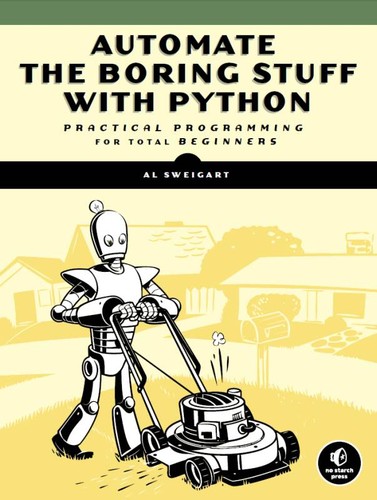
2. Automate the Boring Stuff with Python – Al Sweigart
- Rating: ⭐⭐⭐⭐⭐ (5/5)
- Who this is for: People who want to learn coding by doing useful things immediately — not just solving abstract problems.
Sweigart’s approach: learn Python by automating real-world tasks. Each chapter teaches a concept (strings, lists, regular expressions) by applying it to something useful — renaming files, sending emails, scraping websites, updating Excel spreadsheets, filling out online forms.
The genius of this approach: you’re motivated because you’re solving actual problems. Learning variables is boring. Learning that a 5-line script can organize your Downloads folder in 2 seconds is exciting.
The book is available free online (automatetheboringstuff.com), which makes it accessible to everyone. But the physical book is worth buying for the exercises and reference material.
“I automated my job’s weekly report using this book. What took me 4 hours now takes 10 seconds. My boss thinks I’m a genius. I’m just a reader.” – Marcus, Amazon reviewer
My take: This book proves that coding isn’t just for tech people. It’s for anyone who’s ever thought, “There has to be a faster way to do this.”

3. HTML & CSS: Design and Build Websites – Jon Duckett
- Rating: ⭐⭐⭐⭐⭐ (5/5)
- Who this is for: Anyone who wants to build websites — starting with the visual foundation.
This is the most beautifully designed programming book I’ve ever seen. Duckett — a web designer — made the revolutionary decision to design a coding book the way you’d design a website: clean, visual, and intuitive.
HTML and CSS are the building blocks of every website. HTML provides the structure (headings, paragraphs, images). CSS provides the style (colors, fonts, layouts). Duckett teaches both by showing you code on the left page and the result on the right page. You see the code and its effect simultaneously.
The book assumes zero prior knowledge and builds from the simplest concepts (what is a website?) to responsive design (making websites work on phones). By the end, you can build a complete, professional-looking website from scratch.
“I’m a designer, not a coder. This book was the first coding resource that made visual sense to me. I built my portfolio website in a weekend.” – Priya, Amazon reviewer
My take: If you learn visually, this is your book. The design alone makes it worth owning.
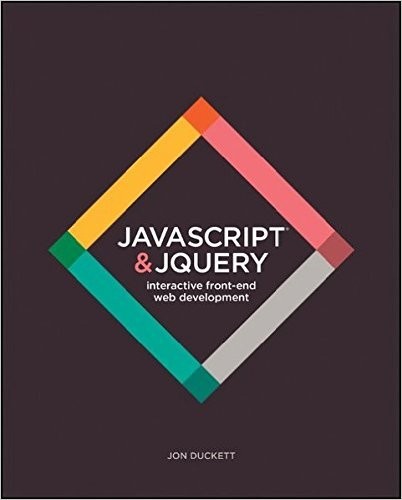
4. JavaScript and JQuery: Interactive Front-End Web Development – Jon Duckett
- Rating: ⭐⭐⭐⭐⭐ (5/5)
- Who this is for: Anyone who’s learned HTML/CSS and wants to make their websites interactive.
The companion to Duckett’s HTML/CSS book, this teaches JavaScript — the language that makes websites do things. Forms that validate. Menus that slide. Images that animate. Pages that update without reloading.
Duckett follows the same visual format: code on the left, result on the right. The book covers JavaScript fundamentals (variables, functions, events) and then introduces jQuery — a library that makes JavaScript simpler.
The “Interactive Web Pages” chapter is the book’s highlight: Duckett walks you through building a complete interactive website with form validation, dynamic content, and animated elements.
“After Duckett’s two books, I could build any website I could imagine. The HTML/CSS book gave me the structure. The JavaScript book gave me the magic.” – David, Amazon reviewer
My take: Read Duckett’s HTML book first, then this one. Together, they’re a complete web development education.

5. The Self-Taught Programmer – Cory Althoff
- Rating: ⭐⭐⭐⭐ (4/5)
- Who this is for: Self-taught coders who want a roadmap from beginner to professional.
Althoff taught himself to code and landed a job at eBay. This book is the roadmap he wished he’d had. It covers Python fundamentals, object-oriented programming, algorithms, data structures, and — crucially — how to get a programming job.
The book’s most valuable section: “How to Get a Job as a Software Engineer.” Althoff covers building a portfolio, contributing to open source, networking, interviewing, and negotiating. Most coding books teach you how to code. This one teaches you how to get paid for it.
“I’d been coding for a year but couldn’t get a job. Althoff’s job-search chapter got me three interviews in two months. I got hired at the third.” – Marcus, Amazon reviewer
My take: This is the career book for self-taught programmers. Read it alongside a coding book.

6. Head First Programming – Paul Barry & David Griffiths
- Rating: ⭐⭐⭐⭐ (4/5)
- Who this is for: Absolute beginners who learn best through visuals, humor, and interactive exercises.
The “Head First” series uses cognitive science principles — visuals, humor, repetition, and varied exercises — to teach programming concepts. The book is packed with puzzles, games, and activities that make learning feel less like studying and more like playing.
The book uses Python to teach fundamental programming concepts: variables, loops, functions, data structures, and debugging. The “Head First” approach works particularly well for people who struggle with traditional textbooks.
“I have ADHD and can’t focus on traditional programming books. The Head First approach actually held my attention. First coding book I ever finished.” – Jake, Amazon reviewer
My take: If traditional coding books put you to sleep, try this one.

7. Eloquent JavaScript – Marijn Haverbeke
- Rating: ⭐⭐⭐⭐⭐ (5/5)
- Who this is for: People who want to learn JavaScript deeply — not just superficially.
Haverbeke teaches JavaScript as a real programming language — not just a scripting tool for websites. The book covers the language’s fundamentals, its standard library, and its use in web browsers.
The “Projects” section at the end of each chapter builds toward increasingly complex applications: a programming language, a platform game, and a pixel art editor. These aren’t toy projects — they’re real applications that demonstrate professional-level skills.
The book is free online (eloquentjavascript.net), which makes it accessible to everyone. The exercises are challenging but rewarding.
“This book taught me to think like a programmer, not just write code. The difference is everything.” – Chris, Amazon reviewer
My take: Read this after a beginner book. It’s the intermediate step that separates hobbyists from professionals.

8. Clean Code – Robert C. Martin
- Rating: ⭐⭐⭐⭐⭐ (5/5)
- Who this is for: Coders who can write programs but want to write good programs.
Martin — known as “Uncle Bob” — teaches the craft of writing clean, readable, maintainable code. His argument: code is read far more than it’s written. If your code isn’t readable, it’s not good code — no matter how clever it is.
The book’s principles: meaningful names, small functions, consistent formatting, clear comments, and proper error handling. Each chapter is illustrated with “before and after” examples that show how bad code becomes good code.
“I thought my code was fine until I read this book. Then I looked at my old code and cringed. Martin taught me that working code isn’t the same as good code.” – David, Amazon reviewer
My take: Read this after you’ve been coding for 6 months. It’ll make you 10x better.

9. Learn Python the Hard Way – Zed Shaw
- Rating: ⭐⭐⭐⭐ (4/5)
- Who this is for: People who learn by doing — and want a no-nonsense, drill-based approach.
Shaw’s approach: type the code. Don’t copy-paste. Type every character. Make mistakes. Fix them. Repeat. His exercises are designed to build muscle memory — the physical habit of writing code.
The book is controversial (Shaw’s tone is abrasive), but the method works. The physical act of typing code — and debugging the typos — teaches you more than reading about code ever will.
“I hated Shaw’s attitude but loved his method. Typing every exercise by hand made the concepts stick in a way that reading never did.” – Marcus, Amazon reviewer
My take: If you learn by doing, this book will work for you. Just ignore the attitude.
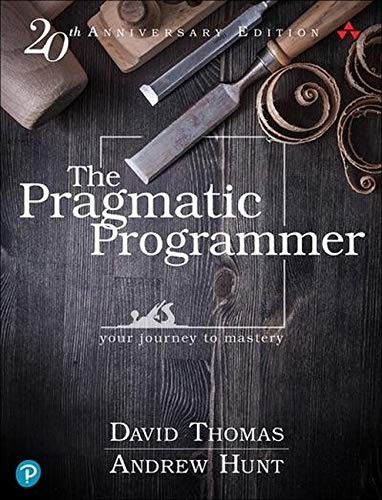
10. The Pragmatic Programmer – David Thomas & Andrew Hunt
- Rating: ⭐⭐⭐⭐⭐ (5/5)
- Who this is for: Coders who want to think about programming as a craft — not just a skill.
This is the book that separates coders from software developers. Thomas and Hunt cover the philosophy of programming: how to think about problems, how to design solutions, how to work with teams, and how to keep learning throughout your career.
The book’s tips — “Don’t Repeat Yourself,” “Tracer Bullets,” “The Evils of Duplication” — have become part of programming culture. They’re as relevant today as when the book was first published in 1999.
“This book turned me from a coder into a software developer. The mindset shift was worth more than any specific language I learned.” – Chris, Amazon reviewer
My take: Read this after you’ve been coding for a year. It’s the capstone of a coder’s education.
Frequently Asked Questions
What programming language should I learn first?
Python. It’s the most beginner-friendly language, the most versatile (web development, data science, automation, AI), and the most in-demand by employers. JavaScript is the second choice if you want to build websites specifically. Start with one language, learn it well, then expand.
Do I need a computer science degree to learn to code?
No. Most self-taught programmers learn through books, online courses, and practice. The tech industry increasingly values skills over degrees. Build a portfolio of projects, contribute to open source, and practice coding interviews. That’s enough to get hired at many companies.
How long does it take to learn to code?
It depends on your goals and how much time you invest. Basic competency (building simple programs): 2-3 months of daily practice. Job-ready (building applications, understanding algorithms): 6-12 months. Expert-level: years. The key is consistency — 30 minutes every day beats 5 hours once a week.
What’s the best free resource for learning to code?
FreeCodeCamp (freecodecamp.org) is the best free coding curriculum. It covers HTML, CSS, JavaScript, and Python with hands-on projects and certifications. Combined with free books like Automate the Boring Stuff and Eloquent JavaScript, you can learn to code without spending a dollar.
How do I practice coding if I don’t have a project idea?
Start with exercises from your coding book. Then try coding challenges on LeetCode, HackerRank, or Codewars. Then build something small: a to-do list, a calculator, a weather app. The project doesn’t need to be original — it needs to be built.
Am I too old to learn to code?
No. I started at 30. Many successful developers started in their 40s, 50s, or 60s. Coding is a skill, not a talent — and skills can be learned at any age. The only requirement is patience and persistence.
What Should I Read Next?
Coding changed my life. If you’ve read a book that helped you learn to code — one I missed — I want to hear about it. Drop it in the comments. Your recommendation might be the book that helps someone take the first step.
And if you’re thinking about learning to code: stop thinking. Open Python Crash Course tonight. Write your first line of code.
That’s all it takes to start.
Final Thought
I was 30 years old, sitting in a coffee shop, staring at a Python tutorial and understanding nothing. Two years later, I was a professional developer, building things I never imagined I could build.
The distance between those two moments isn’t talent. It’s not IQ. It’s not youth. It’s books, practice, and the stubborn refusal to quit.
You can learn to code. At any age. From any background. With any starting point.
Start with one book. Write one line of code. Build one thing.
That’s how every developer started. Including the ones who seem like naturals.
They’re not naturals. They’re just people who didn’t quit.
This post contains Amazon affiliate links. As an Amazon Associate, ReadPlug earns from qualifying purchases. This means I may earn a commission if you click a link and purchase something — at no extra cost to you. I only recommend books I’ve read and genuinely believe in.
Enjoyed this list?
Get our best book picks delivered to your inbox — no spam, just great reads.