I need to tell you about the afternoon I realized I had been angry for six years and didn’t know it.
This sounds dramatic when I write it down. It was not dramatic at the time. It was a regular Tuesday, my son Eli was six, and I was sitting in my car in the school parking lot crying in the way I had apparently been crying for years — quietly, in the car, before I went inside to be the functional version of myself that everyone expected. And I suddenly understood, in that parking lot, that the crying was not about the specific thing that had upset me that day. It was about six years of accumulated something that I had no name for.
I called it stress. I called it being tired. I called it the normal amount of overwhelmed that everyone feels. I did not call it anger because I did not think of myself as an angry person. I am a people-pleaser. I am accommodating. I am fine. These were the things I told myself, and the things I told my therapist, and the things I told my journal, and none of them were lies exactly. They were just incomplete. The missing piece was that I was furious about a marriage that ended without drama, about a life that had shrunk around me so gradually I didn’t notice the walls closing in, about all the times I had said yes when I meant no and smiled when I meant something else entirely.
This is what emotional intelligence is not: it is not being calm all the time. It is not suppressing the inconvenient feelings. It is not managing other people’s emotions while ignoring your own. Emotional intelligence is knowing what you feel, and why, and what to do about it. It is a skill I spent thirty-five years not having and the lack of which cost me more than I can calculate.
The books on this list are the ones that taught me what I was missing. Some of them I read in the worst year of my life. Some of them I return to when I feel myself slipping back into the parking-lot crying that means something larger is wrong. They are not magic. They will not rewire you overnight. But they will give you language for what’s happening inside you, and language is the beginning of everything.
Quick Pick: The Best Book for Building Emotional Intelligence
If you only have time for one book, read “Emotional Intelligence” by Daniel Goleman. This is the foundational text — the one that gave the field its vocabulary and its urgency. Goleman did not invent the concept, but he brought it into mainstream conversation in 1995 and nothing has replaced it since. He understands that IQ is not the only determinant of life outcomes, and that the ability to understand and manage emotions — in yourself and others — may matter more than any metric we had previously considered.
Get it here: https://amzn.com/055338371X?tag=readplug09-20
The 10 BEST BOOKS FOR BUILDING EMOTIONAL INTELLIGENCE AND SELF-AWARENESS AND FINALLY UNDERSTANDING HOW YOU FEEL
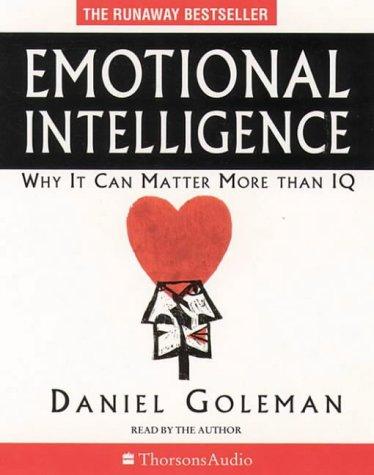
1. Emotional Intelligence by Daniel Goleman
DANIEL GOLEMAN | ⭐ 4.6/5
Who it’s for: Anyone who wants to understand the science behind emotional intelligence — and why it matters more than IQ for almost every outcome that matters.
Get it here: https://amzn.com/055338371X?tag=readplug09-20
“The question is not whether emotional intelligence is real. The question is what we do with that understanding.”
Goleman’s book is a survey of the research on emotions and their role in human functioning. He covers the neuroscience of emotional responses, the way emotional habits form and resist change, the impact of emotional intelligence on everything from academic achievement to relationship success to physical health. The chapters on empathy and social intelligence are particularly valuable — he explains why some people seem to naturally read rooms while others consistently misjudge social situations, and what either group can do about it.
What I take from Goleman is the framework. He gave me words for things I had experienced without naming: the way anger and fear can mask each other, the difference between experiencing an emotion and being consumed by it, the specific skills that make up emotional intelligence. I am not naturally emotionally intelligent. I am naturally emotionally intelligent-adjacent — I feel things deeply and have spent years learning to understand what I’m feeling and why. Goleman’s book accelerated that learning by years.
My take: The foundational text. Read it even if you’ve heard the concepts before — the specific research he cites is worth engaging with directly.
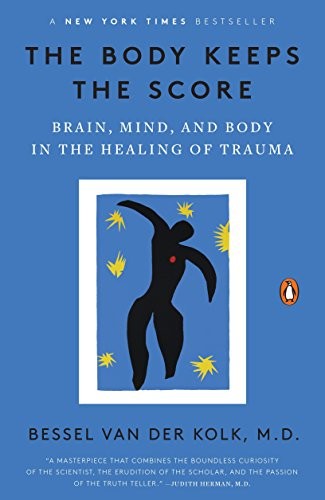
2. The Body Keeps the Score by Bessel van der Kolk
BESSEL VAN DER KOLK | ⭐ 4.7/5
Who it’s for: People who suspect their body is holding onto emotional experiences they haven’t fully processed — and who want to understand why talk therapy isn’t always enough.
Get it here: https://amzn.com/0143127748?tag=readplug09-20
“The body keeps score. If we want to change, we have to feel.”
Van der Kolk is a psychiatrist who spent decades working with trauma survivors, and this book is his summary of what he learned. His central argument: trauma is not just an psychological experience but a physical one. The body encodes traumatic experiences and continues responding to present threats as if they were past dangers. This is why people with trauma histories can feel unsafe in situations that appear objectively safe, why traditional talk therapy sometimes isn’t sufficient, why yoga and body-based therapies sometimes accomplish what years of conversation cannot.
What I take from van der Kolk is the permission to feel my body. I had spent decades treating my body as a delivery mechanism for my brain — a vehicle to get me from place to place while my mind did the important work. This book reminded me that my body has opinions too, and that the tension in my shoulders and the tightness in my chest are not random. They are information.
My take: Essential reading for anyone who has experienced difficult emotions they couldn’t think their way out of. It will change how you understand the relationship between mind and body.

3. Atlas of the Heart by Brene Brown
Brene Brown | ⭐ 4.5/5
Who it’s for: People who want to understand the specific emotions that drive self-sabotage and how to move from analysis to action.
Get it here: https://amzn.com/1250807273?tag=readplug09-20
“We cannot heal what we cannot feel.”
Brown’s research focuses on shame and vulnerability, and this book applies those findings to the specific challenge of emotional awareness. She argues that many of us have developed elaborate systems for avoiding difficult emotions — analysis, planning, helping others — and that these systems protect us from feeling while preventing us from healing. The work of emotional intelligence, in her framework, is learning to sit with discomfort long enough to understand what it’s telling us.
What I take from Brown is the permission to stop strategizing and start feeling. I am a champion avoider. I can turn any uncomfortable emotion into a research project, a self-improvement plan, a book to read. Brown helped me see that this is sometimes a way of not being present for the emotion itself. The feeling is the point. The analysis comes after.
My take: Brown is at her best when she’s being clinically precise about emotional experience. This is not her most famous book, but it may be her most useful for the specific work of emotional awareness.
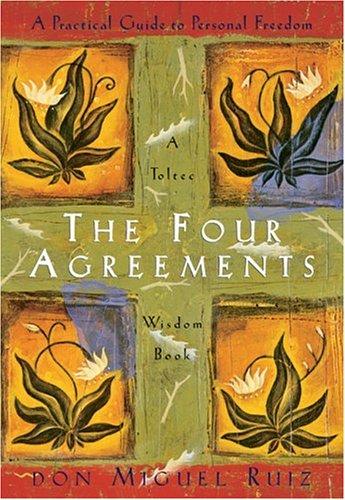
4. The Four Agreements by Don Miguel Ruiz
DON MIGUEL RUIZ | ⭐ 4.4/5
Who it’s for: People who want a framework for understanding how they got the emotional patterns they have — and what to do about it.
Get it here: https://amzn.com/1878424319?tag=readplug09-20
“Be impeccable with your word. Don’t take anything personally. Don’t make assumptions. Always do your best.”
Ruiz presents a code of conduct derived from Toltec wisdom, and while some of the spiritual framing may not be for everyone, the core insights are valuable. The agreements are not just about communication — they’re about the way we construct internal narratives that make us suffer unnecessarily. The second agreement, don’t take anything personally, is particularly useful for emotional intelligence: much of our emotional suffering comes from assuming that other people’s behavior is about us when it usually isn’t.
What I take from Ruiz is the distinction between what is mine and what is not mine. I spent years absorbing other people’s emotional states as if they were my responsibility. Ruiz helped me understand that other people’s reactions are about their own programming, their own wounds, their own agreements. This does not mean I don’t care about others. It means I can stop carrying weight that was never mine to carry.
My take: Short, readable, and more useful than it sounds. The Toltec framing is not essential — the psychological insights stand on their own.

5. Permission to Feel by Marc Brackett
MARC BRACKETT | ⭐ 4.5/5
Who it’s for: People who want a structured approach to emotional intelligence — with specific skills and vocabulary for navigating feelings.
Get it here: https://amzn.com/1250212842?tag=readplug09-20
“Emotions are data, not directives.”
Brackett is the director of the Yale Center for Emotional Intelligence, and this book presents his RULER method: Recognize, Understand, Label, Express, Regulate. The system is designed for educational contexts but the underlying principles apply broadly. His core argument is that emotional literacy is a skill that can be taught, and that most of us received very little training in it as children — which is why we go through adulthood mislabeling our emotions, suppressing some while being overwhelmed by others.
What I take from Brackett is the vocabulary. I had been using maybe six words for emotional states before I read this book: sad, happy, angry, scared, frustrated, fine. The RULER framework helped me develop a more precise emotional vocabulary, which turns out to be essential for emotional intelligence. You cannot manage an emotion you cannot name.
My take: The structured approach is helpful if you’ve tried more intuitive methods and found them insufficient. Brackett is at his best when he’s being practical.

6. Emotional Agility by Susan David
SUSAN DAVID | ⭐ 4.5/5
Who it’s for: People who want to understand how to respond to emotions skillfully rather than being controlled by them.
Get it here: https://amzn.com/1623369325?tag=readplug09-20
“Emotional agility is the ability to be present with whatever thoughts, feelings, and stories our experiences generate.”
David’s framework is about the gap between experiencing an emotion and being defined by it. She argues that our difficult emotions are not problems to be solved but information to be understood. The practice of emotional agility involves noticing what we’re feeling, labeling it accurately, accepting it without judgment, and choosing how to respond based on our values rather than our immediate emotional state. This is not emotional suppression — it’s emotional engagement with discernment.
What I take from David is the distinction between thoughts and feelings. Many of us blur this line, treating our thoughts as facts and our feelings as weaknesses. David helps clarify: I am not my thoughts. I can observe my thoughts without believing them. I can feel an emotion without being consumed by it. These distinctions sound simple and are actually revolutionary.
My take: David is a researcher and coach, and it shows. The book is evidence-based without being dry, practical without being simplistic.

7. The Emotionally Absent Mother by Jasmin Lee Cori
JASMIN LEE CORI | ⭐ 4.4/5
Who it’s for: People who suspect their emotional intelligence was shaped by an unavailable or inconsistent caregiver — and want to understand how to develop skills they didn’t learn in childhood.
Get it here: https://amzn.com/1615226034?tag=readplug09-20
“Children who receive consistent emotional attunement develop the capacity to attune to themselves.”
Cori writes about the specific challenges faced by people who grew up with mothers who were physically present but emotionally unavailable — a different wound than outright abuse, and one that is often harder to name or grieve. She explains how emotional attunement works in childhood and what happens when it doesn’t happen, and offers a path toward developing the emotional skills that should have been modeled in the earliest relationships.
What I take from Cori is understanding without blame. My mother did her best with what she had. She was not emotionally absent in any dramatic sense. But there are gaps in my emotional education that I am only now filling in, and Cori’s book helped me understand where those gaps came from without making her wrong for their existence.
My take: If you recognize yourself in descriptions of emotional neglect — even mild versions — this book provides both explanation and a path forward.

8. Running on Empty by Jonice Webb
JONICE WEBB | ⭐ 4.6/5
Who it’s for: People who suspect their emotional numbness or avoidance is connected to childhood experiences they never processed.
Get it here: https://amzn.com/014218004X?tag=readplug09-20
“Childhood emotional neglect is the absence of something that should have been there.”
Webb coined the term “childhood emotional neglect” and this is her foundational book on the subject. Her argument: many people grow up in families where emotions were not acknowledged, discussed, or validated, and that these people learn — systematically — to ignore their own emotional lives. The result is adults who can be remarkably accomplished while feeling profoundly empty inside, who have learned to function without ever learning to feel.
What I take from Webb is the language. “Childhood emotional neglect” gave me a name for something I had experienced without vocabulary. My family was not cold or abusive in any dramatic sense. We just did not talk about feelings. The feeling vocabulary I developed on my own, through books like this one, is the vocabulary my household didn’t have room for.
My take: Webb is thoughtful and non-blaming. She understands that parents do the best they can and that healing requires understanding rather than accusation.

9. The Gap and the Gain by Dan Sullivan
DAN SULLIVAN | ⭐ 4.3/5
Who it’s for: High-achieving people who are never satisfied with their accomplishments — and want to understand why and how to change the pattern.
Get it here: https://amzn.com/1401957472?tag=readplug09-20
“The Gap is where we put our attention when we’re focused on what’s missing. The Gain is where we put our attention when we’re focused on what’s present.”
Sullivan, a coach who works with entrepreneurs, identifies a pattern he calls “the Gap” — the persistent sense that whatever you’ve accomplished isn’t enough, that you’re not where you should be yet. This orientation toward the absent future makes it impossible to feel good about present achievements, which means high-achieving people with good lives can spend their entire lives in a state of low-grade dissatisfaction. The Gain is the alternative: learning to measure yourself against where you started rather than where you think you should be.
What I take from Sullivan is the reframe. I am a champion comparator. I compare my inside to other people’s outside, my messy middle to other people’s polished highlights. The Gap is my natural state. Sullivan helped me see that this is a choice of attention, and that the choice has emotional consequences.
My take: The framing is simple and the implications are profound. This is a short book that requires you to do the work of applying it.

10. The Inner Work by Matt Licata
MATT LICATA | ⭐ 4.2/5
Who it’s for: People who want to explore emotional intelligence from a depth psychology perspective — including the spiritual dimensions of emotional work.
Get it here: https://amzn.com/1604153686?tag=readplug09-20
“Feelings are not problems to be solved. They are doorways to be entered.”
Licata writes from a Jungian perspective, integrating depth psychology with contemporary psychotherapy in a way that is unusual in the self-help space. He argues that emotional experience is not just a product of conditioning and trauma but an avenue toward genuine transformation — if we can learn to be with difficult feelings rather than trying to fix them. This is a more mystical framing than most emotional intelligence books, and it will not be for everyone.
What I take from Licata is permission to not know. I am a fixer. When I feel something difficult, my first instinct is to research it, understand it, develop a plan for resolving it. Licata suggests that sometimes the feeling is the point, and that our insistence on resolution can actually prevent us from learning what the feeling has to teach.
My take: If you’ve tried the cognitive approaches and found them insufficient, this offers a different angle. Approach with openness if you’re curious about the spiritual dimension of emotional work.
FREQUENTLY ASKED QUESTIONS ABOUT BUILDING EMOTIONAL INTELLIGENCE
WHAT IS EMOTIONAL INTELLIGENCE, EXACTLY?
Emotional intelligence is the ability to recognize, understand, and manage your own emotions while also being able to recognize, understand, and influence the emotions of others. It involves several related skills: emotional awareness (knowing what you feel), emotional clarity (knowing why you feel it), emotional regulation (managing how you respond to emotions), and empathy (recognizing and responding to the emotions of others). IQ is largely fixed after adolescence. Emotional intelligence can be developed at any age.
CAN YOU BUILD EMOTIONAL INTELLIGENCE AS AN ADULT?
Yes. While some emotional habits are deeply ingrained, the brain retains plasticity throughout life. The research on neuroplasticity suggests that deliberate practice of emotional skills — labeling emotions, pausing before reacting, reflecting on emotional patterns — can create new neural pathways over time. The key words are deliberate practice. Reading about emotional intelligence is not the same as developing it. The books on this list offer frameworks, but the actual development happens when you apply the frameworks in real situations with real emotions.
I AM NATURALLY EMOTIONAL — DOES THAT MEAN I AM EMOTIONALLY INTELLIGENT?
Not necessarily. Emotional intensity is not the same as emotional intelligence. Many highly sensitive people feel emotions deeply but struggle to understand what they’re feeling or why, or find themselves overwhelmed by emotions they can’t manage. Emotional intelligence is not about feeling more or feeling less. It’s about developing a relationship with your emotional life that includes awareness, understanding, and skillful response rather than automatic reaction.
WHAT IS THE DIFFERENCE BETWEEN EMOTIONAL INTELLIGENCE AND BEING EMOTIONALLY SENSITIVE?
Emotional sensitivity is a trait — some people are simply more reactive to emotional stimuli than others. Emotional intelligence is a skill set that can be developed regardless of baseline sensitivity. In fact, people who are highly emotionally sensitive sometimes struggle with emotional intelligence precisely because they are overwhelmed by the intensity of what they’re feeling. Developing emotional intelligence can actually help sensitive people function better by giving them tools for managing the volume of their emotional experience.
HOW DO I KNOW IF I HAVE LOW EMOTIONAL INTELLIGENCE?
Common signs include: regularly feeling caught off guard by your own emotional reactions, struggling to name what you’re feeling in the moment, frequently misreading social situations, feeling responsible for other people’s emotions, using substances or behaviors to avoid difficult emotions, and feeling stuck in patterns you recognize but can’t change. If any of this sounds familiar, the books on this list offer starting points for development.
CAN THERAPY HELP BUILD EMOTIONAL INTELLIGENCE?
Therapy is often the most efficient path to developing emotional intelligence, particularly if your emotional patterns are connected to early childhood experiences. A skilled therapist provides something most of us didn’t receive in childhood: consistent attunement to your emotional state, validation of difficult feelings, and reflection that helps you understand what you’re experiencing and why. Books are a useful supplement to therapy and, for some people, a reasonable alternative when therapy is not accessible. If you have access to a good therapist, that is often where to start.
THE BOTTOM LINE
Here is what I have learned from years of reading books about feelings and actually having them: emotional intelligence is not a destination you reach. It is an ongoing practice of paying attention to what is happening inside you and learning to respond rather than react.
Start with Goleman if you want the science. Start with van der Kolk if you suspect your body is holding something your mind hasn’t processed. Start with Brown if you are a champion avoider like me and need permission to feel things you have been outrunning. The book that meets you where you are is the right book to start with.
And if you are sitting in a parking lot someday, crying for reasons you don’t fully understand yet, know that the crying is not the problem. The crying is information. The crying is the beginning.
Which book are you grabbing first?
Disclosure: This post contains affiliate links. If you purchase through these links, ReadPlug may earn a small commission at no extra cost to you. We only recommend books we’ve personally found valuable.
Never miss a life-changing book.
Get our spoiler-free book picks every Tuesday.