I want to tell you about the first time my therapist used the word “boundaries” with me, because I think my reaction is probably the same reaction a lot of people have, and nobody talks about it.
I was thirty-five. Three sessions in. I was explaining — again, in what I’m sure was very organized and articulate detail — why I couldn’t say no to things. The volunteer committee at Nora’s school. The extra project at work. The friend who called at 11pm to process her relationship drama when I had to be at Lincoln Elementary at 7:30am. Daniel’s requests during the marriage, which I’d handled by just… handling them. All of them. Without complaint. Because that’s what good people do, right? They show up. They don’t make things harder for anyone else.
Dr. Nair listened the way she always does, which is like someone who has already heard the end of the story and is patiently waiting for you to get there. And then she said, “It sounds like you have a boundary problem.” And I felt — and this is the part nobody talks about — I felt angry. Not at her. At the word. Because boundaries sounded like walls. Boundaries sounded like something you build to keep people out. And I had spent my entire adult life making sure I was available, approachable, not-difficult, and the suggestion that I needed to start saying no felt like she was asking me to become a different person. A harder person. A person my kids wouldn’t recognize.
She wasn’t. She was asking me to become a person who didn’t collapse every time someone needed something. Which, it turns out, is a different thing.
I didn’t understand the difference until I read my first boundaries book — “Set Boundaries, Find Peace” by Nedra Glennon Tawwab — and realized that boundaries aren’t walls. They’re doors. They’re the mechanism that lets you choose who and what comes in, instead of letting everything in and hoping you don’t drown. And the drowning? That’s what I’d been doing. Quietly. For years.
If you’re here because you can’t say no. Because you give until you’re empty and then give more. Because your relationships feel like obligations instead of choices. Because you love people and also resent them for needing you so much. These are the ten books that helped me figure out why I was doing that, and what to do instead.
Quick Pick: The Best Book for Boundaries in Relationships
If you only have time for one book, go with “Set Boundaries, Find Peace” by Nedra Glennon Tawwab. It’s the clearest, most practical guide to boundaries I’ve read. Tawwab is a licensed therapist, and she writes like one — direct, compassionate, and specific. The chapter on boundaries with family members was the one that made me put the book down and stare at the middle distance for several minutes.
THE 10 BEST BOOKS FOR BUILDING HEALTHY BOUNDARIES IN RELATIONSHIPS

1. SET BOUNDARIES, FIND PEACE BY NEDRA GLENNON TAWWAB
Nedra Glennon Tawwab | ⭐ 4.7/5
Who it’s for: Anyone who knows they need boundaries but doesn’t know what healthy ones look like. If “setting boundaries” feels abstract and scary, Tawwab makes it concrete.
“Boundaries are the distance at which I can love you and me simultaneously.”
Tawwab is a licensed therapist who specializes in boundaries, and this book is the most accessible guide I’ve found. She covers six types of boundaries — physical, emotional, time, sexual, intellectual, and material — and gives specific examples of what each looks like in practice. Not theory. Actual sentences you can say.
The part that changed my daily life: her framework for communicating boundaries. She gives you three steps — identify the need, state the boundary clearly, and follow through consistently. When I started using this with the friend who called at 11pm, the conversation was: “I care about you and I can’t take calls after 9pm anymore. Let’s schedule a time to talk during the week.” She was surprised. She adjusted. The friendship survived. I got my evenings back.
My take: The most practical boundaries book I’ve ever read. I’ve recommended this book to three different people in the last month, which is the only endorsement that matters.

2. BOUNDARIES BY HENRY CLOUD AND JOHN TOWNSEND
Henry Cloud & John Townsend | ⭐ 4.5/5
Who it’s for: People who feel guilty about saying no — especially those from religious or family backgrounds where selflessness was the highest virtue. If “no” feels like a four-letter word, this book will help.
“Boundaries define us. They define what is me and what is not me.”
Cloud and Townsend wrote the original boundaries book, and it’s been in print for over thirty years for a reason. Their framework is comprehensive: they cover boundaries with spouses, children, parents, work, yourself, and God. The chapter on “boundary myths” — beliefs like “if I set boundaries, I’m being selfish” and “boundaries are a sign of not loving someone” — dismantles the guilt that prevents most people from setting limits.
This book has a Christian framework, which resonates with some readers and not with others. I’m not religious, and I still found the core principles useful. The psychological foundation is sound regardless of the spiritual overlay. If the faith elements don’t resonate, focus on the practical framework and skip the theology.
My take: The foundational text. Dense but comprehensive. Best for people whose boundary struggles are tangled up with guilt and family expectations.

3. CODEPENDENT NO MORE BY MELODY BEATTIE
Melody Beattie | ⭐ 4.5/5
Who it’s for: Anyone who has organized their life around managing other people’s feelings. If you feel responsible for other people’s emotions, if you can’t relax unless everyone around you is okay, this book will name what’s happening.
“Codependency is letting another person’s behavior affect you, and becoming obsessed with controlling that person’s behavior.”
Beattie’s book, originally published in 1986 for partners of alcoholics, applies to anyone who has lost themselves in a relationship. Codependency isn’t just about addiction. It’s about the pattern of making someone else’s needs more important than your own until you forget you have needs at all.
This was the book that made me understand my marriage. Not the reasons it ended — those were complicated and real and not reducible to a single framework — but the pattern I’d been in. I had organized my emotional life around Daniel’s comfort. If he was stressed, I managed it. If he was unhappy, I fixed it. If he needed space, I disappeared. I thought I was being a good partner. I was being a codependent one. The difference is that a good partner has their own emotional center. A codependent partner has given theirs away.
My take: The book that broke something open for me. Not comfortable reading. Necessary.
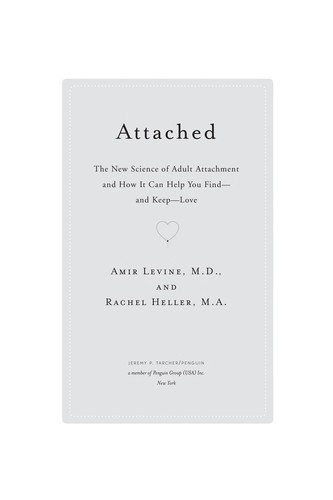
4. ATTACHED BY AMIR LEVINE AND RACHEL HELLER
Amir Levine & Rachel Heller | ⭐ 4.5/5
Who it’s for: Anyone who keeps ending up in the same relationship patterns. If you’re always the anxious one, or always the avoidant one, or always attracted to people who won’t commit, this book explains why.
“Attachment theory teaches us that our needs for intimacy and security are not weaknesses — they are hardwired into our biology.”
Levine and Heller explain three attachment styles: secure, anxious, and avoidant. Anxious people crave closeness and fear abandonment. Avoidant people crave independence and fear engulfment. Secure people are comfortable with both closeness and independence. The book shows how these styles play out in relationships and — crucially — how anxious and avoidant people are magnetically attracted to each other, creating cycles that feel passionate but are actually destabilizing.
I read this in my car in the school parking lot after drop-off. I read the description of anxious attachment and recognized myself in every sentence with the specific horror of a person who has been doing something they didn’t have a name for. My need for reassurance wasn’t neediness. My fear of abandonment wasn’t irrational. It was my attachment style, formed in childhood, running my adult relationships. Naming it didn’t fix it. But it gave me something to work with instead of just feeling broken.
My take: The book that gave me the vocabulary for my relationship patterns. Read it before the boundaries books — understanding your attachment style helps you understand why boundaries are hard.

5. ADULT CHILDREN OF EMOTIONALLY IMMATURE PARENTS BY LINDSAY GIBSON
Lindsay Gibson | ⭐ 4.6/5
Who it’s for: Anyone whose boundary struggles trace back to their parents. If you learned to suppress your needs in childhood because your parents couldn’t handle them, this book will explain exactly how that happened.
“When you grow up with emotionally immature parents, you learn to monitor other people’s feelings instead of your own.”
Gibson identifies four types of emotionally immature parents: emotional, driven, passive, and rejecting. Each type creates specific patterns in their children — patterns of people-pleasing, emotional suppression, hyper-responsibility, and difficulty identifying one’s own needs. If you’ve ever felt like you don’t know what you want, or that your needs aren’t as important as everyone else’s, this book traces that back to its origin.
The chapter that hit me hardest was about “internalizers” — children who responded to emotionally immature parents by becoming hyper-responsible. They learned that if they managed everyone’s feelings, the household would be stable. They became the parent in the parent-child dynamic. And they carried that pattern into every adult relationship, always managing, always monitoring, always making sure everyone else was okay while quietly falling apart.
Chapter three made me put the book down and stare at the middle distance for several minutes. I’ve recommended this book to four people in the last six weeks. Two of them texted me after the third chapter.
My take: If your boundary issues started in childhood, start here. This book will explain the origin. The other books on this list will help you change the pattern.

6. THE GIFT OF FEAR BY GAVIN DE BECKER
Gavin de Becker | ⭐ 4.5/5
Who it’s for: Anyone whose boundary struggles include a failure to trust their own instincts. If you’ve ever felt uncomfortable about someone and talked yourself out of it, this book will teach you to listen.
“Gift of fear is your survival signal that something is wrong. Trust it.”
De Becker is a security expert, and his book is about the most fundamental boundary: the one that protects your physical safety. His central argument is that fear is not the enemy. Fear is a gift — a finely tuned survival mechanism that tells you when something is wrong before your conscious mind has figured it out. The problem is that we’ve been taught to ignore it, to be polite, to give people the benefit of the doubt.
This matters for all relationships, not just dangerous ones. If your gut says someone is crossing a line — a friend who asks too much, a partner who pushes past your stated limits, a colleague who makes you uncomfortable — your gut is probably right. De Becker teaches you to trust that signal instead of overriding it with politeness.
My take: The most important safety book ever written. Essential for anyone who has been taught to prioritize others’ comfort over their own instincts.

7. NOT NICE BY AZIZ GAZIPURA
Aziz Gazipura | ⭐ 4.2/5
Who it’s for: People-pleasers who know they’re too nice and want to stop. If “nice” is the word everyone uses to describe you and it’s actually a cage, this book is the key.
“Being nice is not the same as being kind. Nice is about making others comfortable. Kind is about being honest.”
Gazipura argues that people-pleasing isn’t generosity — it’s fear. Fear of rejection, fear of conflict, fear of being seen as selfish. And the cost of that fear is a life organized around other people’s comfort at the expense of your own truth.
The chapter on “nice guy syndrome” — originally aimed at men but applicable to anyone — identifies the pattern: suppress your needs, avoid conflict, seek approval, and then feel resentful when nobody notices how much you’re sacrificing. The resentment is the signal that your boundaries are missing. If you give freely and feel resentful, you’re not being generous. You’re being trapped by your own niceness.
My take: More confrontational than Tawwab. Better for people who need to be shaken out of the “nice” identity, not gently guided out of it.

8. WHERE TO DRAW THE LINE BY ANNE KATHERINE
Anne Katherine | ⭐ 4.3/5
Who it’s for: People who need specific, practical guidance on where boundaries go — not just the concept, but the actual line. If “set boundaries” feels too vague, this book gets specific.
“A boundary is a limit that promotes integrity. It defines where you end and someone else begins.”
Katherine covers boundaries in every context: friendships, romantic relationships, family, work, parenting, and with yourself. Her approach is more granular than most — she addresses specific scenarios like borrowing money, unannounced visits, unsolicited advice, emotional dumping, and time requests. For each, she explains what the boundary looks like and how to communicate it.
The section on “boundary erosion” — how boundaries gradually weaken through small concessions — was the most useful diagnostic tool I found. Katherine explains that boundaries don’t usually collapse all at once. They erode through a series of small yeses: you answer one late-night call, then another, then it becomes expected. You take on one extra task, then another, then it becomes your job. Recognizing the erosion pattern helped me see where my boundaries had disappeared without my noticing.
My take: The most practical and specific book on this list. Use it as a reference guide, not a cover-to-cover read.

9. THE DISEASE TO PLEASE BY HARRIET BRAIKER
Harriet Braiker | ⭐ 4.2/5
Who it’s for: Compulsive people-pleasers — not occasional difficulty saying no, but a deep, patterned inability to prioritize yourself. If people-pleasing is your default setting, this book diagnoses it.
“People pleasing is not about being nice. It’s about being afraid.”
Braiker identifies people-pleasing as a disorder — a compulsive pattern driven by irrational beliefs (“I must be liked by everyone”), cognitive distortions (“if I say no, they’ll leave”), and fear-based behaviors (avoiding conflict at any cost). The book includes a self-assessment quiz and a structured recovery program.
I scored high on the quiz. Not a surprise. But seeing it quantified — seeing the specific beliefs driving my behavior — made it harder to dismiss. The belief that drove me most: “If I’m not needed, I’m not valued.” That one sentence explained the volunteer committee, the extra work projects, the 11pm phone calls, and most of my marriage.
My take: The most diagnostic book on this list. Take the quiz. See where you land. The results might surprise you — or they might confirm something you’ve been avoiding.

10. HOLD ME TIGHT BY SUE JOHNSON
Sue Johnson | ⭐ 4.5/5
Who it’s for: Couples — or people in committed relationships — who want to build boundaries within the relationship, not just around it. If your boundary issues are specifically about your partner, this book addresses the root.
“Love is not about giving up yourself. It is about finding a secure base from which to be fully yourself.”
Johnson is the creator of Emotionally Focused Therapy (EFT), and her book explains how attachment patterns create the cycles that damage relationships: pursue-withdraw, criticize-defend, attack-retreat. The key insight: most relationship conflicts aren’t about the surface issue. They’re about attachment needs — the need to feel safe, seen, and valued by your partner.
The chapter on “finding the raw spot” — identifying the underlying attachment fear that drives your reactive behavior — was the most useful relationship framework I’ve encountered. When Daniel and I were still together, I didn’t have this language. I didn’t know that my anger about the dishes was actually about my fear that he didn’t see me. I didn’t know that his withdrawal wasn’t rejection — it was his way of managing overwhelm. This book came too late for my marriage. It won’t be too late for yours.
My take: The best book for boundaries within committed relationships. Not about saying no to strangers — about saying what you need to the person you love.
FREQUENTLY ASKED QUESTIONS
WHAT ARE HEALTHY BOUNDARIES IN A RELATIONSHIP?
Healthy boundaries are the limits you set to protect your physical, emotional, and mental well-being while maintaining connection with the people you love. They’re not walls that keep people out. They’re doors that let you choose what comes in. Tawwab defines them as “the distance at which I can love you and me simultaneously.” Examples: “I need alone time after work before I can be present with you.” “I’m not available for calls after 9pm.” “I love you and I can’t take on that responsibility right now.”
HOW DO I SET BOUNDARIES WITHOUT LOSING THE RELATIONSHIP?
If setting a boundary ends a relationship, that relationship was dependent on your lack of boundaries. Healthy relationships can accommodate limits. The people who react worst to your boundaries are usually the people who benefited most from your not having them. That doesn’t mean every boundary conversation will be easy. But a relationship that can’t survive your “no” wasn’t built on mutual respect.
WHAT IF MY PARTNER SAYS MY BOUNDARIES ARE CONTROLLING?
There’s a difference between a boundary (“I need you to stop raising your voice during arguments”) and a demand (“You’re not allowed to see your friends”). A boundary is about your own behavior and needs. A demand is about controlling someone else’s. If your partner says your boundaries feel controlling, examine whether you’re setting limits on yourself or rules on them. Johnson’s “Hold Me Tight” explains this distinction clearly.
CAN I SET BOUNDARIES WITH MY PARENTS?
Yes, and for many people, this is the most important boundary work they’ll do. Gibson’s “Adult Children of Emotionally Immature Parents” shows how childhood patterns of accommodating parents carry into adulthood. Setting boundaries with parents doesn’t mean cutting them off. It means defining what’s acceptable and what isn’t, and communicating that clearly. It might sound like: “I love you, and I’m not going to discuss my marriage with you anymore.”
WHAT IF I SET A BOUNDARY AND THE PERSON IGNORES IT?
A boundary without a consequence is a suggestion. If someone crosses a stated boundary, the follow-through is part of the boundary. If you say “I can’t take calls after 9pm” and they call at 10pm, don’t answer. If you say “I need you to stop criticizing my parenting” and they continue, leave the room. The boundary is not the statement. The boundary is the statement plus the consistent action that backs it up.
ARE BOUNDARIES SELFISH?
No. This is the most common myth about boundaries, and it’s the one that keeps most people from setting them. Boundaries are not selfish. They’re the mechanism that allows you to give sustainably instead of giving until you collapse. You cannot pour from an empty cup, and boundaries are the thing that keeps the cup from emptying. Tawwab’s entire book is built around dismantling this myth.
THE BOTTOM LINE
Boundaries are not about being difficult. They’re about being honest — with yourself and with the people you love. They’re the difference between a relationship that nourishes you and one that drains you. And setting them is the hardest, most important thing you’ll do for your relationships.
If I had to hand you three books, I’d start with “Set Boundaries, Find Peace” by Nedra Glennon Tawwab for the practical framework, move to “Adult Children of Emotionally Immature Parents” by Lindsay Gibson for understanding where your boundary patterns started, and finish with “Hold Me Tight” by Sue Johnson for building boundaries within your most important relationships.
And honestly? The fact that you’re reading this means you already know something needs to change. That’s not nothing. That’s the first boundary you’re setting — the one with yourself. The one that says: I matter too.
Which book are you grabbing first?
Disclosure: This post contains affiliate links. If you purchase through these links, ReadPlug may earn a small commission at no extra cost to you. We only recommend books we’ve personally found valuable.
Never miss a life-changing book.
Get our spoiler-free book picks every Tuesday.