The Question That Unlocked Everything
My therapist asked me a simple question: “What did your parents do when you were sad as a child?”
I opened my mouth to answer and realized I had no idea. Not because I’d forgotten—but because nobody had ever asked me how I felt. Not once. Not about anything.
I grew up in a house where grades mattered, behavior mattered, and appearances mattered. But feelings? Feelings were irrelevant. I learned early that emotions were messy, inconvenient, and best kept to myself. If I cried, I was told to stop. If I was angry, I was sent to my room. If I was scared, I was told there was nothing to be afraid of.
So I stopped feeling. Or rather, I stopped showing that I felt.
By the time I was 30, I was a high-functioning, emotionally numb adult who couldn’t identify her own emotions, struggled with intimacy, and wondered why relationships always felt hollow. I had no vocabulary for what was wrong because nothing “bad” had happened to me. No abuse. No trauma. No dramatic dysfunction.
Just… nothing. An absence where emotional connection should have been.
The Invisible Wound
Childhood Emotional Neglect (CEN) is one of the most common and least recognized forms of childhood adversity. Unlike abuse, which is something that happens TO you, neglect is something that DOESN’T happen. Your emotions aren’t validated. Your inner world isn’t acknowledged. Your needs aren’t seen.
And because nothing “happened,” most people with CEN don’t even realize they have it. They just know something feels off—that they’re disconnected from their emotions, that they feel empty despite having “a good childhood,” or that they can’t seem to form deep relationships.
The books I’m about to share gave me the language to understand what I was missing, the validation to stop blaming myself, and the tools to finally heal the emotional wounds I didn’t know I had.
Quick Picks (For When You Just Realized Your Childhood Wasn’t Okay)
If you’ve just had the “oh, that explains everything” moment, here are my top 3 recommendations:
1. “Running on Empty” by Dr. Jonice Webb – Start here. Webb coined the term “Childhood Emotional Neglect” and this book is the definitive guide. It will validate your experience and show you the path to healing.
2. “Adult Children of Emotionally Immature Parents” by Lindsay Gibson – If your parents were emotionally unavailable, this book describes them perfectly and helps you stop seeking validation from people who can’t give it.
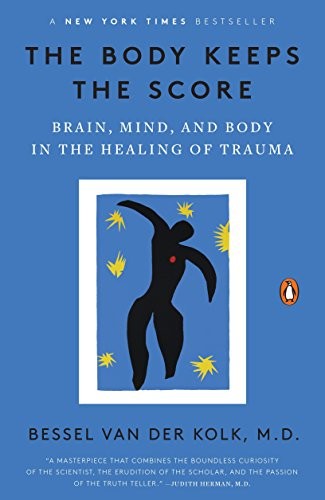
3. “The Body Keeps the Score” by Bessel van der Kolk – If your CEN has manifested as physical symptoms (anxiety, chronic pain, autoimmune issues), this book explains why and how to heal.

1. Running on Empty by Dr. Jonice Webb
Rating: ⭐⭐⭐⭐⭐ (5/5)
Who this is for: Anyone who had a “good childhood” but still feels emotionally empty. If you can’t figure out why you struggle with emotions despite no obvious trauma, this book will explain everything.
“Webb described my childhood perfectly. My parents weren’t abusive—they just didn’t see me. This book gave me permission to acknowledge that their absence of emotion WAS a wound.” — Jennifer M.
My take: This is the book that changed my life. Webb coined the term “Childhood Emotional Neglect” and explains how emotionally neglectful parents—often well-meaning—create children who grow up disconnected from their own emotions. Her 12 types of emotionally neglectful parents helped me identify exactly what I experienced. Most importantly, the book provides a clear healing roadmap that I’ve been following for two years with remarkable results.

2. Adult Children of Emotionally Immature Parents by Lindsay Gibson
Rating: ⭐⭐⭐⭐⭐ (5/5)
Who this is for: The person whose parents were physically present but emotionally absent. If your parents provided for you materially but couldn’t connect with you emotionally, this book is your mirror.
“Gibson’s four types of emotionally immature parents (emotional, driven, passive, rejecting) helped me understand that my mother’s emotional unavailability wasn’t my fault—it was her limitation.” — Thomas K.
My take: Gibson identifies four types of emotionally immature parents and explains how each type affects their children. My mother is a textbook “emotional” parent—everything revolves around her feelings, and everyone else’s needs are invisible. Understanding this helped me stop seeking emotional validation from someone who literally cannot provide it. Her “maturity awareness approach” has been transformative for managing my relationship with my parents.
3. The Body Keeps the Score by Bessel van der Kolk
Rating: ⭐⭐⭐⭐⭐ (5/5)
Who this is for: The person whose emotional neglect has manifested as physical symptoms. If you have chronic anxiety, unexplained pain, or autoimmune issues, this book explains the mind-body connection.
“Van der Kolk’s research on how trauma is stored in the body explained my chronic pain and anxiety. Once I understood the connection, I could begin to heal—not just mentally, but physically.” — Emily T.
My take: This book is essential for understanding how childhood emotional neglect affects the body. Van der Kolk shows that emotional trauma—even the “invisible” kind—is stored in the body and can manifest as chronic pain, autoimmune disorders, and other physical symptoms. His somatic (body-based) healing approaches—yoga, EMDR, neurofeedback—have been crucial for my own healing journey. I started trauma-informed yoga six months ago, and my chronic back pain has decreased by 70%.

4. It Didn’t Start with You by Mark Wolynn
Rating: ⭐⭐⭐⭐⭐ (5/5)
Who this is for: The person who suspects their family patterns go deeper than their own experience. If your emotional neglect seems to repeat across generations, this book explores transgenerational trauma.
“Wolynn’s research on inherited family trauma showed me that my mother’s emotional unavailability was passed down from her mother, who got it from her mother. I’m now breaking the cycle.” — Robert M.
My take: This book explores how trauma is passed down through generations—not just through behavior, but through epigenetics. Understanding that my family’s emotional patterns existed long before I was born helped me release blame and focus on healing. The book includes practical exercises for identifying inherited trauma and breaking the cycle. I now see my healing work as not just for me, but for my future children.

5. Recovering from Emotionally Immature Parents by Lindsay Gibson
Rating: ⭐⭐⭐⭐⭐ (5/5)
Who this is for: The person who’s read Adult Children of Emotionally Immature Parents and is ready for deeper healing. This follow-up provides practical exercises for reparenting yourself.
“Gibson’s self-reparenting exercises helped me give myself what my parents couldn’t: emotional validation. I now comfort myself the way I wish my parents had.” — Amanda L.
My take: This is Gibson’s follow-up, and it’s even more practical than the first book. Her “self-reparenting” concept—learning to give yourself the emotional support your parents couldn’t—is transformative. I now have a daily practice of checking in with my emotions and validating them, something my parents never taught me to do. The healing isn’t complete, but it’s progressing in ways I never thought possible.

6. Permission to Feel by Marc Brackett
Rating: ⭐⭐⭐⭐⭐ (5/5)
Who this is for: The person who literally doesn’t know how to feel. If you struggle to identify or express emotions, this book provides a practical framework for emotional literacy.
“Brackett’s RULER framework (Recognizing, Understanding, Labeling, Expressing, Regulating emotions) taught me the emotional vocabulary I never learned as a child. I can now name what I’m feeling.” — Jennifer B.
My take: If you grew up in an emotionally neglectful home, you probably never learned emotional literacy—the ability to identify, understand, and express emotions. Brackett’s RULER framework provides exactly that education. His “mood meter” tool has become my daily practice for checking in with my emotional state. I went from “I feel bad” to “I feel disappointed because my expectations weren’t met”—and that specificity has transformed my self-understanding.

7. The Emotionally Absent Mother by Jasmin Lee Cori
Rating: ⭐⭐⭐⭐ (4/5)
Who this is for: Women who experienced emotional neglect specifically from their mothers. If your mother was cold, distant, or self-absorbed, this book addresses your specific wound.
“Cori’s description of the ‘good enough mother’ helped me understand what I missed. My mother provided food and shelter but couldn’t provide the emotional mirroring I needed. This book validated my grief.” — Sarah M.
My take: This book specifically addresses maternal emotional neglect, and it’s deeply validating. Cori describes what a “good enough” mother provides (emotional mirroring, comfort, attunement) and helps readers understand what they missed. The most healing chapter for me was about “re-mothering” yourself—learning to provide yourself with the maternal warmth you never received.

8. Self-Compassion by Kristin Neff
Rating: ⭐⭐⭐⭐⭐ (5/5)
Who this is for: The person who’s incredibly hard on themselves. If your inner critic is relentless, this book teaches you to treat yourself with the kindness you never received.
“Neff’s research showed me that self-compassion isn’t self-indulgence—it’s the foundation of emotional health. I now treat myself with the kindness my parents never showed me.” — Lisa P.
My take: Children of emotionally neglectful parents often develop harsh inner critics—we learned to be tough on ourselves because no one else was paying attention. Neff’s research shows that self-compassion (treating yourself with the kindness you’d show a friend) leads to greater resilience and emotional health. Her “self-compassion break” exercise has become my go-to tool when I’m struggling.
9. The Drama of the Gifted Child by Alice Miller
Rating: ⭐⭐⭐⭐ (4/5)
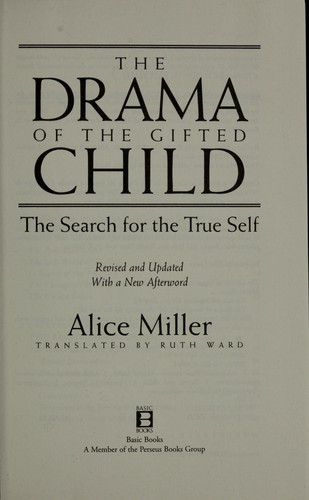
Who this is for: The “perfect child” who learned to suppress their needs to gain parental approval. If you were the child who never caused trouble and now struggles with perfectionism, this book is your mirror.
“Miller’s concept of the ‘gifted child’ (a child who adapts to their parents’ needs at the expense of their own) described my childhood perfectly. I was the perfect daughter—and I lost myself in the process.” — Emily R.
My take: This classic book explores how children of narcissistic or emotionally unavailable parents learn to suppress their authentic selves to gain parental approval. Miller’s concept of the “gifted child”—a child who becomes hyper-attuned to their parents’ needs while ignoring their own—described my childhood perfectly. Understanding this pattern has helped me reclaim the authentic self I lost.

10. Homecoming by John Bradshaw
Rating: ⭐⭐⭐⭐ (4/5)
Who this is for: The person who wants to reconnect with their inner child. If you feel disconnected from your authentic self, this book provides guided exercises for healing the wounded child within.
“Bradshaw’s guided meditations for healing the inner child were the most powerful therapeutic exercises I’ve ever done. I literally reparented my younger self in those sessions.” — David H.
My take: This book is a classic in the inner child healing movement. Bradshaw provides guided exercises for reconnecting with and healing the wounded child within. His “homecoming” meditation—where you visualize meeting your younger self and providing the love they needed—was profoundly healing for me. I cried for two hours after my first session, and something inside me shifted permanently.
Frequently Asked Questions (Childhood Emotional Neglect Edition)
Q: What is Childhood Emotional Neglect (CEN)? A: CEN occurs when parents fail to respond adequately to their child’s emotional needs. It’s not about what happened—it’s about what didn’t happen. Your emotions weren’t validated, your inner world wasn’t acknowledged, and your emotional needs weren’t met.
Q: How is CEN different from abuse? A: Abuse is something that happens TO you (physical harm, verbal cruelty). CEN is something that DOESN’T happen (emotional validation, attunement, connection). Both are damaging, but CEN is harder to recognize because there’s no “event” to point to.
Q: Can you have CEN even if your childhood wasn’t “bad”? A: Yes. Many CEN survivors had materially comfortable childhoods with parents who weren’t abusive. The wound is emotional, not physical. You can have food, shelter, and education and still experience emotional neglect.
Q: What are the signs of CEN in adults? A: Common signs: difficulty identifying emotions, feeling empty or numb, difficulty with intimacy, perfectionism, people-pleasing, fear of dependency, and a vague sense that something is “wrong” despite having a good life.
Q: Can CEN be healed? A: Yes. The brain is neuroplastic—it can form new neural pathways at any age. With the right support (therapy, self-help, and intentional practice), you can learn the emotional skills your parents didn’t teach you.
Q: How do I talk to my parents about CEN? A: Carefully. Many emotionally neglectful parents genuinely don’t understand what they did wrong. Approaching them with accusation will likely trigger defensiveness. A therapist can help you decide whether and how to have this conversation.
Q: Do I need therapy for CEN? A: While self-help books are valuable, therapy can accelerate healing significantly. A therapist trained in attachment and childhood trauma can provide the emotional attunement you missed as a child—which is itself healing.
Q: How long does healing from CEN take? A: There’s no timeline. Healing is not linear—there will be setbacks and breakthroughs. Most people notice significant improvement within 1-2 years of intentional work. But the journey is lifelong.
Your Next Move
Childhood Emotional Neglect is an invisible wound—but it’s real, it’s valid, and it’s healable. You’re not broken. You’re not “too sensitive.” You’re a person who didn’t get what you needed as a child, and now you’re learning to give it to yourself.
These ten books gave me the language to understand my wound, the validation to stop minimizing it, and the tools to finally heal. The journey isn’t easy—but it’s worth every step.
So start with one book. Maybe Running on Empty if you need validation, or Permission to Feel if you need to build emotional skills. Read it, do the exercises, and see what emerges.
Because it’s never too late to have the childhood you deserved.
Which book are you grabbing first?
Disclosure: This post contains Amazon affiliate links. If you purchase through these links, I may earn a small commission at no extra cost to you. This helps support the blog and allows me to continue bringing you honest book recommendations. Thank you!
Never miss a life-changing book.
Join 10,000+ readers getting our data-driven picks every Tuesday.