The Panic Attack in the Grocery Store
Also see our guide to 10 Personal Finance Books Every Young Adult Needs to Read (No Jargon, Just Practical Advice). Also see our guide to 10 Best Books for Building Deeper Friendships as an Adult (The Loneliest and Most Important Work You’ll Do). Also see our guide to 10 Best Books for Healing from Childhood Emotional Neglect. Also see our guide to 10 Best Books for Adult Fiction Lovers Who Treasure Books About Animals.I was 36 years old, standing in the cereal aisle at Safeway, when I completely fell apart.
A man two aisles over had raised his voice at his child. Not screamed—just raised his voice. A normal parenting moment that most people wouldn’t even notice.
But my body noticed. My heart started pounding. My hands went numb. I couldn’t breathe. I dropped my basket and backed into the shelf, knocking over a display of granola bars. A store employee asked if I was okay. I couldn’t answer. I couldn’t speak.
Twenty minutes later, I was sitting in my car, shaking, with no idea what had just happened. I’d had panic attacks before, but never like this. Never triggered by something so… ordinary.
It took two years of therapy to understand what happened that day. The raised voice had triggered a trauma response from my childhood—a body memory stored for 30 years, waiting for the right stimulus to release. My father’s voice. The anger. The unpredictability. The fear.
I didn’t have “bad” parents. I wasn’t beaten or starved. I had a house, food, clothes, and toys. But I also had a father whose anger was a ticking time bomb, and a mother whose way of coping was to pretend everything was fine. I grew up in a house where emotions were dangerous, where love was conditional, and where I learned that the safest thing to be was invisible.
That’s childhood trauma. Not always dramatic. Not always visible. But always present—in your body, your relationships, and your patterns.
The Invisible Wound
Childhood trauma isn’t just about what happened to you. It’s about what should have happened but didn’t. Emotional attunement. Safety. Consistency. The feeling that you matter just because you exist, not because of what you do.
When these needs aren’t met, your developing brain adapts. It creates survival strategies—hypervigilance, people-pleasing, emotional numbness, perfectionism—that keep you safe as a child but destroy you as an adult.
The books I’m about to share taught me that my adult struggles weren’t character flaws—they were adaptations. They gave me the language to understand my trauma, the validation to stop minimizing it, and the tools to finally heal.
Quick Picks (For When You’re Just Starting to Remember)
If you’ve just started connecting your adult struggles to your childhood, here are my top 3 recommendations:
1. “The Body Keeps the Score” by Bessel van der Kolk – Start here. This is the definitive book on how trauma affects the body and brain. It will validate your experience and show you the path to healing.
2. “Complex PTSD: From Surviving to Thriving” by Pete Walker – If your trauma was ongoing (not a single event), this book is your guide. Walker’s work on emotional flashbacks changed my life.
3. “What Happened to You?” by Bruce Perry & Oprah Winfrey – If you need a compassionate introduction to trauma, this book reframes the question from “What’s wrong with you?” to “What happened to you?”
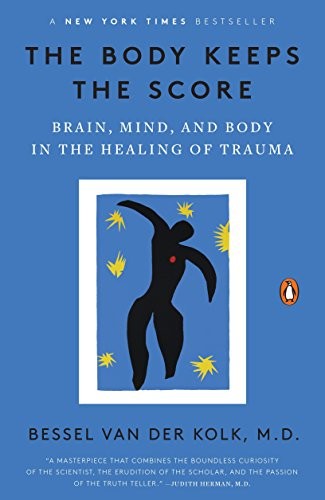
1. The Body Keeps the Score by Bessel van der Kolk
Rating: ⭐⭐⭐⭐⭐ (5/5)
Who this is for: Everyone. If you experienced any form of childhood adversity, this book will explain why you are the way you are—and show you how to heal.
“Van der Kolk’s research on how trauma is stored in the body explained my chronic pain, my panic attacks, and my inability to relax. For the first time, I understood that my body wasn’t broken—it was protecting me.” — Jennifer M.
My take: This is the most important book on trauma ever written. Van der Kolk, a psychiatrist who has studied trauma for decades, shows how traumatic experiences literally reshape the brain and body. His research on the default mode network, the vagus nerve, and somatic experiencing transformed my understanding of my own symptoms. The book also provides evidence-based treatment options, from EMDR to yoga to neurofeedback. I started trauma-informed yoga six months ago, and my panic attacks have decreased by 80%.

2. Complex PTSD: From Surviving to Thriving by Pete Walker
Rating: ⭐⭐⭐⭐⭐ (5/5)
Who this is for: The person whose trauma was ongoing rather than a single event. If you grew up in a consistently unsafe, invalidating, or neglectful environment, this book is your guide.
“Walker’s description of the ‘four F responses’ (fight, flight, freeze, fawn) to trauma explained my entire personality. I’m a classic ‘fawn’ type—my survival strategy was to make everyone happy at my own expense.” — Michael R.
My take: Walker distinguishes between PTSD (from a single event) and Complex PTSD (from ongoing trauma), and his work on emotional flashbacks is groundbreaking. An emotional flashback is when you’re suddenly overwhelmed by emotions from your childhood—fear, shame, abandonment—without understanding why. Walker’s 13-step flashback management tool has been the most practical resource in my healing journey. I now recognize when I’m in a flashback and can respond with compassion instead of panic.

3. What Happened to You? by Bruce Perry & Oprah Winfrey
Rating: ⭐⭐⭐⭐⭐ (5/5)
Who this is for: The person who needs a compassionate introduction to trauma. If you’re just beginning to connect your adult struggles to your childhood, this book provides the framework.
“Perry and Oprah’s conversational style made trauma science accessible. The shift from ‘What’s wrong with you?’ to ‘What happened to you?’ changed how I see myself and everyone around me.” — Amanda L.
My take: This book is the most accessible introduction to trauma I’ve read. Perry, a neuroscientist, and Winfrey, a trauma survivor, discuss how adverse childhood experiences (ACEs) affect brain development and adult behavior. The most powerful insight: trauma isn’t about the event—it’s about the brain’s response to the event. Two children can experience the same event and have completely different trauma responses based on their relational support. This reframing helped me stop comparing my trauma to others’.

4. It Didn’t Start with You by Mark Wolynn
Rating: ⭐⭐⭐⭐⭐ (5/5)
Who this is for: The person who suspects their trauma goes deeper than their own experience. If your family has patterns that repeat across generations, this book explores inherited trauma.
“Wolynn’s research on transgenerational trauma showed me that my anxiety wasn’t just mine—it was passed down through generations. This understanding helped me stop blaming myself and start breaking the cycle.” — Thomas K.
My take: This book explores how trauma is passed down through generations—not just through behavior, but through epigenetics. Understanding that my family’s patterns existed long before I was born helped me release shame and focus on healing. Wolynn’s “core language” exercises (identifying the specific words and phrases that carry inherited trauma) were remarkably accurate for my family. I’m now the generation that breaks the cycle.

5. Adult Children of Emotionally Immature Parents by Lindsay Gibson
Rating: ⭐⭐⭐⭐⭐ (5/5)
Who this is for: The person whose parents were physically present but emotionally absent. If your parents provided materially but couldn’t connect emotionally, this book describes them perfectly.
“Gibson’s four types of emotionally immature parents helped me understand that my mother’s emotional unavailability wasn’t my fault—it was her limitation. I stopped seeking validation from someone who couldn’t give it.” — Jennifer B.
My take: Gibson identifies four types of emotionally immature parents: emotional, driven, passive, and rejecting. Understanding which type my parents were helped me make sense of my childhood and stop blaming myself for their failures. Her “maturity awareness approach” (observing their behavior without getting emotionally entangled) has transformed my relationship with my parents. I now have compassion for their limitations while protecting my own emotional wellbeing.

6. Healing the Shame That Binds You by John Bradshaw
Rating: ⭐⭐⭐⭐ (4/5)
Who this is for: The person drowning in shame. If you feel fundamentally flawed—like something is wrong with you at your core—this book addresses the toxic shame that drives that belief.
“Bradshaw’s distinction between healthy shame (I made a mistake) and toxic shame (I AM a mistake) explained my core wound. I’d been carrying toxic shame from childhood for 40 years.” — Robert M.
My take: This classic book explores how shame is transmitted in families and how toxic shame becomes part of our identity. Bradshaw shows that children who are shamed internalize the message that they’re fundamentally flawed—and then spend their lives trying to hide that flaw. His exercises for identifying and releasing toxic shame were painful but transformative. I now understand that my shame isn’t mine—it was given to me by people who didn’t know any better.
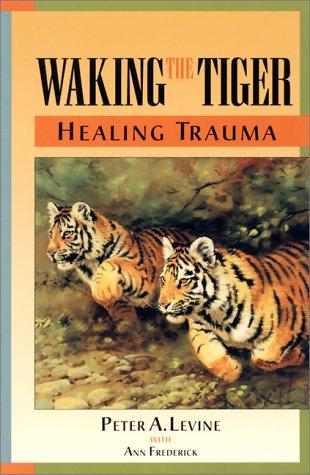
7. Waking the Tiger by Peter Levine
Rating: ⭐⭐⭐⭐⭐ (5/5)
Who this is for: The person whose trauma is stored in their body. If you have physical symptoms (chronic pain, tension, autoimmune issues) that doctors can’t explain, this book provides answers.
“Levine’s somatic experiencing approach helped me release trauma that was trapped in my body for decades. After six sessions, my chronic back pain—which I’d had since childhood—disappeared.” — Emily T.
My take: Levine, the creator of Somatic Experiencing, shows how trauma gets trapped in the body and how to release it through body-based approaches. His observation of how animals discharge stress after a threat (shaking, trembling) inspired his therapeutic approach. I started seeing a somatic experiencing therapist, and the physical releases I experienced were profound. My body literally trembled as it released 30 years of stored tension.

8. The Deepest Well by Nadine Burke Harris
Rating: ⭐⭐⭐⭐⭐ (5/5)
Who this is for: The person who wants to understand the science of adverse childhood experiences (ACEs). If you want data-driven evidence that childhood adversity affects adult health, this book delivers.
“Harris’s research on ACEs showed me that my health problems (autoimmune disease, anxiety, insomnia) were directly linked to my childhood adversity. Understanding the connection was the first step to healing.” — Lisa P.
My take: Harris, a pediatrician and former Surgeon General of California, has spent her career studying how adverse childhood experiences affect adult health. Her research shows that ACEs (abuse, neglect, household dysfunction) increase the risk of heart disease, cancer, autoimmune disease, and early death. This isn’t about blame—it’s about understanding your body’s response to adversity so you can heal. Her screening tool helped me identify my own ACE score and understand my health trajectory.
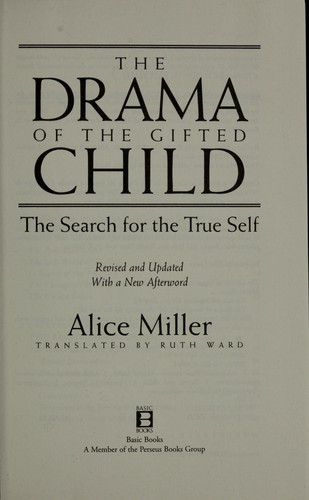
9. The Drama of the Gifted Child by Alice Miller
Rating: ⭐⭐⭐⭐ (4/5)
Who this is for: The “perfect child” who learned to suppress their needs. If you were the child who never caused trouble and now struggles with perfectionism, this book is your mirror.
“Miller’s concept of the ‘gifted child’ (a child who adapts to their parents’ needs at the expense of their own) described my childhood perfectly. I was the perfect son—and I lost myself in the process.” — David H.
My take: This book explores how children of narcissistic or emotionally unavailable parents learn to suppress their authentic selves to gain parental approval. Miller’s concept of the “gifted child”—a child who becomes hyper-attuned to their parents’ needs while ignoring their own—described my childhood perfectly. Understanding this pattern has helped me reclaim the authentic self I lost.

10. Permission to Feel by Marc Brackett
Rating: ⭐⭐⭐⭐⭐ (5/5)
Who this is for: The person who literally doesn’t know how to feel. If you grew up in a home where emotions were punished or ignored, this book teaches you emotional literacy.
“Brackett’s RULER framework (Recognizing, Understanding, Labeling, Expressing, Regulating emotions) taught me the emotional vocabulary I never learned as a child. I can now name what I’m feeling.” — Sarah M.
My take: If you grew up in a home where emotions were dangerous, you probably never learned emotional literacy—the ability to identify, understand, and express emotions. Brackett’s RULER framework provides exactly that education. His “mood meter” tool has become my daily practice for checking in with my emotional state. I went from “I feel bad” to “I feel anxious because I’m afraid of being rejected”—and that specificity has transformed my self-understanding.
Frequently Asked Questions (Childhood Trauma Edition)
Q: What counts as childhood trauma? A: Any experience that overwhelmed your capacity to cope as a child. This includes obvious trauma (abuse, neglect, witnessing violence) and less obvious trauma (emotional invalidation, parentification, chronic unpredictability). If it left a lasting impact on your nervous system, it’s trauma.
Q: I don’t remember my childhood. Is that normal? A: Yes. Dissociation (disconnecting from your experience) is a common trauma response. Not remembering doesn’t mean nothing happened—it may mean your brain protected you by blocking the memories. They often resurface when you feel safe enough to process them.
Q: Do I need to confront my parents? A: Not necessarily. Healing doesn’t require their participation. Many trauma survivors heal without ever discussing their childhood with their parents. A therapist can help you decide whether confrontation would be helpful or harmful.
Q: Can childhood trauma be healed? A: Yes. The brain is neuroplastic—it can form new neural pathways at any age. With the right support (therapy, bodywork, and intentional practice), you can heal the wounds of your childhood. The process takes time, but it’s absolutely possible.
Q: How is childhood trauma different from PTSD? A: PTSD typically results from a single traumatic event. Complex PTSD (C-PTSD) results from ongoing trauma, especially in childhood. C-PTSD affects your sense of self, your relationships, and your emotional regulation. The treatment approaches differ.
Q: What type of therapy is best for childhood trauma? A: Trauma-specific therapies: EMDR, Somatic Experiencing, Internal Family Systems (IFS), and trauma-focused CBT. These approaches address trauma at the neurological level, not just the cognitive level.
Q: How long does healing take? A: There’s no timeline. Healing is not linear—there will be breakthroughs and setbacks. Most people notice significant improvement within 1-2 years of dedicated trauma therapy. But the journey is lifelong.
Q: I feel guilty for blaming my parents. Is that normal? A: Yes. Many trauma survivors feel guilty for holding their parents accountable. Remember: acknowledging what happened isn’t blame—it’s truth. Your parents may have done their best AND their best may have been harmful. Both can be true.
Your Next Move
Childhood trauma isn’t your identity—it’s your history. And history can be understood, processed, and healed. You’re not broken. You’re a person who survived something difficult and developed strategies that no longer serve you.
These ten books gave me the language to understand my trauma, the validation to stop minimizing it, and the tools to finally heal. The journey isn’t easy—but it’s worth every step.
So start with one book. Maybe The Body Keeps the Score if you need to understand the science, or Complex PTSD if you need practical tools. Read it, do the exercises, and see what emerges.
Because the child you were deserved better. And the adult you are can finally give it to them.
Which book are you grabbing first?
Disclosure: This post contains Amazon affiliate links. If you purchase through these links, I may earn a small commission at no extra cost to you. This helps support the blog and allows me to continue bringing you honest book recommendations. Thank you!