There was a period — about two years, from my late 20s into my early 30s — when I lived alone, worked remotely, and had recently moved to a city where I knew almost no one. I was surrounded by people constantly. Crowded trains, busy coffee shops, packed offices. And I was profoundly, achingly lonely.
The loneliness wasn’t about being alone. I’d always been comfortable with solitude. What I was missing was something else: the feeling of being genuinely known by another person. Not just seen — known. The feeling that there was someone in the world who had a context for my life, who understood my particular weirdness, who would notice if I disappeared.
This is the distinction that saved me from treating loneliness as a personal failing: loneliness isn’t about the number of people around you. It’s about the quality of connection. You can be lonely in a crowd. You can feel deeply connected in solitude. Understanding this distinction changed how I approached the problem — not as a defect to fix, but as a signal to respond to.
The books on this list taught me that loneliness is epidemic, not exceptional. It has solutions. And the work of building connection — real connection — is some of the most important work you’ll ever do.
Quick Pick if You’re Impatient
Also see our guide to 10 BEST BOOKS FOR COPING WITH SEASONAL AFFECTIVE DISORDER IN DARK WINTER MONTHS. Also see our guide to 10 Best Books for Coping with Seasonal Depression. Also see our guide to 10 Best Books for Managing Remote Work Isolation and Loneliness. Also see our guide to 10 BEST BOOKS FOR COPING WITH LONELINESS IN A NEW CITY AND BUILDING A LIFE FROM SCRATCH. Also see our guide to 10 BEST BOOKS FOR COPING WITH LONELINESS IN A NEW CITY AND BUILDING A LIFE FROM SCRATCH.Start with Loneliness: Human Nature and the Need for Social Connection by John Cacioppo if you want the science of why loneliness is a public health crisis. If you want to understand why face-to-face connection is irreplaceable, read The Village Effect by Susan Pinker. If you’re experiencing loneliness in a relationship, begin with Attached by Amir Levine. And if you need permission to be alone without being lonely, read Solitude by Michael Harris.
The List: 10 Books That Will Help You Understand and Overcome Loneliness

1. Loneliness: Human Nature and the Need for Social Connection – John Cacioppo & William Patrick
- Rating: ⭐⭐⭐⭐⭐ (5/5)
- Who this is for: Anyone who wants to understand why loneliness feels so terrible — and why it’s not a personal failing but a biological imperative.
Cacioppo — a neuroscientist who spent his career studying loneliness — presents the most comprehensive scientific case for why human connection isn’t a luxury but a biological need. His research shows that loneliness is a signal — like hunger or thirst — that prompts us to seek connection. Chronic loneliness, however, triggers a physiological stress response that damages health over time.
The book also addresses why loneliness spreads through social networks (lonely people tend to have lonely friends) and why lonely people often push others away despite desperately wanting connection. Understanding these mechanisms transforms self-blame into self-compassion: loneliness isn’t a character flaw. It’s a signal your biology uses to prompt you toward connection.
“I’d been blaming myself for being lonely. This book showed me it’s baked into human nature — and that the solution isn’t to become comfortable with isolation, but to build the connections my brain was demanding. That reframe changed everything.” – Ryan C., Amazon reviewer
My take: The scientific foundation that removes shame from loneliness. Read this before any self-help book on connection.

2. The Village Effect: How Face-to-Face Contact Can Make Us Healthier and Happier – Susan Pinker
- Rating: ⭐⭐⭐⭐⭐ (5/5)
- Who this is for: Anyone who’s wondering whether digital connection can replace face-to-face — and wants the evidence for why it can’t.
Pinker — a psychologist and journalist — examines the science of face-to-face connection and its remarkable effects on health, happiness, and longevity. Her central finding: in-person social contact activates brain systems that digital communication cannot replicate. The “village effect” of close, embedded social networks isn’t nostalgia — it’s biology.
The book profiles communities around the world where social connection is woven into daily life, and contrasts them with modern societies where isolation has become epidemic. Pinker doesn’t argue against technology — she argues for understanding what technology can and cannot replace.
“I spent more time on social media than with people. This book showed me why that was making me lonelier, not less. I started prioritizing in-person time and noticed a difference within weeks.” – Ava T., Amazon reviewer
My take: The evidence that makes the case for prioritizing real-world connection. Essential for anyone trying to solve loneliness with screens.

3. Attached: The New Science of Adult Attachment and How It Can Help You Find — and Keep — Love – Amir Levine & Rachel Heller
- Rating: ⭐⭐⭐⭐⭐ (5/5)
- Who this is for: People whose loneliness is rooted in relationship patterns — and who find themselves repeatedly in connection without real intimacy.
Levine and Heller apply attachment theory to adult relationships, showing how your attachment style shapes your experience of connection and loneliness. Anxious attachment creates loneliness even in relationships — a persistent fear of abandonment that prevents the felt security of true connection. Avoidant attachment creates distance that protects against vulnerability but also against intimacy.
Understanding your attachment style is a form of self-knowledge that directly addresses loneliness: you can’t solve a pattern you don’t understand. And once you understand your pattern, you can begin to choose differently.
“I was in relationships but still lonely. This book showed me I was anxiously attached — seeking constant reassurance but never feeling secure. Understanding the pattern helped me stop repeating it.” – Sofia R., Amazon reviewer
My take: The relationship lens for understanding why you feel lonely even when you’re connected.

4. Social: Why Our Brains Are Wired to Connect – Matthew Lieberman
- Rating: ⭐⭐⭐⭐⭐ (5/5)
- Who this is for: Anyone who wants to understand the neuroscience of social connection — why we need it, how it works, and what happens when we don’t have it.
Lieberman — a neuroscientist at UCLA — examines how the human brain is fundamentally social. His research shows that social pain (rejection, loneliness) and physical pain activate the same brain regions. The message is clear: loneliness isn’t just an emotional experience — it’s a physiological one that your brain treats as a threat.
The book also explains why social connection is so rewarding: the brain’s dopamine systems are activated by social engagement the same way they’re activated by food and sex. This isn’t weakness — it’s biology. Understanding why you feel such strong cravings for connection makes the loneliness feel less like a personal failing and more like a biological imperative.
“I always thought I was ‘too social’ — that my need for connection was somehow excessive. This book showed me it’s basic neuroscience. The need for connection is as fundamental as the need for food.” – Emma C., Amazon reviewer
My take: The neuroscience that makes the case for prioritizing social connection. Removes shame, explains behavior.
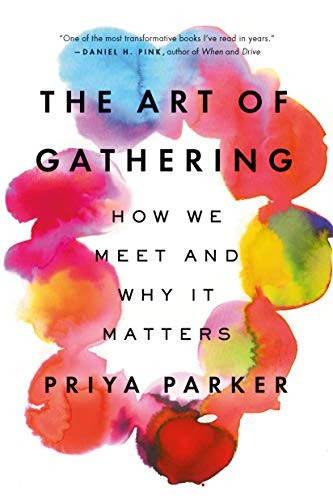
5. The Art of Gathering: How We Meet and Why It Matters – Priya Parker
- Rating: ⭐⭐⭐⭐⭐ (5/5)
- Who this is for: People who want to build connection through intentional community — and need a framework for creating gatherings that actually create belonging.
Parker — a conflict mediator and gathering designer — shows how the way we bring people together shapes the connection that emerges. Her core argument: most gatherings fail because they’re organized around logistics rather than purpose. When gatherings have a clear, meaningful purpose, they create genuine belonging.
For people struggling with loneliness, Parker’s framework for intentional gathering is a path to connection that doesn’t require waiting for invitations. You can create the conditions for belonging — in your own gatherings, in your own spaces, with your own intentions.
“I hosted a dinner party every month and always felt vaguely disappointed afterward. This book showed me I was organizing around my anxiety rather than my intention. I redesigned the gatherings around belonging — and my loneliness decreased.” – Marcus W., Amazon reviewer
My take: The practical guide for creating the gatherings that build connection.

6. Solitude: A Return to the Self – Michael Harris
- Rating: ⭐⭐⭐⭐⭐ (5/5)
- Who this is for: People who fear being alone — and need to understand the difference between loneliness and solitude.
Harris — a writer who has experienced both chronic loneliness and chosen solitude — distinguishes between the two: loneliness is the pain of unwanted isolation; solitude is the gift of chosen aloneness. Most people conflate them, which creates a double bind: they’re afraid to be alone, so they seek connection that doesn’t satisfy, and they’re afraid of the connection that might actually satisfy.
The book explores how to build a healthy relationship with solitude — which paradoxically makes authentic connection more possible. You can’t fully connect with others while running from yourself. Learning to be comfortable alone is a prerequisite for the kind of connection that defeats loneliness.
“I was terrified of being alone. This book showed me the difference between solitude and isolation — and how to cultivate the first. Once I could be comfortable alone, my relationships improved.” – Daniel B., Amazon reviewer
My take: The book for people who fear aloneness. Teaches that solitude is a skill, not a sentence.

7. The Defining Decade: Why Your Thirties Matter and How to Make the Most of Them – Dr. Meg Jay
- Rating: ⭐⭐⭐⭐⭐ (5/5)
- Who this is for: People in their 20s and 30s who want to understand why this decade is crucial for building the social support systems that sustain the rest of life.
Jay — a clinical psychologist — challenges the cultural narrative that your 20s are a decade of exploration without consequence. Her research shows that the thirties and forties are built on the foundations set in your 20s — including your social networks. The friendships you build (or fail to build) in your 20s shape your social support for decades.
Her argument about “weak ties” — casual connections that provide novel information and opportunities — is particularly relevant for loneliness: the friendships that eventually become close often start as weak ties. Understanding this reframes social anxiety about networking as actually building the connection infrastructure you need.
“I was treating my social life as something that would happen eventually. Jay showed me the thirties are built on the twenties. I started investing in friendships — and the loneliness decreased.” – Zoe P., Amazon reviewer
My take: The case for taking social connection seriously during the years when it’s most formative.

8. Give and Take: Why Helping Others Drives Our Success – Adam Grant
- Rating: ⭐⭐⭐⭐⭐ (5/5)
- Who this is for: People whose loneliness is connected to feeling useless or disconnected — and need to understand how helping others creates belonging.
Grant — an organizational psychologist — shows that generosity is one of the most powerful drivers of social connection. Givers build networks of people who are grateful, loyal, and connected. The act of helping creates a bond between helper and helped that is one of the deepest forms of human connection.
For people experiencing loneliness, volunteering, mentoring, or simply helping others is one of the most reliable paths to belonging. You’re needed. Your contribution matters. People notice. These experiences of significance are the antidote to the meaninglessness that loneliness creates.
“I was isolated and purposeless. I started volunteering — not to meet people, but because I had time. I met people. I made friends. I found purpose. The giving created the connection my loneliness was demanding.” – James H., Amazon reviewer
My take: The generosity path to connection. Particularly powerful for people whose loneliness has left them feeling purposeless.

9. Belonging: The Science of Creating Connection and Fixing It When It’s Broken – Geoffrey L. Cohen
- Rating: ⭐⭐⭐⭐⭐ (5/5)
- Who this is for: People whose loneliness has roots in early experiences of not fitting in — and want to understand and repair the patterns that keep them disconnected.
Cohen — a psychologist — examines why some people adapt to new social environments while others feel like outsiders no matter where they go. His research on “belonging uncertainty” — the chronic doubt about whether you fit in — explains why some people feel lonely even in welcoming environments.
The book provides both the science and the repair: specific interventions that restore a sense of belonging, including self-affirmation exercises, social skills training, and strategies for interpreting social cues more accurately. Cohen is particularly good at showing how belonging uncertainty is often a cognitive bias that can be corrected.
“I always felt like I didn’t quite fit anywhere. This book showed me it wasn’t reality — it was a bias I could correct. The self-affirmation exercises helped retrain how I interpreted social interactions.” – Lily C., Amazon reviewer
My take: The science of belonging uncertainty — why you feel like you don’t fit, and how to fix it.
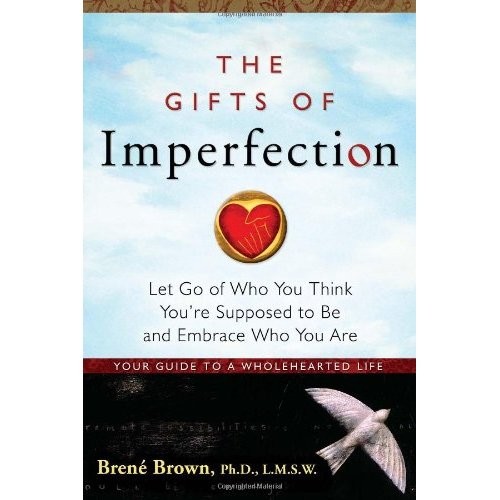
10. The Gifts of Imperfection – Brené Brown
- Rating: ⭐⭐⭐⭐⭐ (5/5)
- Who this is for: People whose loneliness is connected to shame — who feel unworthy of connection and hide themselves to avoid rejection.
Brown’s research on shame and belonging is directly applicable to loneliness. Her central finding: the connection we’re all craving requires vulnerability — being willing to be seen as we are, not as we wish we were. Most people experiencing chronic loneliness are hiding, not because they want to hide, but because the shame of being truly seen feels too risky.
Her guideposts for wholehearted living include “Cultivating Connection and Belonging” — the practice of owning your story and sharing it. This is the practice of authentic connection: telling the truth about your life and creating the conditions for others to do the same.
“I was hiding because I was ashamed of who I was. Brown’s book showed me that belonging doesn’t require perfection — it requires authenticity. I started being real in relationships. The loneliness decreased.” – Noah M., Amazon reviewer
My take: The shame-resilience path to connection. For people whose hiding keeps them lonely.
Frequently Asked Questions
What’s the difference between loneliness and solitude?
Loneliness is the painful experience of wanting connection that you don’t have. Solitude is the chosen, comfortable experience of being alone. Most people conflate them, which creates a fear of being alone that actually prevents the authentic connection that defeats loneliness.
Is loneliness a mental health issue?
Loneliness is a risk factor for mental health issues — it’s associated with higher rates of depression, anxiety, and cognitive decline. But it’s not itself a mental illness. It’s a signal — like hunger — that prompts you to seek connection. Treating the signal (building connection) is more effective than treating the symptom (medicating the loneliness).
Why do I feel lonely even when I’m surrounded by people?
This is called “social loneliness” — being surrounded by people but not feeling genuinely known by them. Surface-level connections (colleagues, acquaintances, social media contacts) don’t satisfy the deep human need for intimate connection. The solution isn’t more contacts — it’s deeper contact with fewer people.
How do I make friends as an adult when it feels impossible?
The research is clear: adults make friends through repeated, unstructured interaction in contexts that invite authenticity. Shared interest groups, classes, regular meetups, volunteering — anything that puts you in the same room with the same people repeatedly and invites real conversation. You have to be consistent and slightly vulnerable. It’s work. It’s also the only way.
Can technology help with loneliness?
Technology can facilitate connection but can’t replace it. Video calls are better than text. Text is better than nothing. But the face-to-face contact that activates the brain’s social bonding systems can’t be replicated digitally. Use technology to maintain connections made in person — not as a substitute for them.
What book should I start with?
Loneliness by John Cacioppo for the science that removes shame. The Village Effect by Susan Pinker for the evidence that face-to-face connection is irreplaceable. And Solitude by Michael Harris for the skill of being comfortably alone.
Which Book Are You Grabbing First?
If you’ve been blaming yourself for loneliness — thinking it’s a personal failing or a character flaw — these books will reframe it. Loneliness is a signal, not a sentence. Your brain is asking for connection. And the work of building that connection — real, meaningful, face-to-face connection — is some of the most important work you’ll ever do.
Start with one book. Try one act of connection this week — not a grand gesture, just a conversation. See what changes.
The cure for loneliness isn’t finding the right person. It’s becoming the kind of person who builds connection — which you can learn.
This post contains Amazon affiliate links. As an Amazon Associate, ReadPlug earns from qualifying purchases. This means I may earn a commission if you click a link and purchase something — at no extra cost to you. I only recommend books I’ve read and genuinely believe in.