I spent the first thirty years of my life being “fine.” That was my answer to everything. How are you? Fine. How was your day? Fine. Are you upset? No, I’m fine. I said it so often that I actually believed it, even when my jaw was clenched, my shoulders were at my ears, and I had not slept properly in weeks. I was fine. Totally, completely, absolutely fine.
The crack came during a routine meeting at work. My manager gave me mild feedback on a project — not criticism, just a suggestion to adjust the formatting — and I burst into tears. Not quiet, dignified tears. Ugly, gasping, someone-please-leave-the-room tears. My colleagues stared. I stared at myself, shocked, as if my body had betrayed me by revealing a truth my mind had been hiding for years. I was not fine. I had not been fine for a very long time. I just did not know what I actually was.
That moment sent me to therapy, and therapy sent me to books. The books taught me that emotional self-awareness — the ability to identify, understand, and name what you are feeling — is not a soft skill. It is the foundational skill. Without it, you cannot communicate your needs, set boundaries, process grief, or maintain healthy relationships. You can function. You can appear fine. But you are operating with a blind spot the size of your emotional life.
The books on this list are the ones that taught me to see what I had been refusing to feel. Some of them are science-heavy. Some are deeply personal. All of them will change the way you understand yourself.
Quick Pick if You’re Impatient
Start with Permission to Feel by Marc Brackett if you want a practical, science-backed framework for understanding emotions. If you want a book that maps the full landscape of human emotions, read Atlas of the Heart by Brené Brown. If your emotional numbness has roots in childhood, pick up Running on Empty by Jonice Webb. And if you want a book that challenges everything you thought you knew about how emotions work, read How Emotions Are Made by Lisa Feldman Barrett.

1. Permission to Feel by Marc Brackett
Rating: ⭐⭐⭐⭐⭐ (4.5/5) Who it’s for: Anyone who was never taught how to identify or process their emotions and wants a practical, research-backed starting point.
Marc Brackett is the founding director of the Yale Center for Emotional Intelligence, and Permission to Feel is his blueprint for developing emotional literacy. The book introduces the RULER framework — Recognizing, Understanding, Labeling, Expressing, and Regulating emotions — which Brackett developed and has taught in schools, workplaces, and homes around the world.
What makes this book so effective is its simplicity. Brackett argues that most people can name only three emotions: happy, sad, and angry. That is like having a three-color palette and trying to paint a sunset. The book introduces the “mood meter,” a tool that plots emotions along two dimensions — energy and pleasantness — and helps you identify precisely what you are feeling at any given moment.
Brackett’s personal story adds depth to the science. He writes about growing up in a home where emotions were dismissed, about the uncle who taught him that feelings matter, and about the research that changed his understanding of how emotional skills shape everything from academic performance to workplace success.
“Emotions are information. Every emotion you have is telling you something about the world and about yourself.”
My take: Why it works for self-awareness: It gives you a concrete, usable vocabulary for emotions and a step-by-step process for developing the skills most people never learn.

2. Atlas of the Heart by Brené Brown
Rating: ⭐⭐⭐⭐⭐ (4.5/5) Who it’s for: People who want to understand the full range of human emotions and learn the precise language to describe what they feel.
Brené Brown spent twenty years studying emotions, vulnerability, and courage. Atlas of the Heart is her most ambitious work — a map of eighty-seven emotions and experiences that define the human condition. She organizes them into chapters by theme: places we go when things are uncertain or too much, places we go when we compare, places we go when it’s beyond us, and so on.
The book’s power lies in its precision. Brown shows that what most people call “angry” might actually be frustrated, resentful, contemptuous, or envious. What most people call “sad” might be disappointed, lonely, helpless, or grieving. When you learn the specific word for what you are feeling, you gain the ability to address it directly rather than reacting to a vague, overwhelming sensation.
Brown’s research shows that emotional granularity — the ability to make fine-grained distinctions between emotions — is one of the strongest predictors of emotional health. People who can name their emotions precisely are better at regulating them, better at communicating them, and less likely to self-medicate with alcohol, food, or other coping mechanisms.
“Name it to tame it. If we can name our emotions, we can tame them.”
My take: Why it works for self-awareness: It expands your emotional vocabulary from three words to eighty-seven, giving you the language to understand what you have been feeling all along.
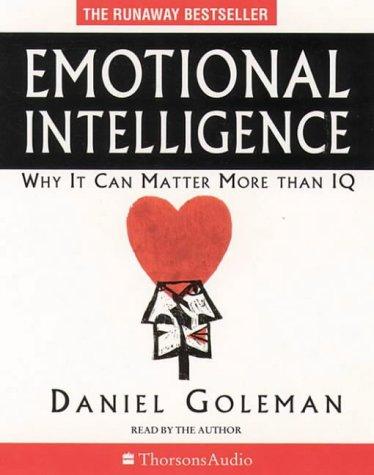
3. Emotional Intelligence by Daniel Goleman
Rating: ⭐⭐⭐⭐⭐ (4.4/5) Who it’s for: Anyone who wants the foundational understanding of why emotions matter more than IQ in determining life success.
Daniel Goleman’s Emotional Intelligence is the book that brought the concept of EQ into mainstream consciousness. Published in 1995, it argued that the ability to understand and manage emotions is a better predictor of success, happiness, and health than traditional intelligence. The book spent over a year on the New York Times bestseller list and has sold millions of copies worldwide.
Goleman defines emotional intelligence through five components: self-awareness, self-regulation, motivation, empathy, and social skill. Self-awareness — the ability to recognize your own emotions as they happen — is the foundation. Without it, the other four components are impossible.
The book is rich with neuroscience, case studies, and real-world examples. Goleman explains how the amygdala hijacks rational thought, why emotional memories are stronger than factual ones, and how emotional skills can be taught and developed at any age.
“In a very real sense we have two minds — one that thinks and one that feels.”
My take: Why it works for self-awareness: It provides the scientific foundation for understanding why emotions matter and how self-awareness underpins every other emotional skill.

4. Emotional Agility by Susan David
Rating: ⭐⭐⭐⭐ (4.4/5) Who it’s for: High-achievers who intellectualize their emotions and want to develop a healthier relationship with difficult feelings.
Susan David is a psychologist at Harvard Medical School, and Emotional Agility is her guide to being with your emotions without being controlled by them. Her central argument is that emotional health is not about feeling good all the time. It is about being flexible — about having the ability to show up with whatever you feel, accept it without judgment, and choose how to respond.
David identifies two types of emotional rigidity: bottling (suppressing emotions) and brooding (obsessing over emotions). Both prevent you from processing what you feel and moving forward. The alternative she proposes is emotional agility — the ability to notice your emotions, step back from them, and act in accordance with your values rather than your impulses.
The book includes practical exercises for developing emotional agility, including the “5-4-3-2-1” grounding technique, journaling prompts, and strategies for identifying your core values. For people who pride themselves on being rational, this book is a gentle but firm invitation to stop ignoring half your experience.
“Discomfort is the price of admission to a meaningful life.”
My take: Why it works for self-awareness: It teaches you to be present with difficult emotions instead of suppressing or overanalyzing them, which is the core skill of emotional self-awareness.

5. Running on Empty by Jonice Webb
Rating: ⭐⭐⭐⭐ (4.4/5) Who it’s for: Adults who grew up in emotionally neglectful homes and struggle to identify or express their feelings as adults.
Jonice Webb is a psychologist who specializes in Childhood Emotional Neglect (CEN) — a pattern of upbringing where a child’s emotional needs are consistently ignored, dismissed, or minimized. Running on Empty is her guide to understanding CEN and healing from it.
Webb argues that emotional neglect is not the same as abuse. Abuse is about what happened to you. Neglect is about what did not happen — the emotions that were not validated, the needs that were not met, the feelings that were not acknowledged. Because there is no specific traumatic event to point to, people who experienced CEN often do not realize anything is wrong. They just feel vaguely disconnected, empty, or “fine.”
The book includes twelve types of emotionally neglectful parenting, self-assessment tools, and a step-by-step healing process. For many readers, it is the first time someone has named what they have been feeling — or not feeling — their entire lives.
“What you don’t feel, you can’t heal.”
My take: Why it works for self-awareness: It explains why some people struggle with emotional self-awareness in the first place and provides a path toward feeling what they were never taught to feel.
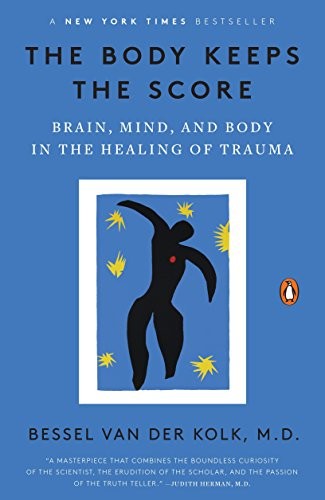
6. The Body Keeps the Score by Bessel van der Kolk
Rating: ⭐⭐⭐⭐⭐ (4.6/5) Who it’s for: Anyone whose emotional numbness or dysregulation is rooted in trauma — from childhood abuse, accidents, loss, or chronic stress.
Bessel van der Kolk is a psychiatrist who has spent his career studying how trauma reshapes the body and brain. The Body Keeps the Score is his landmark work, and it has changed how millions of people understand the connection between trauma and emotional experience.
Van der Kolk’s central argument is that trauma is not just a psychological event — it is a physiological one. When you experience something overwhelming, your body stores the memory in ways that bypass conscious awareness. You might not remember the event, but your body does. Your heart races when someone raises their voice. Your stomach clenches when you feel trapped. You go numb when emotions become too intense.
The book covers the neuroscience of trauma, the limitations of talk therapy, and the effectiveness of body-based approaches including EMDR, yoga, and neurofeedback. It is long, dense, and sometimes disturbing, but it is essential reading for anyone whose emotional life has been shaped by experiences they cannot fully access or understand.
“Being able to feel safe with other people is probably the single most important aspect of mental health.”
My take: Why it works for self-awareness: It explains why some people cannot feel their emotions — and shows that healing is possible through approaches that address the body, not just the mind.
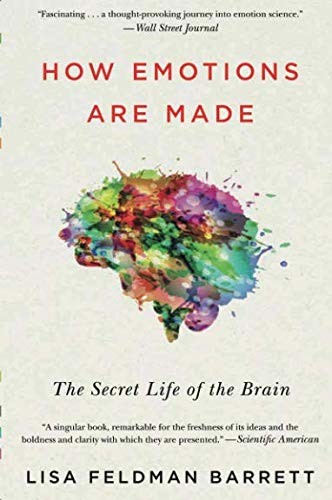
7. How Emotions Are Made by Lisa Feldman Barrett
Rating: ⭐⭐⭐⭐ (4.2/5) Who it’s for: Science-minded readers who want to understand the neuroscience of emotions and challenge their assumptions about how feelings work.
Lisa Feldman Barrett is a neuroscientist whose research has overturned centuries of assumptions about emotions. How Emotions Are Made argues that emotions are not hardwired reactions triggered by external events. They are constructed by your brain in real time, based on your past experiences, your cultural context, and your predictions about what will happen next.
This is a radical reframe. The conventional view — that emotions are automatic, universal, and located in specific brain regions — has been the dominant model for decades. Barrett’s research shows that it is wrong. Emotions are not discovered in the brain. They are made by the brain. And the emotions you experience are shaped by the concepts your culture has taught you.
For emotional self-awareness, Barrett’s work has a practical implication: if your brain constructs your emotions based on predictions and concepts, then you can change your emotional life by changing the concepts you use to understand your experience. Expanding your emotional vocabulary, as Brené Brown advocates, is not just a nice idea. It literally changes how your brain processes your experience.
“You are an architect of your own experience.”
My take: Why it works for self-awareness: It challenges the assumption that emotions are fixed reactions and shows you that you have more agency over your emotional life than you think.

8. Untamed by Glennon Doyle
Rating: ⭐⭐⭐⭐ (4.3/5) Who it’s for: People — especially women — who have spent their lives suppressing their true feelings to meet others’ expectations.
Glennon Doyle’s memoir is not a psychology book. It is the story of a woman who spent decades performing the roles she thought she was supposed to play — devoted wife, perfect mother, successful author — while her inner life screamed for attention. Untamed is about the moment she stopped performing and started listening.
The book is structured as a collection of short essays, each one exploring a different aspect of emotional authenticity. Doyle writes about the “cages” that keep people from feeling their real emotions — cultural expectations, religious teachings, gender roles, family scripts. She argues that most people are not emotionally self-aware because they have been taught that their real feelings are wrong, dangerous, or selfish.
For readers who struggle to identify what they feel because they have spent their lives prioritizing what they should feel, this book is a permission slip. It is not a substitute for therapy or scientific understanding. But it is a powerful companion to both.
“The braver I am, the luckier I get.”
My take: Why it works for self-awareness: It addresses the cultural and social barriers to emotional self-awareness and gives you permission to feel what you actually feel.

9. The Language of Emotions by Karla McLaren
Rating: ⭐⭐⭐⭐ (4.3/5) Who it’s for: People who want a comprehensive guide to every major emotion and what it is trying to tell them.
Karla McLaren is an empath and researcher who has spent decades studying the function of emotions. The Language of Emotions argues that every emotion — including the ones we consider negative — has a specific purpose and message. Anger tells you a boundary has been violated. Fear tells you to pay attention. Sadness tells you to let go. Shame tells you that you have violated your own values.
The book covers each major emotion in detail, explaining its function, its physical sensations, its healthy expression, and its pathological forms. McLaren also includes practices for working with each emotion: grounding exercises for anxiety, release practices for grief, and boundary-setting strategies for anger.
What makes this book unique is its radical non-judgment toward emotions. McLaren does not divide feelings into “good” and “bad.” She treats all emotions as intelligent responses to experience, and she teaches you to listen to them rather than suppress or react to them.
“Every emotion you have is a messenger. Your job is not to silence the messenger but to hear the message.”
My take: Why it works for self-awareness: It gives you a detailed understanding of what each emotion is trying to communicate, turning your feelings from obstacles into information.

10. It Didn’t Start with You by Mark Wolynn
Rating: ⭐⭐⭐⭐ (4.3/5) Who it’s for: People who experience emotions that feel disproportionate to their own life experiences and suspect they may be carrying inherited family patterns.
Mark Wolynn is a therapist who specializes in inherited family trauma. It Didn’t Start with You explores the growing body of research suggesting that trauma can be passed down through generations — not just through behavior and storytelling, but through epigenetic changes that alter how genes are expressed.
The book addresses a common experience: feeling emotions that do not seem to belong to you. Anxiety without a clear source. Depression that runs in the family. Phobias that have no basis in your own experience. Wolynn argues that these emotions may be inherited echoes of trauma experienced by your parents, grandparents, or earlier ancestors.
The book includes a specific healing process: identifying the core language of your inherited trauma, tracing it to its source in your family system, and creating a healing sentence that acknowledges and releases the pattern. The approach is unconventional and some readers will find it speculative. But for those who have tried everything else and still feel haunted by emotions they cannot explain, this book offers a compelling framework.
“The heaviest burdens we carry are often the ones we inherited.”
Why it works for self-awareness: It addresses the mysterious, unexplained emotions that standard self-awareness frameworks cannot account for and offers a framework for understanding where they come from.
Frequently Asked Questions
What is emotional self-awareness?
Emotional self-awareness is the ability to recognize and understand your own emotions as they happen — what you are feeling, why you are feeling it, and how it affects your thoughts and behavior. It is the foundation of emotional intelligence and a prerequisite for self-regulation, empathy, and healthy relationships. Without emotional self-awareness, you react to emotions unconsciously. With it, you can choose how to respond.
Why do some people struggle with emotional self-awareness?
Many people were raised in environments where emotions were dismissed, punished, or ignored. If you grew up hearing “stop crying,” “you are too sensitive,” or “there is nothing to be upset about,” you learned that your emotions were wrong or unimportant. Over time, you stopped noticing them. Jonice Webb’s Running on Empty explores this pattern in detail. Cultural expectations, gender norms, and trauma can also suppress emotional awareness.
Can you develop emotional self-awareness as an adult?
Yes. Emotional self-awareness is a skill, not a fixed trait. Research from the Yale Center for Emotional Intelligence shows that emotional skills can be taught and developed at any age. The books on this list provide frameworks, exercises, and language for building self-awareness. Therapy, journaling, and mindfulness practices are also effective.
What is the difference between emotional self-awareness and emotional intelligence?
Emotional self-awareness is one component of emotional intelligence. Daniel Goleman’s model of EQ includes five components: self-awareness, self-regulation, motivation, empathy, and social skill. Self-awareness — knowing what you feel and why — is the foundation. Without it, you cannot effectively regulate your emotions, empathize with others, or navigate social situations.
How do I know if I lack emotional self-awareness?
Common signs include: frequently saying “I’m fine” when you are not, difficulty naming what you feel beyond “good” or “bad,” reacting to emotions with surprise or confusion, being told by others that you seem angry or upset when you did not notice, using food, alcohol, screens, or work to avoid feeling, and difficulty understanding why you made certain decisions. If these resonate, Marc Brackett’s Permission to Feel is the best starting point.
How long does it take to develop emotional self-awareness?
There is no fixed timeline. Some people experience shifts within weeks of starting a practice like the mood meter or journaling. For others, particularly those with childhood emotional neglect or trauma, the process takes months or years. The key is consistency — daily check-ins with yourself, regular journaling, and honest self-reflection. Therapy can accelerate the process significantly.
Do I need therapy, or can books alone help?
Books can be a powerful starting point, particularly for people who have never explored their emotional life. For mild to moderate emotional unawareness, the techniques in Permission to Feel, Emotional Agility, and Atlas of the Heart may be sufficient. For deeper issues — trauma, chronic emotional numbness, childhood neglect — books are best used alongside therapy. Bessel van der Kolk’s The Body Keeps the Score and Jonice Webb’s Running on Empty both explicitly recommend professional support for certain patterns.
What is the first step toward developing emotional self-awareness?
The simplest first step is to pause several times a day and ask yourself: “What am I feeling right now?” Do not judge the answer. Do not try to fix it. Just notice it. If you can name the emotion — even roughly — you have begun the process. Over time, you will develop a richer vocabulary and a more nuanced understanding of your inner life. Marc Brackett’s mood meter is an excellent tool for this practice.
Final Thoughts
I am not “fine” anymore. I have a much larger vocabulary now. I am “anxious but functional.” I am “content with an undercurrent of restlessness.” I am “grieving something I cannot name but recognize when I feel it.” The specificity does not make the feelings go away. But it does something more important: it makes them real.
Emotional self-awareness is not about feeling better. It is about feeling more. It is about trading the numb comfort of “fine” for the raw, complicated, sometimes painful experience of actually being alive. It is about knowing yourself — not the curated, acceptable version, but the whole messy truth.
My take: You deserve to know what you feel. These books will help you find out.
Which book are you grabbing first?
Disclosure: This article contains affiliate links. If you purchase through these links, we may earn a small commission at no extra cost to you. We only recommend books we have personally read and believe in.
Never miss a life-changing book.
Get our spoiler-free book picks every Tuesday.