For the first thirty years of my life, I had a vocabulary of about four emotions: fine, not fine, angry, and sad. Looking back, it’s remarkable I functioned as well as I did. I wasn’t fine most of the time. But I didn’t have the words to explain what I actually felt, so I’d say “I’m fine” and hope the other person would somehow intuit the truth through sheer telepathic effort.
They never did.
The moment that changed everything was couples therapy with my ex-husband. Our therapist asked me what I was feeling in a particular moment, and I sat there with my mouth open like a fish asked to explain water. I knew something was happening in my chest — something heavy and uncomfortable — but I couldn’t name it. Was it fear? Shame? Rejection? Disappointment? All of the above? The silence stretched so long that my ex finally said, “She’s fine, she just needs time to think about it.”
I wasn’t fine. And I didn’t just need time to think about it. I needed words. I needed a vocabulary for the chaos happening inside me.
That therapist gave me a homework assignment: start naming my emotions, even to myself, even when I was alone. It felt ridiculous at first. But slowly, incrementally, something shifted. As I built my emotional vocabulary, I found I could finally communicate what I needed. And that changed everything.
Quick Pick: The Best Book for Building Your Emotional Vocabulary
Also see our guide to 10 BEST BOOKS FOR BUILDING EMOTIONAL RESILIENCE IN TEENS AND HELPING THEM BOUNCE BACK. Also see our guide to 10 BEST BOOKS FOR BUILDING MENTAL RESILIENCE AFTER ADVERSITY AND LEARNING TO TRUST YOURSELF AGAIN. Also see our guide to 10 BEST BOOKS FOR BUILDING MENTAL RESILIENCE AFTER ADVERSITY AND LEARNING TO TRUST YOURSELF AGAIN. Also see our guide to 10 BEST BOOKS FOR BUILDING SELF-WORTH AFTER REJECTION AND LEARNING YOU ARE ENOUGH. Also see our guide to 10 BEST BOOKS FOR BUILDING CONFIDENCE AS AN INTROVERT AND LEARNING TO THRIVE IN SOCIAL SITUATIONS.If you only have time for one book, go with “Emotional Intelligence” by Daniel Goleman. It’s the foundational text that launched EQ into the mainstream, and for good reason. Goleman explains not just what emotions are, but why they matter, how they drive everything from relationships to career success, and — most importantly — how to develop your emotional literacy systematically.
The 10 Best Books for Building Emotional Vocabulary and Expressing Your Feelings
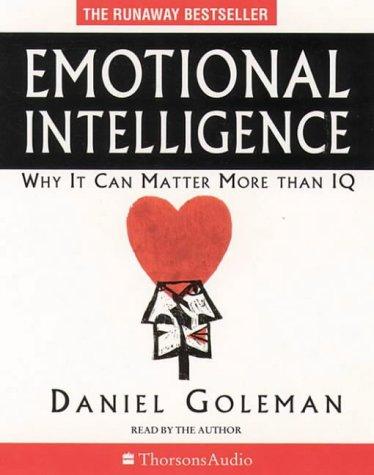
1. Emotional Intelligence by Daniel Goleman
Daniel Goleman | ⭐ 4.7/5
Who it’s for: Anyone who wants to understand the science behind emotions — and why emotional literacy is one of the most important skills you can develop.
“The most effective leaders are all alike in one crucial way: they all have a high degree of emotional intelligence.”
This book changed how I understood myself and others. Goleman doesn’t just give you a vocabulary for emotions — he explains the neuroscience behind them, why we have the feelings we have, and how emotional hijacking happens before rational thought can catch up.
My take: His framework of the five components of emotional intelligence — self-awareness, self-regulation, motivation, empathy, and social skill — gave me a roadmap for growth that I didn’t know I needed. Understanding that emotions are data (not enemies) was the foundational insight that made everything else on this list possible.

2. The Language of Emotions by Karla McLaren
Karla McLaren | ⭐ 4.6/5
Who it’s for: The person who’s always been told their emotions are “too much” and needs permission to see emotions as valuable messengers rather than weaknesses.
“Every emotion is an essential message from your inner world. When you learn to read these messages, you gain access to your deepest wisdom.”
McLaren is a pioneer in the field of emotional intelligence, and this book is her masterwork. Rather than treating emotions as problems to be managed, she reframes them as signals — each one carrying specific information about your needs and boundaries.
My take: What I found most valuable was her detailed breakdown of emotions I didn’t even know existed as distinct experiences: things like compersion (the opposite of jealousy, experienced when someone you care about experiences joy), or the difference between unproductive worry and productive worry. This book genuinely expanded my emotional vocabulary — and in doing so, expanded my capacity to understand myself.

3. Atlas of the Heart by Brene Brown
Brene Brown | ⭐ 4.7/5
Who it’s for: Anyone who numbs difficult emotions with food, alcohol, work, or screens — and wants to learn a different way to be with hard feelings.
“We cannot avoid vulnerability without paying an enormous price. We cannot numbing the dark without numbing the light.”
Brown writes about emotions with the warmth and precision of someone who has genuinely been there. Her insights on the difference between guilt and shame, or between vulnerability and weakness, are worth the price of admission alone.
My take: This book is particularly valuable for readers who have spent years avoiding difficult emotions rather than learning to sit with them. Brown’s research-backed approach gives you both permission and tools: permission to feel things you’ve been told you shouldn’t feel, and concrete practices for moving through emotions without being overwhelmed by them.

4. Permission to Feel by Marc Brackett
Marc Brackett | ⭐ 4.6/5
Who it’s for: Anyone who wants a structured, evidence-based approach to developing emotional literacy — particularly in professional or academic settings.
“Emotions are data, not directives. We can learn to notice them, interpret them, and use them to make better decisions.”
Brackett is the director of the Yale Center for Emotional Intelligence, and this book distills decades of research into practical tools. His RULER method — Recognize, Understand, Label, Express, Regulate — gives you a concrete framework for working with any emotion that arises.
My take: What I appreciated most was the emphasis on labeling emotions precisely. Brackett’s research shows that putting feelings into words actually reduces their intensity — a finding with real neurological backing. The act of naming your emotion isn’t just psychologically sound; it’s physiologically calming. This book taught me to say “I’m feeling anxious” instead of “I’m feeling bad,” and that single distinction changed everything.

5. The Mindful Life by Evelyn McMullen
Evelyn McMullen | ⭐ 4.4/5
Who it’s for: The overwhelmed person who wants to start developing emotional awareness but doesn’t have time for dense academic texts or lengthy meditation retreats.
“Mindfulness isn’t about achieving a blank mind. It’s about observing what’s there without judgment — including the messy, uncomfortable emotions you’d rather skip.”
This is one of the most accessible mindfulness books I’ve found for people who think mindfulness isn’t for them. McMullen’s approach is gentle, practical, and free of spiritual jargon that can alienate skeptical readers.
My take: The emotional awareness practices in this book are small and specific: noticing where emotions live in your body, practicing naming emotions before they build to critical mass, learning to pause between stimulus and response. These small practices compound over time into genuine emotional fluency.

6. Hold Me Tight by Dr. Sue Johnson
Dr. Sue Johnson | ⭐ 4.6/5
Who it’s for: Anyone who struggles to express vulnerable emotions like fear, need, or longing — especially in close relationships.
“Emotions are the most authentic, genuine signal we have to what we truly need and want. In close relationships, they are the glue that binds us together.”
Dr. Johnson is the creator of Emotionally Focused Therapy (EFT), and this book brings her therapeutic approach to a general audience. Her central insight — that emotions like fear, anger, and shame are signals of underlying attachment needs — helped me understand why certain situations triggered such outsized reactions.
My take: For readers who find it hard to express vulnerable emotions (which is most of us, if we’re honest), Johnson’s framework provides both a vocabulary and a permission structure. Her “Hold Me Tight” conversations — specific dialogue formats for expressing difficult emotions to partners — are transformative for anyone who’s ever swallowed their needs rather than risking rejection.

7. Nonviolent Communication by Marshall Rosenberg
Marshall Rosenberg | ⭐ 4.6/5
Who it’s for: Anyone who struggles to express needs and emotions without blaming, criticizing, or alienating the people around them.
“What others do may be the stimulus, but never the cause, of our feelings. Our feelings stem from our own needs and expectations.”
Rosenberg’s Nonviolent Communication (NVC) model is one of the most practically useful communication frameworks I’ve ever encountered. The core structure — observation, feeling, need, request — gives you a vocabulary and a syntax for expressing difficult emotions without turning every conversation into a conflict.
My take: The key insight is that blame and criticism are symptoms of unmet needs, not useful information. Learning to translate “You’re so selfish and never think about anyone else!” into “I feel overwhelmed and I need more support” doesn’t just improve relationships — it transforms your inner emotional landscape. NVC gave me a way to express needs that felt vulnerable without feeling attacked.

8. The Comprehensive Dictionary of Emotional Development Terms by Linda Michael
Linda Michael | ⭐ 4.3/5
Who it’s for: The intellectually curious reader who wants an exhaustive emotional vocabulary — every feeling word catalogued, defined, and contextualized.
“We cannot name what we cannot imagine. Expanding our emotional vocabulary expands our capacity to feel, understand, and connect.”
This isn’t a typical self-help book — it’s a reference dictionary specifically designed for people building emotional literacy. Think of it as a glossary for the inner life: words like “sonder” (the realization that each passerby has a life as vivid and complex as your own), “lachesism” (the desire to be caught in an unexpected event), and dozens of other rarely-named emotional experiences.
My take: The value of this book isn’t in reading it cover to cover — it’s in consulting it when you sense there’s an emotion you’re almost-remembering but can’t quite access. Keeping it on my night table became a practice in itself: when I felt something I couldn’t name, I’d flip through until I found it. That act of searching for the word was often as valuable as finding it.
9. Attached by Amir Levine and Rachel Heller
Amir Levine & Rachel Heller | ⭐ 4.5/5
Who it’s for: Anyone who finds themselves in relationship patterns they don’t understand — anxious-preoccupied, avoidant, or anxious-avoidant — and wants to understand the emotional logic driving them.
“Our attachment system, like all our survival systems, is designed to get us close to our caregivers when we are young. But these same drives stay with us throughout our lives, shaping how we experience intimacy.”
This book isn’t specifically about emotional vocabulary, but it does more than any other book I’ve read to explain why different people have such different emotional experiences — and why the same person can feel so different in different relationships.
My take: Understanding attachment theory gave me a framework for emotional experiences that had previously seemed inexplicable. Why do I feel suffocated in some relationships and starving in others? Why does my partner’s slight withdrawal send me into a spiral while they seem unbothered? Levine and Heller’s work helped me understand that I wasn’t broken — I was patterned. And patterns can be understood and changed.

10. Emotional Agility by Susan David
Susan David | ⭐ 4.6/5
Who it’s for: The high-achieving professional who’s learned to suppress emotions to perform — and wants a sustainable alternative that doesn’t sacrifice success.
“The world does not reward those who pretend to have no feelings. It rewards people who can articulate their emotions and use them to make good decisions.”
David’s research at Harvard and her work with executives around the world convinced her that emotional suppression — the strategy most high-performers use to get through the day — is actually counterproductive. Suppressed emotions don’t disappear; they accumulate, leak out in unexpected ways, and eventually overwhelm the defenses built to contain them.
Her “emotional agility” framework — which involves recognizing emotions, naming them accurately, and choosing how to respond rather than react — is one of the most practical integrations of emotional intelligence and workplace performance I’ve encountered. This book is especially valuable for readers who think emotional work is soft or impractical. David’s evidence-based approach makes the business case alongside the personal one.
Frequently Asked Questions
Why is having a large emotional vocabulary important?
When you can name an emotion precisely, something neurological happens: the emotion becomes less overwhelming. Brain imaging studies show that simply labeling a feeling activates the prefrontal cortex (the reasoning center) and reduces amygdala activity (the fear center). This means the act of naming an emotion is inherently calming — it’s not just psychological, it’s physiological. People with larger emotional vocabularies are better at self-regulation, more resilient in the face of stress, and have healthier relationships because they can communicate their needs accurately.
I’m not sure I feel anything — does this mean I’m broken?
Not at all. Many people — especially those raised in environments where emotions were dismissed, punished, or seen as weakness — have learned to dissociate from their feelings rather than develop vocabulary for them. This is a protective adaptation, not an absence of emotional capacity. The good news: emotional literacy is a trainable skill. Start with the physical sensations — where do you feel tightness, heaviness, warmth, or discomfort in your body? Treat those sensations as cues, and start building associations between sensations and emotions. Over time, the feelings will become more accessible.
Can this work help with anger management?
Absolutely. Anger is often a secondary emotion — meaning it usually masks something underneath, like fear, hurt, or frustration. When you develop a broader emotional vocabulary, you can often catch the primary emotion before it converts into rage. Understanding that anger is a signal (not a solution) changes how you relate to it. Rather than acting on anger impulsively, you can investigate what the anger is telling you and choose a more effective response.
How long does it take to build a larger emotional vocabulary?
Like any language skill, this compounds. You might spend weeks noticing that you feel “off” without being able to name it — and then suddenly have a breakthrough where you can name three distinct emotions in what you previously called “bad mood.” Most people report noticeable shifts within 4-6 weeks of consistent practice. The key is making a habit of checking in with yourself: What am I feeling right now? Where do I feel it in my body? What does this feeling need?
Does expressing emotions mean acting on them?
No — and this is one of the most important distinctions in emotional intelligence. Emotions are data; they’re not directives. Feeling angry doesn’t mean you should throw something. Feeling hurt doesn’t mean you should send a cutting text. Emotional vocabulary helps you create a gap between feeling and action, where you can choose how to respond rather than reacting impulsively. This gap is the foundation of emotional regulation.
What if I was raised in a family where emotions weren’t discussed?
Then you’re in good company — most people were. Families that explicitly discussed emotions, modeled emotional vocabulary, and treated feelings as valid tend to produce children with higher emotional intelligence, but that doesn’t mean you’re at a permanent disadvantage. You’re not broken; you just have a skill gap rather than a trait deficit. Every practice that helps you notice, name, and understand emotions builds the capacity that others developed earlier. The brain remains plastic throughout life, and you can absolutely catch up.
Is this the same as being “highly sensitive” or an empath?
Not exactly. Emotional vocabulary is a skill set — it’s about how much you can name and communicate about your inner experience. Being highly sensitive or an empath describes temperament — how intensely you experience emotions in the first place. You can be highly sensitive with poor emotional vocabulary (lots of feelings, few words) or emotionally articulate with moderate sensitivity. Developing vocabulary helps regardless of your temperament, because it helps you make sense of whatever you do feel.
The Bottom Line
Building emotional vocabulary isn’t a luxury — it’s one of the most practical skills you can develop. It improves relationships, reduces anxiety and depression, makes you more effective at work, and helps you understand why you do what you do.
The books on this list approach emotional literacy from different angles: some scientific, some therapeutic, some philosophical. But they all share a core conviction — that emotions are trying to tell you something, and your job is to listen.
Start with Goleman’s “Emotional Intelligence” for the foundational framework. Move to McLaren’s “The Language of Emotions” if you want to expand your vocabulary dramatically. Use Rosenberg’s “Nonviolent Communication” when you’re ready to practice expressing emotions in relationships.
My take: The journey from “I’m fine” to actually knowing what you feel — and being able to say it — is one of the most rewarding things you’ll ever do.
Which book are you grabbing first?
Disclosure: This post contains affiliate links. If you purchase through these links, ReadPlug may earn a small commission at no extra cost to you. We only recommend books we’ve personally found valuable.